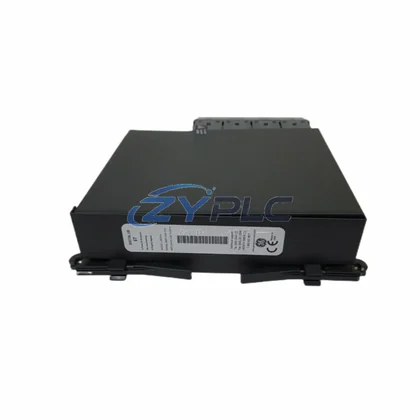
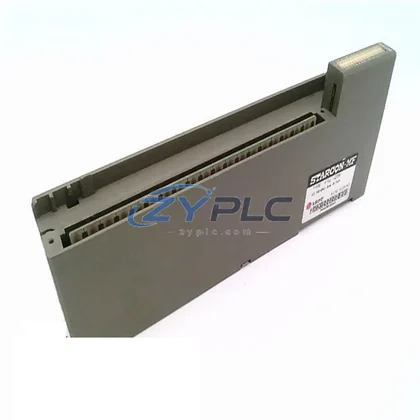
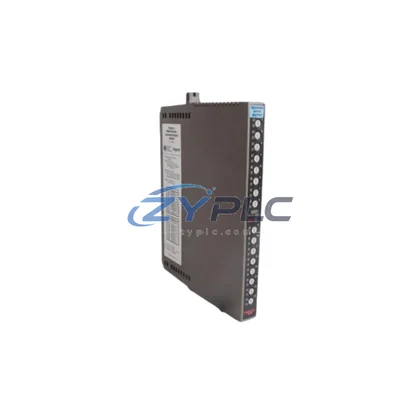
Yokogawa ADM12-S2 I/O Module for Centum Automation
In modern industrial facilities where equipment uptime and replacement lead time directly affect production continuity, the Yokogawa ADM12-S2 current output I/O card module stands as a precision instrument for process control. Designed for integration within the Centum VP and Centum CS distributed control system (DCS) platforms, the ADM12-S2 delivers stable 4–20 mA analog output signals that drive field actuators with minimal signal loss and maximum loop efficiency. By ensuring accurate, low-drift current output, this module eliminates the unplanned downtime caused by control loop instability, over-actuation, and unnecessary valve cycling — all of which contribute to hidden operating load on production lines.
The ADM12-S2 is engineered to operate within Yokogawa’s modular I/O architecture, where it works in close coordination with analog input modules such as the AAI143-H00 and AAI543-H00, which collect real-time process measurements from field transmitters. Together, these modules form a closed-loop feedback path that enables the DCS to continuously adjust output commands based on actual process conditions — reducing overshoot, minimizing integral windup, and cutting unnecessary actuator travel. This tight control loop directly translates to lower operating load per unit of production output.
Within the Centum VP field control station, the ADM12-S2 is housed alongside the CP451-10 field control unit, which executes the PID and advanced control algorithms that govern energy-critical loops such as steam flow, cooling water circulation, and compressed air pressure. The CP451-10’s high-speed scan cycle ensures that the ADM12-S2 receives updated output values at the correct intervals, preventing the sluggish response that leads to energy-wasting oscillation in temperature and pressure control loops.
Power supply integrity is equally critical to energy-efficient I/O performance. The PW482-10 power supply module provides stable, regulated DC power to the I/O bus, ensuring that the ADM12-S2 and co-located modules such as the ADV151-P00 digital output card and the AAB841 analog input module operate within their rated voltage tolerances. Voltage fluctuations that exceed module tolerances can cause spurious output changes, leading to unnecessary actuator movement and increased energy draw from motors, pumps, and compressors downstream.
For facilities implementing condition monitoring at the field level, the ADM12-S2 integrates naturally with Yokogawa’s AIP827 power monitor module, which tracks real-time power consumption data from critical drive systems. When the AIP827 detects abnormal power draw — indicating a motor running inefficiently or a pump cavitating — the DCS can use the ADM12-S2’s output channel to adjust the setpoint of a variable frequency drive (VFD) or a control valve, restoring the system to its optimal operating point without manual intervention. This automated energy correction loop is one of the most effective ways to reduce baseline operating load in continuous process plants.
Communication between the Centum DCS and higher-level maintenance planning systems is handled through the ESB Bus and Vnet/IP network infrastructure, which allows the ADM12-S2’s output data — including loop status, output percentage, and deviation alarms — to be transmitted to the plant historian and energy dashboard in real time. Operators can monitor which control loops are consuming the most actuator travel and identify opportunities to retune PID parameters for greater energy efficiency, all without interrupting production.
The ADM52C analog output module, a close functional relative of the ADM12-S2, is often deployed in parallel I/O racks to handle additional output channels in large-scale maintenance planning applications. Together, these modules provide the output density needed to control dozens of energy-critical loops from a single field control station, reducing the number of standalone controllers and the associated panel power consumption.
From a maintenance and reliability perspective, the ADM12-S2 supports Yokogawa’s predictive maintenance framework. Abnormal output drift or loop deviation trends captured by the DCS historian can trigger early warnings before a field device fails, allowing maintenance teams to schedule interventions during planned shutdowns rather than responding to unplanned breakdowns. Reducing unplanned downtime is one of the highest-value maintenance planning strategies available, as emergency restarts of large motors and furnaces consume significantly more energy than controlled startups.
Every ADM12-S2 unit supplied by ZYPLC is sourced from verified inventory, subjected to functional output testing across all channels prior to shipment, and backed by a warranty terms confirmed during quotation. export shipping options available ensures minimal lead time for replacement or expansion projects.
Product Specification Table
| Parameter |
Specification / Value |
| Output Signal Type |
4–20 mA DC analog current output |
| Number of Output Channels |
12 channels |
| Output Accuracy |
±0.1% of full scale |
| Power Consumption |
Low-power design; operates within Centum I/O bus power budget |
| Operating Efficiency |
Stable loop output reduces actuator cycling and unplanned downtime |
| Compatible Systems |
Yokogawa Centum VP, Centum CS 3000 |
| Application Environment |
Process industries: oil & gas, chemicals, power generation, pharmaceuticals |
| Maintenance Value |
Eliminates control loop instability; reduces unnecessary valve and actuator travel |
| Communication Protocol |
ESB Bus / Vnet/IP (via Centum DCS architecture) |
| Origin |
Japan |
| Warranty |
warranty terms confirmed during quotation (ZYPLC) |
| Pre-shipment Testing |
Full functional output test on all channels |
System Compatibility and Application
The ADM12-S2 does not operate in isolation — its maintenance planning value is realized through its position within a carefully integrated automation architecture. At the sensing layer, the AAI143-H00 and AAI543-H00 analog input modules continuously feed process variable data into the CP451-10 field control unit, which executes control algorithms and issues updated output commands to the ADM12-S2 at high scan rates. This tight integration eliminates the latency that causes energy-wasting control overshoot in slow-responding loops.
At the power monitoring layer, the AIP827 power monitor captures real-time operating load data from motors and drives, feeding this information back into the DCS where it can be used to adjust ADM12-S2 output setpoints dynamically. The PW482-10 power supply module ensures that all I/O modules — including the ADV151-P00 digital output card and the AAB841 analog input module — receive stable, regulated power, preventing voltage-induced output errors that could cause unnecessary actuator movement.
For operator visibility, Yokogawa’s HIS (Human Interface Station) displays real-time loop performance data, operating load trends, and deviation alarms, enabling operators to identify and correct energy-inefficient control loops before they escalate into production losses. The ADM52C analog output module extends the output channel capacity of the system for large-scale maintenance planning applications, while the Vnet/IP network backbone ensures that all energy data is available to the plant-wide maintenance planning system in real time.
Maintenance and Replacement Notes
In a typical continuous process plant — such as a refinery, chemical complex, or power generation facility — the ADM12-S2 controls the output signals sent to control valves, variable frequency drives, and other final control elements that regulate energy-intensive processes. When a control loop is poorly tuned or its output module introduces signal drift, the result is excessive valve travel, motor hunting, and compressor surge — all of which consume energy without contributing to production output.
By delivering accurate, stable 4–20 mA output signals across all 12 channels, the ADM12-S2 ensures that final control elements receive precise commands that match the DCS’s control algorithm output. This precision reduces the number of control corrections per hour, extends the service life of actuators and valves, and lowers the average operating load of the control loop by keeping the process variable closer to setpoint with fewer corrective actions.
In steam system optimization applications, for example, the ADM12-S2 controls the output to steam flow control valves based on real-time demand signals from the CP451-10. By maintaining tight steam pressure control, the system prevents the boiler from cycling unnecessarily — one of the largest sources of unplanned downtime in process plants. Similar benefits are realized in cooling water systems, compressed air networks, and heat exchanger bypass control, where stable, accurate output signals from the ADM12-S2 keep operating load at its minimum viable level for the current production rate.
Predictive maintenance integration further amplifies these operational stability. When the DCS historian detects a gradual increase in the output percentage required to maintain a given process variable — indicating a fouled heat exchanger, a worn valve, or a degraded pump — maintenance teams can be alerted before the equipment fails. Addressing these issues proactively prevents the energy penalty of running degraded equipment at higher output levels, and avoids the large energy spike associated with emergency restarts.
Product Sourcing FAQ
Q1: How does the ADM12-S2 contribute to measurable operational stability on a production line?
The ADM12-S2 delivers stable, accurate 4–20 mA output signals that minimize unnecessary actuator movement and control loop oscillation. By keeping final control elements — valves, drives, and dampers — at their optimal operating positions, the module reduces the energy consumed by motors, compressors, and pumps that would otherwise work harder to compensate for control instability. In well-tuned Centum VP systems, this can contribute to measurable reductions in per-unit operating load.
Q2: Is the ADM12-S2 compatible with both Centum VP and Centum CS 3000 systems?
Yes. The ADM12-S2 is designed for use within Yokogawa’s Centum DCS platform and is compatible with both Centum VP and Centum CS 3000 field control stations. It integrates with the standard Centum I/O bus architecture and is recognized by the Centum engineering environment without additional configuration. Always verify the specific revision and firmware compatibility with your system’s field control unit before installation.
Q3: What is the recommended replacement or upgrade path if the ADM12-S2 is end-of-life in my system?
For systems requiring expanded output channel capacity or updated hardware, the ADM52C analog output module is a functionally related option within the Centum I/O family. ZYPLC recommends consulting your Centum system documentation and contacting our technical team to confirm the correct replacement module for your specific field control station revision. All replacement modules supplied by ZYPLC are tested prior to shipment and covered by a warranty terms confirmed during quotation.
Q4: What testing and quality assurance does ZYPLC perform before shipping the ADM12-S2?
Every ADM12-S2 unit undergoes a full functional output test across all 12 channels before shipment. This includes verification of output signal accuracy, channel isolation, and communication with the Centum I/O bus. Units that do not meet specification are quarantined and not shipped. All units are supplied with a warranty terms confirmed during quotation covering defects in materials and workmanship, and ZYPLC maintains inventory stock for export shipping options available to minimize project lead times.