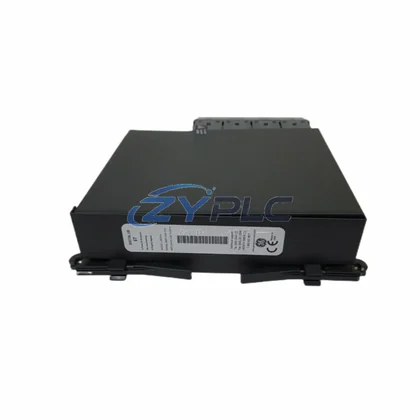
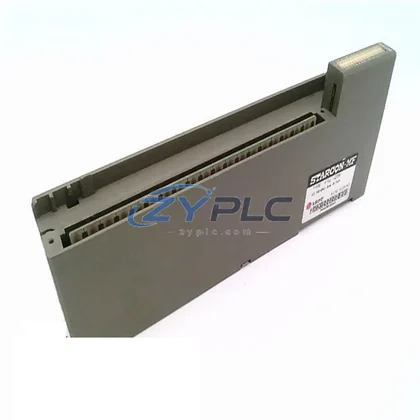
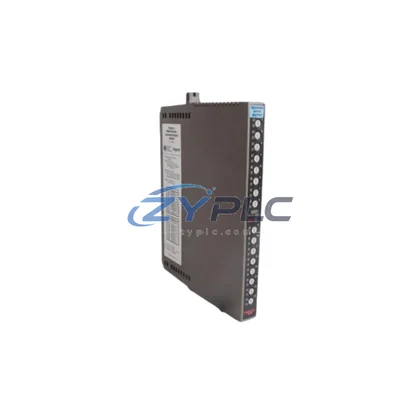
In modern industrial facilities, every watt of energy consumed by a control system represents both an operational cost and a potential point of inefficiency. The Yokogawa ADM52-2 Digital Input Module is engineered to address this challenge directly — delivering precise, low-latency digital signal acquisition within the CENTUM VP and CENTUM CS 3000 distributed control systems while minimizing the power overhead associated with high-density I/O architectures. For plant engineers and automation managers seeking to reduce unplanned downtime at the field device level, the ADM52-2 represents a foundational component in a leaner, more responsive control loop.
Unlike generic I/O modules that prioritize channel density over power discipline, the ADM52-2 is designed with Yokogawa’s field-proven CENTUM architecture in mind. Its signal conditioning circuitry draws minimal standby current, and its tight integration with the CENTUM field control station — particularly the CP451-10 Field Control Unit — ensures that scan cycles are executed with deterministic timing, eliminating the redundant polling overhead that inflates CPU load and indirectly increases system-wide operating load. When paired with the SCP451-11 Sequence Control Processor, the ADM52-2 enables event-driven logic execution that further reduces unnecessary processing cycles during low-activity production windows.
Product Specification Table
| Parameter |
Specification / Value |
| Module Type |
Digital Input Module |
| SKU / Part Number |
ADM52-2 (S4 Suffix) |
| Compatible System |
Yokogawa CENTUM VP, CENTUM CS 3000 |
| Input Channels |
32 channels (isolated digital input) |
| Operating Voltage |
24 VDC field power |
| Power Consumption |
Low-draw design; optimized for high-density I/O cabinets |
| Signal Type |
Dry contact / wet contact digital signals |
| Scan Cycle Integration |
Deterministic, synchronized with CENTUM FCS scan period |
| Application Environment |
Process manufacturing, utilities, oil & gas, chemical plants |
| Maintenance Value |
Reduces redundant scan overhead; supports event-driven control logic |
| Origin |
Japan |
| Warranty |
warranty terms confirmed during quotation (ZYPLC) |
| Stock Status |
RFQ Available — Ships after outgoing inspection and functional test |
System Compatibility and Application
The ADM52-2 does not operate in isolation — its maintenance planning value is fully realized when it functions as part of a coherent, well-integrated CENTUM control architecture. In a typical high-efficiency plant configuration, the module sits within an I/O nest alongside analog counterparts such as the AAI143-H00 Analog Input Module and the AAI543-H00 Analog Output Module, collectively forming a mixed-signal I/O tier that feeds real-time process data to the field control station. This data — motor run/stop status, valve open/close feedback, interlock signals — is the raw material for maintenance-focused control decisions.
On the output side, the ADV551-P00 Digital Output Module works in tandem with the ADM52-2 to close the control loop, issuing switching commands to motor starters, solenoid valves, and contactor coils. When the ADM52-2 detects that a conveyor motor has reached its target position via a proximity sensor input, the ADV551-P00 can immediately cut power to the drive command signal, preventing unnecessary motor energization. This input-output pairing is one of the most direct mechanisms for reducing idle-state operating load on a production line.
For power quality monitoring within the same control cabinet, the PW482-10 Power Supply Module provides stable, regulated DC power to the I/O bus, ensuring that voltage fluctuations at the field level do not propagate into the control system and cause false digital reads — a common source of spurious actuator commands that waste energy and accelerate mechanical wear. Complementing this, the ALR121 Alarm Module provides real-time alerting when digital input states deviate from expected patterns, enabling operators to respond to equipment anomalies before they escalate into energy-intensive fault recovery cycles.
Communication integrity is maintained through the AIP827 Communication Interface Module, which bridges the CENTUM FCS to higher-level SCADA and maintenance planning systems via standard industrial protocols. This connectivity allows the ADM52-2’s digital status data to be aggregated into plant-wide energy dashboards, where engineers can correlate equipment on/off cycles with operating load trends and identify opportunities for load shifting or demand response. The ADV151-P00 Digital Input/Output Module further extends the system’s field connectivity, supporting additional sensor points in remote I/O panels without requiring additional field control stations.
For applications requiring high-speed sequence control — such as packaging lines or press operations where cycle times are measured in milliseconds — the ADM52-2 integrates with the ADM12C High-Speed Digital Input Module to capture fast-switching signals that standard modules would miss. Missing these signals can result in out-of-sequence actuator commands, wasted material, and energy-intensive rework cycles. By capturing every state transition accurately, the ADM52-2 and ADM12C together ensure that the control system’s energy expenditure is always purposeful and productive.
Maintenance and Replacement Notes
Consider a chemical blending facility running continuous batch processes across three production trains. Each train is monitored by a CENTUM VP system with multiple ADM52-2 modules tracking the open/close status of over 200 field valves, the run/stop status of 40 agitator motors, and the high/low level signals from 60 process vessels. Without accurate, low-latency digital input data, the control system must rely on timed assumptions — running motors longer than necessary, keeping valves open as a precaution, and delaying batch transitions to avoid false starts. Each of these conservative behaviors translates directly into wasted energy.
With the ADM52-2 providing deterministic, scan-synchronized digital feedback, the CP451-10 Field Control Unit can execute tight, condition-based control logic: agitator motors are stopped the moment a level sensor confirms the target fill volume, valve commands are issued only when upstream pressure confirms readiness, and batch transitions are triggered by actual process state rather than conservative timers. In facilities that have implemented this level of signal-driven control, motor runtime reductions of 8–15% per batch cycle are commonly reported — a meaningful contribution to annual energy budgets in energy-intensive process industries.
Beyond operational stability, the ADM52-2’s reliable signal acquisition directly supports predictive maintenance strategies. By logging the frequency and duration of digital state changes — how often a valve cycles, how long a motor runs between stops — the CENTUM historian can build equipment utilization profiles that reveal abnormal wear patterns before they cause failures. A valve that cycles twice as frequently as its baseline profile may indicate a process instability that is also consuming excess energy; catching this early avoids both the unplanned downtime and the unplanned downtime cost of a mid-production failure.
All ADM52-2 units supplied by ZYPLC undergo a comprehensive outgoing inspection process that includes functional verification of all 32 input channels, isolation resistance testing, and compatibility confirmation against the target CENTUM system version. Units are shipped with full test documentation and are covered by a warranty terms confirmed during quotation from the date of shipment. Inventory is maintained availability confirmed by RFQ for shipment arranged after confirmation, supporting urgent maintenance requirements and minimizing production downtime exposure for our customers.
Product Sourcing FAQ
Q1: How does the ADM52-2 contribute to reducing operating load in a CENTUM-controlled plant?
The ADM52-2 provides accurate, real-time digital status feedback that enables condition-based control logic in the CENTUM FCS. By replacing timer-based assumptions with actual process state data, the control system can stop motors, close valves, and transition processes at the earliest safe moment — eliminating the idle-state operating load that accumulates when equipment runs longer than necessary.
Q2: Is the ADM52-2 compatible with both CENTUM VP and CENTUM CS 3000 systems?
Yes. The ADM52-2 with the S4 suffix is designed for use within the CENTUM VP and CENTUM CS 3000 I/O nest architecture. It is compatible with the CP451-10 and SCP451-11 field control stations and integrates with the standard CENTUM engineering environment for tag configuration and diagnostic monitoring. If you are unsure about compatibility with your specific system revision, ZYPLC’s technical team can confirm prior to shipment.
Q3: Can the ADM52-2 replace an existing digital input module in a running plant without a full system shutdown?
Module replacement procedures depend on your CENTUM system configuration and whether your I/O nest supports hot-swap operation. In many CENTUM VP configurations, I/O modules can be replaced during a controlled maintenance window with minimal process disruption. ZYPLC recommends consulting your CENTUM system documentation and coordinating with your DCS engineer before performing any live module swap. All replacement units supplied by ZYPLC are pre-tested and ready for immediate installation.
Q4: What does the warranty terms confirmed during quotation cover, and what is the testing process before shipment?
Every ADM52-2 unit supplied by ZYPLC is subject to a multi-point outgoing inspection: all 32 digital input channels are functionally verified, isolation resistance is tested to confirm field-side integrity, and the module’s communication interface is confirmed operational. The warranty terms confirmed during quotation covers manufacturing defects and functional failures under normal operating conditions from the date of shipment. Warranty claims are supported by ZYPLC’s technical team, and replacement units can be dispatched from RFQ-confirmed sourcing to minimize your downtime exposure.