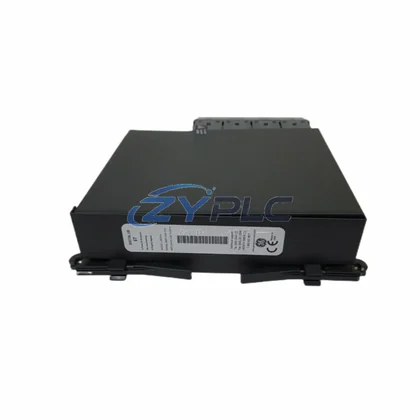
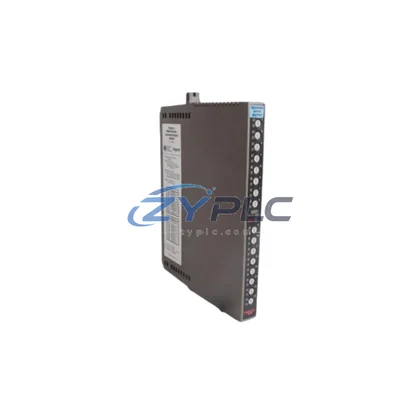
Yokogawa AET4D Relay Terminal for CENTUM
The Yokogawa AET4D Relay Terminal Board is a precision-engineered I/O interface component designed to operate within the layered control architecture of Yokogawa’s CENTUM distributed control system platform. Rather than functioning as a standalone device, the AET4D is conceived as a structural element within a coordinated automation hierarchy — bridging field-level signal conditioning with controller-level logic execution across multi-tier industrial environments. Its role within the system is to provide reliable relay output termination, ensuring that discrete control signals from the CENTUM CS 3000 or CENTUM VP controller platform are accurately translated into field actuator commands with the electrical isolation and contact integrity required for continuous process operations.
In a fully integrated CENTUM architecture, the AET4D terminal board is mounted within the field control station (FCS) cabinet alongside companion I/O modules, power supply units, and communication backplanes. The board interfaces directly with relay output modules such as the AAR141 or AAT141 series, providing the physical terminal points through which relay contacts are wired to field devices including solenoid valves, motor starters, alarm annunciators, and interlock circuits. This physical-to-logical integration is fundamental to maintaining signal traceability from the HMI operator station down through the controller, I/O bus, terminal board, and ultimately to the field actuator — a complete signal chain that the AET4D anchors at the termination layer.
System architects specifying the AET4D for new installations or replacement projects benefit from its compatibility with the CENTUM FCS node bus architecture, which supports both simplex and redundant I/O configurations. In redundant deployments, the terminal board remains common to both the primary and standby I/O module paths, ensuring that switchover events do not interrupt field wiring continuity. This design characteristic makes the AET4D particularly valuable in high-availability applications such as power generation control, refinery unit operations, and continuous chemical process lines where unplanned downtime carries significant operational and safety consequences.
From an engineering commissioning perspective, the AET4D simplifies field wiring verification by providing clearly labeled terminal blocks that correspond directly to the channel mapping defined in the CENTUM engineering environment. Technicians working with the CENTUM Builder or CENTUM VP engineering tools can cross-reference terminal assignments against the I/O builder database, reducing wiring errors during initial loop checkout and accelerating the pre-startup acceptance testing phase. This traceability between the software-defined I/O configuration and the physical terminal layout is a key advantage in large-scale projects where hundreds of relay output loops must be verified within compressed commissioning schedules.
Long-term maintenance planning for CENTUM-based systems frequently identifies terminal board availability as a critical spare parts consideration. The AET4D, as a passive termination component, has an extended service life under normal operating conditions, but its availability as a verified replacement part is essential for sustaining system integrity over the 15–25 year operational lifecycle typical of process industry DCS installations. Stocking the AET4D alongside related components such as the ALR111 power supply module, the ACM12 communication module, the AIP829 I/O power distributor, and the ESB105 or ESB205 node interface units ensures that maintenance teams can respond to field failures without extended lead times that could compromise production continuity.
Product Specification Table
| Parameter |
Specification |
| System Role |
Relay Output Termination Board — CENTUM FCS I/O Layer |
| Compatible Platform |
Yokogawa CENTUM CS 3000 / CENTUM VP |
| Module Type |
Relay Terminal Board (Passive Termination) |
| Contact Configuration |
Relay output terminal interface, multi-channel |
| Electrical Isolation |
Field-side galvanic isolation per relay channel |
| Installation Environment |
FCS cabinet, DIN rail or rack-mount within CENTUM node enclosure |
| Communication Layer |
Interfaces via paired relay output I/O module (e.g. AAR141 / AAT141) |
| Operating Temperature |
0°C to 55°C (standard industrial control cabinet environment) |
| Compatibility |
CENTUM node bus architecture, simplex and redundant I/O configurations |
| Origin |
Japan |
| Warranty |
warranty terms confirmed during quotation — covers functional integrity and electrical performance |
System Compatibility Notes
The AET4D does not operate in isolation — its value is realized through its position within a coordinated CENTUM system architecture. At the controller layer, the CENTUM VP FCS processor executes the control strategy and generates discrete output commands that are routed through the node bus to the I/O subsystem. The relay output module, such as the AAR141 4-channel relay output card or the AAT141 transistor output module, receives these commands and drives the relay contacts through the AET4D terminal board to the field wiring. This three-layer signal path — controller, I/O module, terminal board — is the fundamental architecture of CENTUM discrete output control.
Power distribution within the FCS cabinet is managed by the ALR111 or ALR121 power supply modules, which provide regulated DC power to the I/O bus and node interface components. The ACM12 or ACM22 communication modules manage the Vnet/IP or ESnet communication between the FCS and the HCS (human interface station), ensuring that operator commands issued from the CENTUM VP HMI are executed with deterministic latency. The ESB105 or ESB205 node interface units coordinate the I/O bus expansion, allowing multiple terminal boards including the AET4D to be deployed across extended cabinet configurations without compromising bus integrity.
In redundant system designs, the AEB400 series expansion backplanes and the AIP829 I/O power distributor work in conjunction with the AET4D to maintain continuous field output capability during controller or I/O module switchover events. The terminal board’s passive architecture means it remains energized and connected to field wiring throughout the redundancy transition, preserving relay contact states and preventing spurious actuator commands during the switchover interval.
Industrial Application Notes
The Yokogawa AET4D finds application across a broad range of process industries where CENTUM-based DCS architectures are deployed for continuous and batch control. In petroleum refining, the AET4D supports relay output termination for fired heater burner management systems, compressor anti-surge control panels, and emergency shutdown interlock circuits integrated within the CENTUM safety instrumented system architecture. In power generation, the board provides the termination interface for turbine auxiliary control relay outputs, boiler feed pump motor control circuits, and grid synchronization interlock systems managed through the CENTUM VP platform.
Chemical and petrochemical processing facilities utilize the AET4D within reactor temperature control systems, distillation column overhead condenser control loops, and batch reactor sequencing applications where relay output reliability directly affects product quality and process safety. Water and wastewater treatment plants deploy the AET4D in pump station motor control applications, chlorination dosing system interlock circuits, and SCADA-integrated remote terminal unit relay output panels operating under CENTUM supervisory control. Mining and minerals processing operations rely on the AET4D for conveyor drive control relay termination, crusher motor protection interlock wiring, and flotation cell reagent dosing pump control within CENTUM-managed plant automation systems.
Product Compatibility FAQ
Q1: Is the AET4D compatible with both CENTUM CS 3000 and CENTUM VP relay output modules?
The AET4D Relay Terminal Board is designed for use within the Yokogawa CENTUM platform architecture and is compatible with relay output I/O modules used in both CENTUM CS 3000 and CENTUM VP systems. System integrators should verify the specific module pairing (e.g. AAR141 or AAT141) against the project’s I/O list and CENTUM engineering database to confirm channel-to-terminal mapping before installation. Our technical team can assist with compatibility verification as part of the warranty terms confirmed during quotation support service.
Q2: Can the AET4D be used in redundant I/O configurations without field wiring changes?
Yes. The AET4D terminal board serves as the common field wiring termination point in both simplex and redundant CENTUM I/O configurations. In redundant deployments, both the primary and standby relay output modules connect to the same AET4D terminal board, meaning that I/O module replacement or redundancy switchover events do not require any field wiring disconnection. This architecture significantly reduces maintenance intervention time and eliminates the risk of wiring errors during module replacement under live plant conditions.
Q3: What is covered under the warranty terms confirmed during quotation, and how does it support long-term system maintenance?
The warranty terms confirmed during quotation covers the functional integrity and electrical performance of the AET4D Relay Terminal Board from the date of delivery. This includes coverage for manufacturing defects, terminal contact integrity, and electrical isolation performance under normal operating conditions within a CENTUM FCS cabinet environment. For long-term system maintenance planning, we recommend stocking the AET4D alongside related CENTUM I/O components to ensure rapid replacement capability. Our system integration support service provides technical guidance on spare parts planning, system compatibility verification, and installation commissioning assistance throughout the warranty period and beyond.