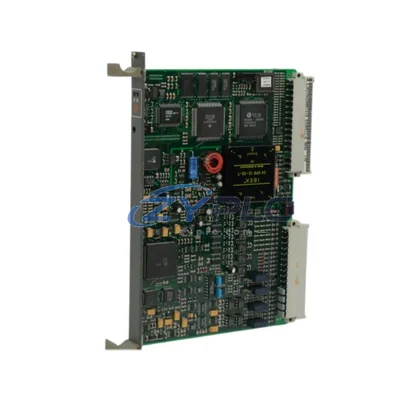
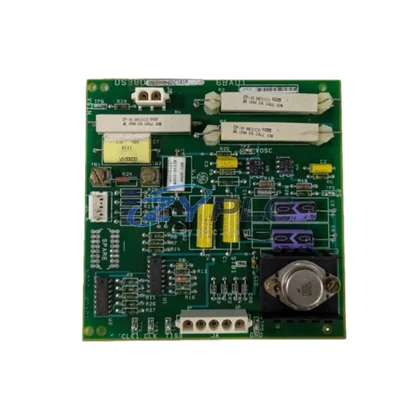
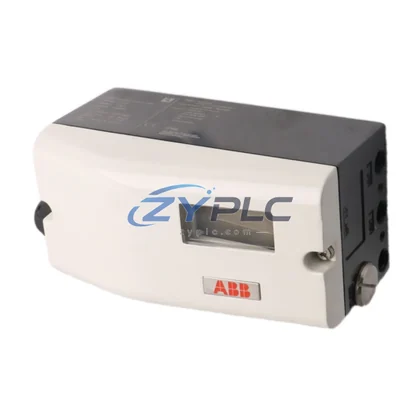
Yokogawa AIP171-S2 Industrial Network Interface for Centum VP Systems: Bridging the Industrial Data Link in Smart Factory Environments
The Yokogawa AIP171-S2 is a high-performance HART analog input module engineered for seamless integration within the Centum VP Distributed Control System (DCS). Designed to serve as a critical node in the industrial data chain, the AIP171-S2 enables reliable signal acquisition from field instruments, real-time protocol conversion, and transparent data delivery to supervisory control layers — making it an indispensable component for modern smart factory connectivity.
In today’s industrial landscape, the ability to bridge field-level devices with upper-level SCADA and HMI platforms is no longer optional — it is the foundation of operational intelligence. The AIP171-S2 fulfills this role by supporting the HART (Highway Addressable Remote Transducer) communication protocol over standard 4–20 mA analog signal lines, enabling simultaneous analog process data transmission and digital HART diagnostic communication without disrupting the primary control loop.
Compatibility & Integration Notes
| Specification |
Details |
| Communication Protocol |
HART (Highway Addressable Remote Transducer), 4–20 mA Analog |
| Interface Type |
Analog Input Module (AI), DCS Backplane Interface |
| Transmission Capability |
Simultaneous analog + digital HART communication; multi-drop capable |
| Network Compatibility |
Centum VP DCS, Centum CS 3000 (with adapter), HART-compatible field instruments |
| System Application |
Process control, remote diagnostics, SCADA integration, smart field device management |
| Channel Count |
16 channels (S2 variant) |
| Signal Range |
4–20 mA DC with HART superimposed signal |
| Isolation |
Channel-to-channel isolation for signal integrity |
| Mounting |
Centum VP I/O module nest (backplane-mounted) |
| Warranty |
Warranty and support terms confirmed before quote — Covered by ZYPLC quality assurance program |
Connected Automation Data Flow
Understanding the AIP171-S2’s role requires tracing the full data path from field sensor to enterprise system. At the field level, process transmitters — such as pressure, temperature, and flow sensors communicating over HART — connect directly to the AIP171-S2 input channels. The module reads both the primary analog variable (4–20 mA) and the HART digital payload simultaneously, forwarding structured process data to the Centum VP controller via the DCS backplane.
Within the Centum VP architecture, the AIP171-S2 works in close coordination with the CP451-10 field control station processor, which executes the control logic and manages data routing between I/O modules and the network. Alongside analog input modules like the AAI143-S00 (standard analog input) and the AAI543-S00 (analog input with HART for higher-density applications), the AIP171-S2 forms a layered I/O strategy that balances channel density, protocol support, and diagnostic depth.
For analog output control loops — such as valve positioners and variable frequency drives — the ADV151-P00 digital output module and ADV551-P00 analog output module complement the AIP171-S2 by closing the control loop from the DCS back to the field actuator. This bidirectional data flow — from sensor through AIP171-S2 to CP451-10 processor, then back through ADV551-P00 to the actuator — forms the backbone of a closed-loop process control network.
At the supervisory layer, the Centum VP system communicates with SCADA platforms and HMI workstations via the SCP451 system communication processor, which manages Ethernet-based data exchange between the DCS domain and the plant information network. HART device diagnostic data collected by the AIP171-S2 — including device status, loop integrity, and calibration alerts — is surfaced through the Centum VP Plant Resource Manager (PRM), enabling predictive maintenance workflows without requiring physical field access.
For plants integrating legacy Fieldbus or Profibus devices alongside HART instruments, the ANB10D communication module provides protocol bridging within the Centum VP environment, ensuring that the AIP171-S2’s HART data stream can coexist with other fieldbus segments on a unified DCS backbone. Power integrity for the entire I/O nest is maintained by the PW482-10 power supply module, which provides stable, redundant DC power to the backplane — a critical factor in maintaining HART signal quality and preventing communication dropouts.
In remote monitoring scenarios, edge gateways and OPC-UA servers aggregate data from the Centum VP system and relay it to cloud-based SCADA or MES platforms, enabling plant managers to monitor AIP171-S2-connected field devices from any location. The AIP827 HART multiplexer further extends the diagnostic reach by enabling simultaneous HART communication with multiple field devices across a shared communication path, reducing polling time and improving real-time visibility across large instrument loops.
Solving Data Isolation in Industrial Sites
One of the most persistent challenges in industrial automation is data isolation — the condition where field instruments, PLCs, DCS controllers, and enterprise systems operate in disconnected silos, preventing plant-wide visibility and real-time decision-making. The Yokogawa AIP171-S2 directly addresses this challenge by serving as the protocol-aware entry point for HART field data into the Centum VP DCS ecosystem.
Protocol Unification: Many industrial sites operate mixed instrument fleets — some devices communicating over legacy 4–20 mA analog, others over HART, and newer installations over Foundation Fieldbus or Profibus. The AIP171-S2’s native HART support allows plants to extract digital diagnostic data from HART-capable instruments without replacing existing analog wiring infrastructure, dramatically reducing the cost and risk of protocol migration.
Eliminating Data Silos: By channeling HART device data — including secondary variables, device health status, and loop diagnostics — directly into the Centum VP control database, the AIP171-S2 ensures that field-level intelligence is immediately available to SCADA operators, maintenance engineers, and process optimization algorithms. This eliminates the manual data collection workflows that create latency and error in traditional analog-only installations.
Remote Monitoring and Diagnostics: The AIP171-S2 enables continuous remote diagnostics for connected HART instruments. Loop integrity checks, device configuration verification, and alarm threshold monitoring can all be performed from the DCS engineering station or remote HMI without dispatching field technicians — reducing maintenance costs and improving response time to process anomalies.
Production Line Transparency: With AIP171-S2 modules deployed across multiple I/O nests in a Centum VP system, plant operators gain a unified, real-time view of all analog field devices — from raw material intake sensors to final product quality transmitters. This end-to-end visibility supports lean manufacturing, OEE (Overall Equipment Effectiveness) tracking, and regulatory compliance reporting.
System Scalability: The modular architecture of the Centum VP platform, combined with the AIP171-S2’s backplane-native design, allows plants to expand their I/O capacity incrementally. Additional AIP171-S2 modules can be added to existing nests as new instruments are commissioned, without requiring changes to the DCS software architecture or network topology.
Industrial Connectivity FAQ
Q1: What is the communication latency of the AIP171-S2 in a Centum VP DCS environment?
The AIP171-S2 operates within the Centum VP scan cycle, typically achieving analog data update rates in the range of 100–500 ms depending on system configuration and channel count. HART digital communication operates asynchronously and does not impact the primary analog control loop latency, ensuring that process control performance is maintained while diagnostic data is collected in the background.
Q2: Is the AIP171-S2 compatible with all HART-enabled field instruments?
Yes. The AIP171-S2 supports HART Protocol Revision 5 and 6, making it compatible with the vast majority of HART-enabled transmitters, positioners, and analyzers from leading manufacturers including Emerson, Endress+Hauser, ABB, and Yokogawa’s own EJA and EJX series transmitters. Multi-drop HART configurations are also supported for applications requiring multiple devices on a single loop.
Q3: How does the AIP171-S2 ensure network stability in high-noise industrial environments?
The AIP171-S2 incorporates channel-to-channel isolation and EMI filtering to maintain signal integrity in electrically noisy plant environments. The module’s backplane-mounted design eliminates external wiring between the I/O module and the DCS controller, reducing the risk of signal degradation. Yokogawa’s Centum VP platform also supports redundant I/O configurations, allowing a standby AIP171-S2 module to take over automatically in the event of a primary module failure.
Q4: What quality assurance and warranty coverage does ZYPLC provide for the AIP171-S2?
Every AIP171-S2 unit supplied by ZYPLC undergoes pre-shipment functional testing to verify communication integrity, channel accuracy, and HART protocol compliance before dispatch. Warranty terms are confirmed during quotation. ZYPLC maintains RFQ-based sourcing support of AIP171-S2 modules to support urgent project timelines and emergency replacement requirements globally.