YOKOGAWA AIP512 RIO Bus Connection Module: Industrial Data Link for CENTUM Smart Factory Networks
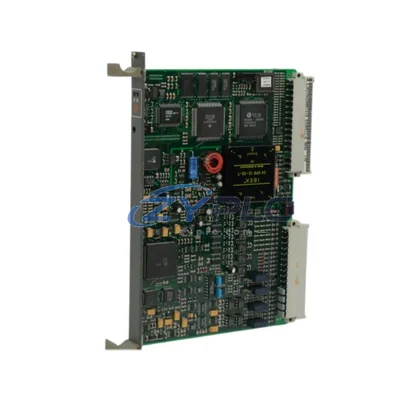
The YOKOGAWA AIP512 is a high-performance RIO (Remote I/O) Bus Connection Module engineered for seamless integration within YOKOGAWA’s CENTUM distributed control system (DCS) architecture. Designed to serve as a critical node in the industrial data chain, the AIP512 enables reliable, real-time communication between field-level devices and upper-level control and monitoring systems. Whether deployed in petrochemical plants, power generation facilities, pharmaceutical production lines, or advanced discrete manufacturing environments, the AIP512 delivers the network stability and protocol compatibility that modern smart factories demand.
Compatibility & Integration Notes
| Parameter |
Specification |
| SKU |
AIP512 |
| Brand |
YOKOGAWA |
| Series |
CENTUM DCS |
| Module Type |
RIO Bus Connection Module |
| Communication Protocol |
RIO Bus (Remote I/O Bus), proprietary YOKOGAWA high-speed serial |
| Interface Type |
RIO Bus port, backplane bus interface |
| Transmission Capability |
High-speed deterministic data transfer for real-time process control |
| Network Compatibility |
CENTUM VP, CENTUM CS 3000, CENTUM CS 1000 DCS platforms |
| System Application |
DCS I/O expansion, remote I/O node connection, field device integration |
| Product Category |
Industrial Network Interface / DCS Communication Module |
| Origin |
Japan |
| Warranty |
Warranty and support terms confirmed before quote |
Connected Automation Data Flow
In a fully integrated CENTUM DCS environment, the AIP512 acts as the backbone connector that bridges field instrumentation with the plant’s supervisory and control layers. At the field level, process sensors — including pressure transmitters, temperature sensors, and flow meters — feed analog and digital signals into remote I/O stations. The AIP512 collects these signals via the RIO Bus and transmits structured data packets upstream to the YOKOGAWA CENTUM VP Field Control Station (FCS), where real-time process logic is executed.
Within the same control network, the AIP512 works in concert with modules such as the YOKOGAWA AAI141 analog input module and the YOKOGAWA ADV151 digital input module, which handle signal conditioning at the I/O card level. The processed data is then made available to the YOKOGAWA HIS (Human Interface Station) — the operator workstation — where SCADA-level visualization, alarm management, and trend monitoring are performed in real time.
For plants requiring extended reach across large process areas, the AIP512 supports connection to YOKOGAWA RIO nodes installed at remote marshalling cabinets, effectively eliminating the need for long individual cable runs from each field device. This architecture reduces wiring costs, simplifies maintenance, and improves signal integrity across the entire plant network.
In multi-loop control scenarios, the AIP512 integrates with YOKOGAWA CENTUM VP Engineering Environment (CAMS for HIS) for alarm and event management, and with the YOKOGAWA Exaquantum plant information management system (PIMS) for historical data archiving and production KPI reporting. This end-to-end data flow — from field sensor through RIO bus, FCS, HIS, and PIMS — forms the digital backbone of a transparent, data-driven smart factory.
Where protocol conversion is required between the CENTUM DCS and third-party systems, the AIP512 can be paired with YOKOGAWA FA-M3 range-free multi-layer controllers or industrial protocol gateways supporting Modbus TCP, PROFIBUS DP, or EtherNet/IP, enabling seamless interoperability with variable frequency drives (VFDs), motor control centers (MCCs), and third-party PLC platforms such as Siemens S7 or Allen-Bradley ControlLogix. Edge computing nodes and industrial IoT gateways can further aggregate AIP512-sourced data for cloud-based analytics and remote diagnostics.
Solving Data Isolation in Industrial Sites
One of the most persistent challenges in legacy and hybrid industrial environments is data isolation — the inability to share real-time process information across different control systems, protocols, and network segments. The YOKOGAWA AIP512 directly addresses this challenge within CENTUM DCS architectures by providing a standardized, high-speed RIO Bus interface that consolidates field device data into a unified communication backbone.
Plants that previously relied on point-to-point wiring between individual field instruments and control panels faced significant limitations in scalability, diagnostics, and remote monitoring. By deploying the AIP512 as the RIO Bus connection node, engineers can aggregate data from dozens of I/O modules across multiple remote stations into a single, coherent data stream accessible to the FCS and HIS layers. This eliminates protocol fragmentation and ensures that operators have a single, consistent view of plant status across all process areas.
For facilities undergoing digital transformation, the AIP512 supports production line transparency by enabling real-time data visibility at every level of the ISA-95 automation hierarchy — from Level 0 field devices up through Level 3 MES and Level 4 ERP systems. Alarm rationalization, remote fault diagnostics, and predictive maintenance workflows all benefit from the reliable, low-latency data delivery that the AIP512 provides.
System expansion is equally straightforward: additional RIO nodes and I/O modules can be added to the network without disrupting existing control loops, making the AIP512 an ideal foundation for phased plant upgrades and capacity expansions. All units supplied by ZYPLC undergo pre-shipment functional testing and are Warranty terms are confirmed during quotation.
Industrial Connectivity FAQ
Q1: What communication protocol does the YOKOGAWA AIP512 use, and is it compatible with third-party systems?
The AIP512 uses YOKOGAWA’s proprietary high-speed RIO Bus protocol, optimized for deterministic, low-latency data transfer within CENTUM DCS systems (CENTUM VP, CS 3000, CS 1000). For integration with third-party PLCs, SCADA platforms, or Modbus/PROFIBUS devices, protocol gateways or YOKOGAWA’s FA-M3 controllers can be used as intermediary converters.
Q2: How does the AIP512 ensure network stability in high-noise industrial environments?
The AIP512 is designed to YOKOGAWA’s industrial-grade specifications, incorporating noise immunity measures suitable for process plant environments. The RIO Bus architecture uses shielded cabling and differential signaling to maintain signal integrity over extended distances, minimizing the impact of electromagnetic interference (EMI) from motors, VFDs, and high-voltage switchgear.
Q3: Can the AIP512 support system expansion without interrupting existing control operations?
Yes. The modular architecture of the CENTUM DCS platform allows additional RIO nodes and I/O modules to be added to the network with minimal disruption to running control loops. Hot-swap capabilities and redundant communication paths (where configured) further support non-disruptive expansion and maintenance activities.
Q4: What pre-shipment testing and warranty coverage does ZYPLC provide for the AIP512?
Every YOKOGAWA AIP512 unit supplied by ZYPLC undergoes pre-shipment functional verification to confirm communication integrity and module operability. Warranty terms are confirmed during quotation. For technical support, spare parts sourcing, or urgent delivery requirements, contact our team directly.