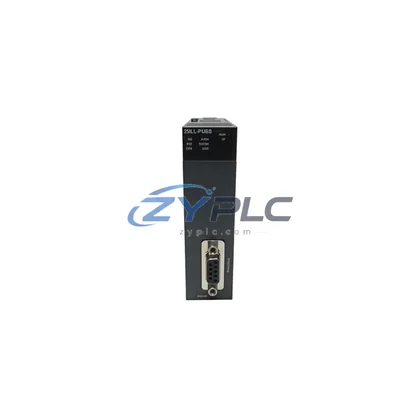
Yokogawa ALE111-S51: Industrial Data Link and Smart Factory Connectivity for STARDOM Systems
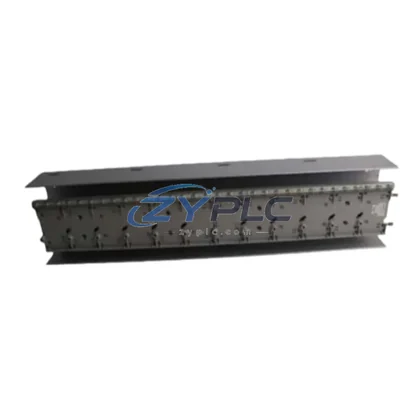
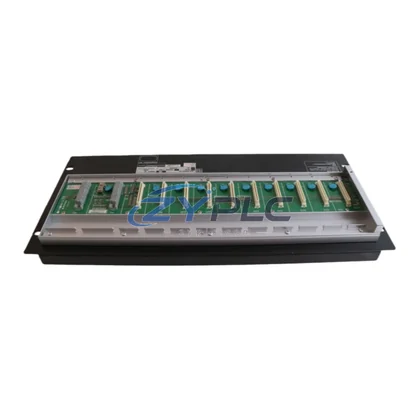
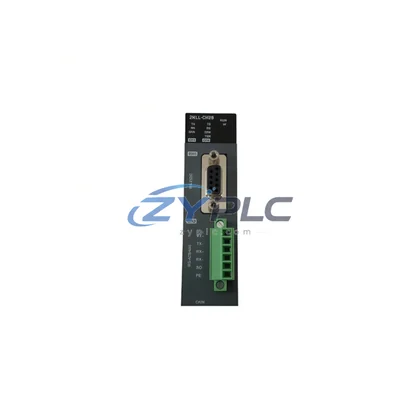
The Yokogawa ALE111-S51 is a high-performance Ethernet Communication Module engineered for seamless industrial network integration within the STARDOM FCN/FCJ controller platform. Designed to bridge field-level devices with supervisory control systems, the ALE111-S51 enables reliable, real-time data exchange across the full automation hierarchy — from sensors and actuators on the plant floor to SCADA servers, HMI workstations, and enterprise MES platforms in the control room.
In modern smart factory environments, the integrity of the data link between field instruments and upper-level systems is mission-critical. The ALE111-S51 addresses this challenge by providing a robust Ethernet communication interface that supports standard industrial protocols, ensuring that process variables, alarm states, and diagnostic data flow continuously and without interruption across the network. Whether deployed in oil and gas, chemical processing, power generation, water treatment, or discrete manufacturing, this module delivers the connectivity backbone that intelligent production demands.
Compatibility & Integration Notes
| Specification |
Details |
| SKU / Part Number |
ALE111-S51 |
| Brand |
Yokogawa |
| Series |
STARDOM FCN / FCJ |
| Module Type |
Ethernet Communication Module |
| Communication Protocol |
Ethernet/IP, Modbus TCP, OPC-UA (via STARDOM platform) |
| Interface Type |
RJ-45 Ethernet (10/100 Mbps) |
| Transmission Capability |
Real-time process data, alarm events, diagnostic telemetry |
| Network Compatibility |
Industrial Ethernet, TCP/IP, VLAN-capable infrastructure |
| System Application |
SCADA integration, HMI connectivity, DCS bridging, remote I/O polling |
| Origin |
Japan |
| Warranty |
12 Months |
| Availability |
RFQ Available — Global Shipping |
Connected Automation Data Flow
The ALE111-S51 sits at the heart of a layered industrial communication architecture. At the field level, process signals originate from transmitters, flow meters, pressure sensors, and temperature instruments wired into the STARDOM FCN autonomous controller. The FCN’s modular I/O subsystem — including analog input modules such as the AAI141-S00 and digital output modules like the ADO141-P50 — aggregates these signals and passes them to the ALE111-S51 for Ethernet encapsulation and upstream transmission.
Once on the Ethernet backbone, the ALE111-S51 communicates with STARDOM FCJ field control nodes deployed across distributed plant sections, enabling peer-to-peer data sharing without routing through a central DCS. This architecture is particularly valuable in geographically dispersed installations such as pipeline monitoring stations, remote pump houses, and offshore platforms where the STARDOM FAST/TOOLS SCADA software serves as the supervisory layer, collecting real-time tag data, trend histories, and alarm logs from multiple FCN/FCJ nodes simultaneously.
At the HMI level, operators interact with process data through Yokogawa FAST/TOOLS or third-party SCADA platforms via OPC-UA or Modbus TCP, both of which the ALE111-S51 supports through the STARDOM communication stack. For facilities running Yokogawa CENTUM VP distributed control systems alongside STARDOM nodes, the ALE111-S51 enables cross-platform data exchange, allowing CENTUM VP to poll STARDOM process variables as external tags — a critical capability for unified plant-wide visibility.
In drive and motor control applications, the ALE111-S51 facilitates network-level communication with Yokogawa VariFlex variable frequency drives and third-party inverters supporting Modbus TCP, enabling remote speed reference, torque feedback, and fault status monitoring without dedicated serial wiring. Similarly, smart field instruments equipped with HART or Foundation Fieldbus interfaces can be integrated via protocol gateways such as the Yokogawa YTA510 temperature transmitter or EJA110E differential pressure transmitter, with their digital process values forwarded through the ALE111-S51 to the SCADA historian.
Edge computing nodes and industrial IoT gateways — including platforms compatible with Yokogawa OpreX architecture — can subscribe to real-time data streams published by the ALE111-S51, enabling local analytics, predictive maintenance algorithms, and cloud forwarding without disrupting the primary control loop. This positions the ALE111-S51 as a foundational component in IIoT-enabled smart factory deployments where data latency, network reliability, and protocol interoperability are non-negotiable.
Solving Data Isolation in Industrial Sites
One of the most persistent challenges in industrial automation is the fragmentation of communication protocols across different generations of equipment. Legacy PLCs, proprietary DCS networks, and modern Ethernet-based systems often coexist on the same plant floor, creating data silos that prevent operators from achieving a unified operational picture. The Yokogawa ALE111-S51 directly addresses this by serving as a protocol-aware Ethernet gateway within the STARDOM platform, translating between field-level communication standards and IP-based supervisory networks.
Remote monitoring and diagnostics are equally critical in reducing unplanned downtime. With the ALE111-S51 maintaining a continuous Ethernet link between the FCN/FCJ controller and the SCADA server, maintenance engineers can remotely access controller diagnostics, review I/O module health status, and acknowledge alarms from any networked workstation — eliminating the need for on-site intervention for routine diagnostic tasks. This capability is especially valuable in hazardous area installations where physical access to control panels is restricted.
Production line transparency — the ability to see real-time KPIs, batch progress, and equipment status across the entire facility — is enabled by the ALE111-S51’s role as a reliable data conduit. By ensuring that process data reaches the SCADA historian without packet loss or communication timeouts, the module supports accurate OEE calculations, SPC analysis, and regulatory compliance reporting. System expansion is equally straightforward: additional FCN/FCJ nodes can be added to the Ethernet network and immediately recognized by the SCADA system, scaling the automation infrastructure without rewiring or protocol reconfiguration.
Every ALE111-S51 unit supplied by ZYPLC undergoes pre-shipment functional testing to verify Ethernet link establishment, protocol handshake integrity, and module self-diagnostics. Units are shipped with a warranty terms confirmed during quotation covering manufacturing defects and communication failures, backed by technical support for integration and commissioning queries.
Industrial Connectivity FAQ
Q1: What communication protocols does the Yokogawa ALE111-S51 support?
The ALE111-S51 supports Ethernet-based industrial protocols including Modbus TCP and Ethernet/IP within the STARDOM FCN/FCJ platform. OPC-UA connectivity is available through the STARDOM FAST/TOOLS SCADA software layer, enabling integration with third-party HMI and MES systems without additional protocol converters.
Q2: How does the ALE111-S51 ensure network stability in continuous process environments?
The module is designed for 24/7 operation in industrial environments, supporting standard Ethernet redundancy configurations when paired with managed industrial switches. The STARDOM FCN controller’s autonomous control capability ensures that local process control continues uninterrupted even during temporary network communication interruptions, preventing production impact from transient network events.
Q3: Can the ALE111-S51 be integrated with existing SCADA or DCS systems from other vendors?
Yes. Through Modbus TCP and OPC-UA (via FAST/TOOLS), the ALE111-S51 can exchange data with SCADA platforms from Wonderware, Ignition, Siemens WinCC, and other major vendors. For Yokogawa CENTUM VP environments, native integration is supported through Yokogawa’s cross-platform communication architecture.
Q4: What warranty and pre-shipment testing does ZYPLC provide for the ALE111-S51?
All ALE111-S51 units are covered by a warranty terms confirmed during quotation from the date of shipment. Prior to dispatch, each unit undergoes functional verification including Ethernet link testing, module initialization checks, and communication protocol handshake validation. Technical support for installation and SCADA integration is available throughout the warranty period.