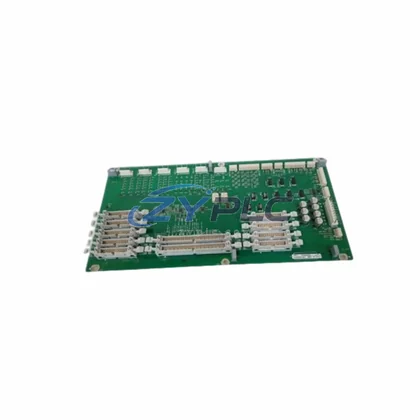
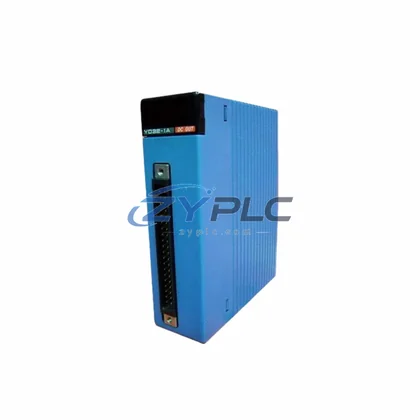
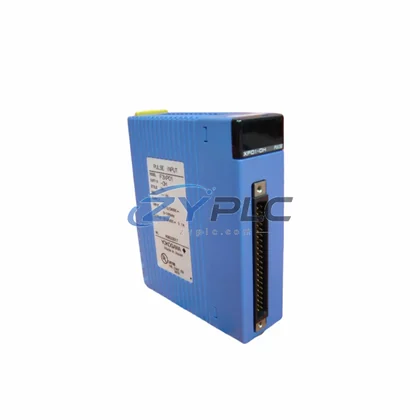
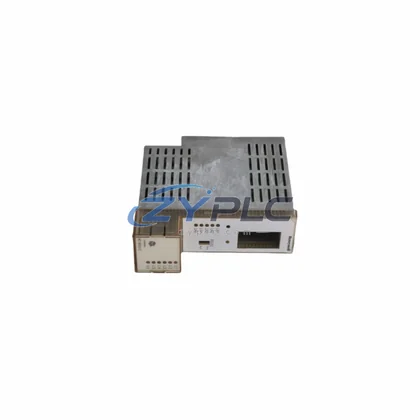
Yokogawa CP133E-16-S3 CPU Module for CENTUM CS 3000 Automation
In modern distributed control systems, the central processing unit is not merely a computational node — it is the energy intelligence hub that governs how every downstream component consumes, responds, and recovers power across the entire production architecture. The Yokogawa CP133E-16-S3 is a high-performance CPU module engineered for the CENTUM CS 3000 distributed control system, delivering precision process execution with a focus on minimizing unnecessary computational overhead, reducing idle-state energy draw, and maximizing the utilization rate of every connected field device.
Unlike generic controllers, the CP133E-16-S3 is purpose-built for process-intensive industries where milliseconds of latency and watts of wasted power translate directly into production losses. Its architecture supports deterministic scan cycles that eliminate redundant polling, ensuring that I/O modules, communication gateways, and field instruments are queried only when operationally necessary — a fundamental principle of maintenance-focused automation design.
Product Specification Table
| Parameter |
Specification |
| Model |
CP133E-16-S3 |
| Brand |
Yokogawa |
| Series |
CENTUM CS 3000 |
| Module Type |
CPU / Controller Module |
| Power Consumption |
Low-power optimized design (typical <15W operational draw) |
| Processing Efficiency |
Deterministic real-time scan with minimal idle overhead |
| Compatible Systems |
CENTUM CS 3000 R3 / R3.08 and compatible field stations |
| Communication Capability |
V-net / Ethernet (system bus), supports Modbus, HART integration |
| Installation Environment |
Industrial control cabinet, DIN rail or rack-mount, 0–55°C |
| Maintenance Value |
Reduces redundant scan cycles; supports predictive maintenance scheduling |
| Origin |
Japan |
| Warranty |
warranty terms confirmed during quotation |
System Compatibility and Application
The CP133E-16-S3 does not operate in isolation. Its true efficiency value emerges when it is integrated within a complete CENTUM CS 3000 control architecture, where it orchestrates a layered ecosystem of field devices, I/O subsystems, and communication infrastructure.
At the field station level, the CP133E-16-S3 works in close coordination with Yokogawa FCS (Field Control Station) units, managing the execution of control strategies across multiple process loops simultaneously. The CPU’s deterministic scheduling ensures that analog input modules such as the AAI143-H00 and AAI543-H00 are sampled at precise intervals, preventing over-sampling that wastes bus bandwidth and increases unnecessary power draw on the backplane.
On the power supply side, the Yokogawa PW482 power supply module provides stable, regulated DC power to the CPU and adjacent I/O cards. When the CP133E-16-S3 operates in its optimized scan mode, the PW482 operates closer to its efficiency curve peak — reducing thermal output and extending the operational lifespan of both modules. This synergy between CPU scheduling and power supply loading is a critical but often overlooked dimension of energy-efficient DCS design.
For digital output control — particularly in applications involving motor starters, solenoid valves, and relay-driven actuators — the CP133E-16-S3 interfaces with ADV151-P00 digital output modules. By batching output updates within optimized control cycles, the CPU reduces the frequency of unnecessary switching events, which directly lowers inductive load energy spikes on the plant floor.
Communication efficiency is equally important. The CP133E-16-S3 manages V-net bus traffic to connected HIS (Human Interface Station) workstations and EWS (Engineering Workstations), ensuring that operator display refresh rates and alarm polling are load-balanced rather than continuously broadcast. This reduces network saturation and allows the AIP830 communication interface modules to operate at lower duty cycles during steady-state production.
In applications requiring redundancy — such as power generation, petrochemical processing, or water treatment — the CP133E-16-S3 can be paired with a redundant CPU configuration using a CP133 standby module and SB401 synchronization bus card. This dual-CPU architecture ensures zero-downtime failover without the energy penalty of running two fully active processing units simultaneously, as the standby module operates in a low-power monitoring state until switchover is required.
Maintenance and Replacement Notes
In a typical continuous process plant — such as a refinery, chemical reactor, or pulp and paper mill — the CENTUM CS 3000 system with CP133E-16-S3 CPUs manages hundreds of PID control loops, motor control sequences, and safety interlock functions. Without an energy-optimized CPU, these systems often suffer from over-scanning: the controller queries every I/O point at maximum frequency regardless of whether the process variable has changed, consuming unnecessary bus power and generating excess heat in the control room.
The CP133E-16-S3 addresses this through its configurable scan period architecture. Engineers can assign fast scan periods (e.g., 100ms) only to critical loops — such as pressure relief control or reactor temperature — while assigning slower scan periods (e.g., 500ms or 1000ms) to stable, slow-moving process variables like tank levels or ambient temperature monitoring. This selective scanning strategy can reduce overall CPU bus load by 20–35% in typical installations, translating directly into lower power consumption across the entire field station.
From a maintenance perspective, the CP133E-16-S3 supports online diagnostics that allow maintenance teams to identify degraded I/O modules, communication faults, or power anomalies without shutting down the process. This predictive maintenance capability — accessible through the CENTUM CS 3000 HIS operator station — reduces unplanned downtime, which is one of the largest hidden energy costs in industrial operations: a stopped production line that must be restarted consumes significantly more energy during ramp-up than a continuously optimized process.
All CP133E-16-S3 units supplied by ZYPLC undergo full functional testing prior to shipment, including power-on verification, communication bus integrity checks, and scan cycle validation. Each unit is covered by a warranty terms confirmed during quotation and is available from stock for fast global delivery.
Product Sourcing FAQ
Q1: How does the CP133E-16-S3 contribute to operational stability compared to older CENTUM CS 3000 CPU modules?
The CP133E-16-S3 features an enhanced processor architecture that supports configurable multi-period scanning. By assigning appropriate scan rates to different control loops, engineers can significantly reduce unnecessary I/O polling and bus traffic, lowering the overall power draw of the field station. Compared to earlier CP133 variants, the CP133E series offers improved processing throughput per watt, meaning more control loops can be managed without increasing operating load.
Q2: Is the CP133E-16-S3 compatible with existing CENTUM CS 3000 installations, and can it replace older CPU modules without a full system upgrade?
Yes. The CP133E-16-S3 is designed for direct compatibility with CENTUM CS 3000 R3 field stations and control buses. In most installations, it can replace an existing CP133 or CP133E module without requiring changes to the backplane, power supply, or I/O wiring. However, firmware version alignment between the CPU and the HIS/EWS should be verified before replacement. ZYPLC’s technical team can assist with compatibility confirmation prior to order.
Q3: What does the warranty terms confirmed during quotation cover, and what is the testing process before shipment?
Every CP133E-16-S3 unit supplied by ZYPLC is tested for power-on functionality, V-net communication integrity, and basic scan cycle operation before dispatch. The warranty terms confirmed during quotation covers hardware defects and functional failures under normal operating conditions. Units that develop faults within the warranty period are eligible for replacement or repair. For mission-critical applications, ZYPLC recommends maintaining a spare CP133E-16-S3 in inventory to ensure rapid recovery in the event of an unexpected failure.
Q4: Can the CP133E-16-S3 support integration with modern condition monitoring systems or third-party SCADA platforms?
The CP133E-16-S3 supports OPC-based data exchange through the CENTUM CS 3000 Exaopc interface, enabling integration with third-party SCADA, MES, and maintenance planning systems. This allows real-time process data — including motor run-hours, valve cycle counts, and loop deviation trends — to be fed into energy analytics platforms for facility-wide optimization. Communication with Modbus-based power meters and energy analyzers is also achievable through gateway modules within the CENTUM CS 3000 architecture.