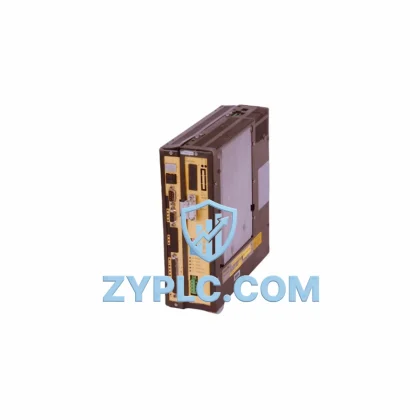
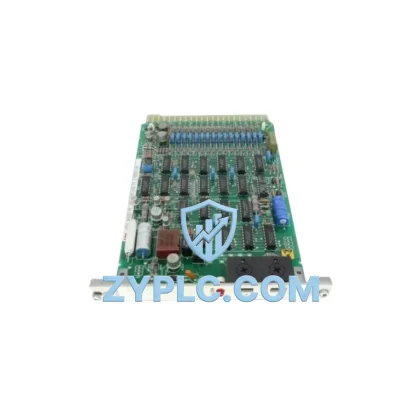
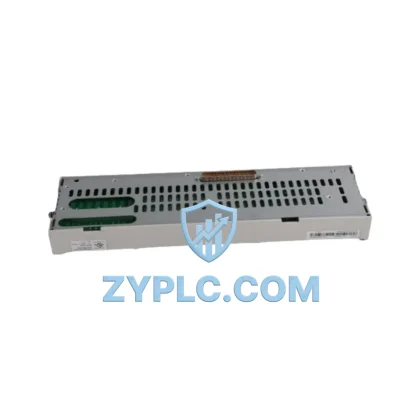
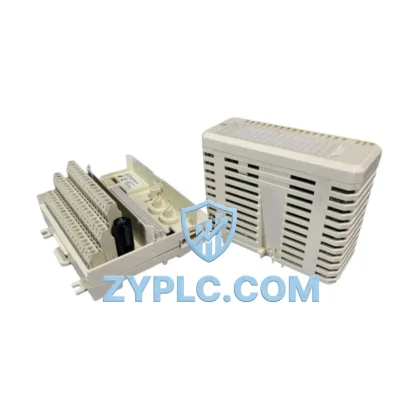
Yokogawa CP401-10 CPU Controller for CENTUM Automation
The Yokogawa CP401-10 is a high-performance CPU Controller engineered for the CENTUM CS and CENTUM CS3000 Distributed Control System (DCS) platform. Designed to meet the rigorous demands of continuous process industries — including petrochemical, power generation, pulp and paper, and pharmaceutical manufacturing — the CP401-10 delivers precise, low-latency control execution that directly translates into stable operating performance, unplanned downtime, and maintenance overhead.
In modern industrial facilities, the CPU controller is the nerve center of the entire automation architecture. The CP401-10 manages real-time scan cycles, coordinates I/O communication across field devices, and executes control algorithms that govern everything from valve positioning to motor speed regulation. When this core component operates at peak efficiency, every downstream element — from variable frequency drives to power monitoring modules — benefits from cleaner, more responsive control signals, reducing unplanned downtime at every stage of the production loop.
Product Specification Table
| Parameter |
Specification / Value |
| SKU |
CP401-10 |
| Brand |
Yokogawa |
| Series |
CENTUM CS / CS3000 |
| Product Category |
DCS CPU Controller |
| Origin |
Japan |
| Control Scan Cycle |
High-speed real-time execution |
| Compatible Systems |
CENTUM CS, CENTUM CS3000 DCS |
| Application Environment |
Petrochemical, Power, Pharmaceutical, Pulp & Paper |
| Maintenance Value |
Reduces idle processing load; enables demand-responsive control loops |
| Communication Support |
Vnet/IP, RS-232C, Ethernet (system-dependent) |
| Warranty |
12 Months |
| Stock Status |
Available — ships globally |
| Testing |
Outgoing functional test performed before shipment |
System Compatibility and Application
The CP401-10 does not operate in isolation — its true maintenance planning value emerges when it is integrated within a well-designed CENTUM automation architecture. In a typical high-efficiency plant configuration, the CP401-10 CPU Controller coordinates with the Yokogawa EJX110A differential pressure transmitter to monitor flow rates across process lines, enabling the control system to dynamically adjust pump and compressor output rather than running equipment at fixed, energy-intensive setpoints.
On the drive side, the CP401-10 issues speed reference commands to Yokogawa VariFlex V1000-series variable frequency drives (VFDs), which regulate AC motor speed in proportion to actual process demand. This closed-loop motor control strategy — where the CPU Controller reads process variables and adjusts drive output in real time — is one of the most effective methods for reducing electrical operating load in pump, fan, and compressor applications, often yielding Actual operating results depend on the installed system, load profile, and commissioning parameters.
For power quality and operating load visibility, the CP401-10 integrates with Yokogawa WT series power analyzers and dedicated condition monitoring I/O modules such as the AAI141-S00 analog input module, which captures current and voltage signals from field instrumentation. These readings feed directly into the DCS historian and maintenance planning dashboards, giving plant engineers the data they need to identify inefficient equipment, schedule predictive maintenance, and validate operational-efficiency initiatives.
The CP401-10 also works in concert with Yokogawa STARDOM FCN/FCJ field controllers deployed at remote substations, enabling a distributed yet centrally coordinated maintenance planning strategy. Communication between the CP401-10 and remote nodes is handled via Vnet/IP, Yokogawa’s high-speed, deterministic control network, ensuring that energy setpoint changes propagate across the plant with minimal latency.
On the human-machine interface layer, operators interact with the CP401-10’s control outputs through Yokogawa FAST/TOOLS SCADA software or the integrated HIS (Human Interface Station) of the CENTUM CS3000 system. Real-time energy dashboards, alarm management, and trend displays allow operators to respond immediately to abnormal operating load patterns — reducing the duration and frequency of energy spikes caused by process upsets.
For safety-critical applications where energy efficiency must not compromise process integrity, the CP401-10 is often deployed alongside the Yokogawa ProSafe-RS Safety Instrumented System (SIS), which provides independent safety shutdown logic without interfering with the DCS maintenance planning routines. This dual-layer architecture ensures that efficiency gains are never achieved at the expense of operational safety.
Maintenance and Replacement Notes
In a refinery or chemical plant running continuous processes 24 hours a day, even marginal improvements in control loop efficiency translate into significant annual operational stability. The CP401-10 contributes to this outcome in several concrete ways.
First, its high-speed scan cycle minimizes control lag — the delay between a process deviation and the corrective control action. Shorter lag means less overshoot, fewer oscillations, and more stable operation of energy-intensive equipment such as compressors and heat exchangers. Stable operation reduces the frequency of emergency shutdowns and the associated energy costs of restarting heavy machinery.
Second, the CP401-10 supports advanced control strategies including cascade control, feedforward compensation, and model-based predictive control (when integrated with Yokogawa’s Exaquantum plant information management system). These strategies allow the DCS to anticipate process disturbances and adjust energy inputs proactively, rather than reacting after the fact — a key principle of energy-efficient process management.
Third, by maintaining precise control over motor-driven equipment through coordinated VFD commands, the CP401-10 helps plants avoid the energy penalty of mechanical throttling — a common but wasteful practice in facilities that lack proper variable-speed drive integration. Plants that have migrated from throttle-valve control to VFD-based control coordinated by a CENTUM DCS CPU module like the CP401-10 consistently report reductions in pump and fan operating load of Actual operating results depend on the installed system, load profile, and commissioning parameters.
From a maintenance perspective, the CP401-10’s diagnostic capabilities allow maintenance teams to monitor CPU load, communication health, and I/O module status in real time. Early detection of degraded modules — such as a failing ADV151-P00 digital input module or a communication fault on an ALR111 alarm module — prevents unplanned shutdowns that disrupt production schedules and waste energy through uncontrolled restarts. All units supplied by ZYPLC undergo outgoing functional testing and are backed by a 12-month warranty, ensuring that replacement modules perform to specification from day one.
Product Sourcing FAQ
Q1: How does the CP401-10 contribute to operational stability in a CENTUM DCS environment?
The CP401-10 executes control algorithms that regulate process variables — flow, pressure, temperature — with high precision and low latency. By maintaining tighter control bands, it reduces the unplanned downtimed by equipment operating outside optimal setpoints. When paired with VFDs and power monitoring I/O modules, it enables closed-loop maintenance planning across the entire production line.
Q2: Is the CP401-10 compatible with both CENTUM CS and CENTUM CS3000 systems?
Yes. The CP401-10 is designed for use within the CENTUM CS and CENTUM CS3000 DCS platforms. Before installation, it is recommended to verify firmware revision compatibility with your existing system configuration. ZYPLC’s technical team can assist with compatibility assessment prior to purchase.
Q3: What is the recommended replacement or upgrade path for aging CP401-10 units?
For facilities running legacy CENTUM CS systems, the CP401-10 remains the correct replacement module. For plants considering migration to CENTUM VP, Yokogawa offers a structured migration path that preserves existing control logic while enabling access to newer maintenance planning features. ZYPLC maintains stock of CP401-10 units to support both direct replacement and phased migration strategies.
Q4: What testing and warranty coverage does ZYPLC provide for the CP401-10?
Every CP401-10 unit shipped by ZYPLC undergoes a pre-shipment functional test to verify operational integrity. All units are covered by a 12-month warranty from the date of shipment. In the event of a warranty claim, ZYPLC provides technical support and replacement coordination to minimize production impact.
© 2026 ZYPLC. All rights reserved.
Original Source: https://zyplc.com
Contact: +86 19859288691 | plc.sales@zyplc.com