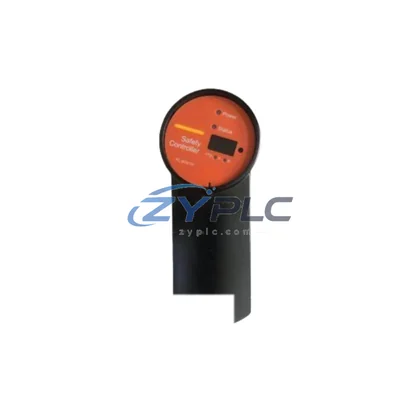
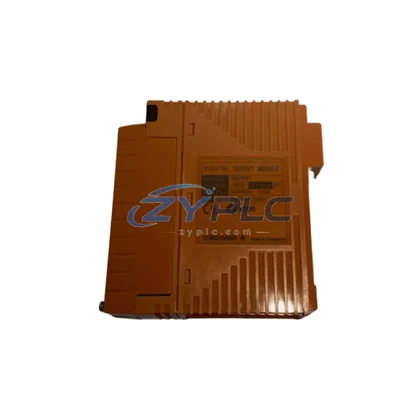
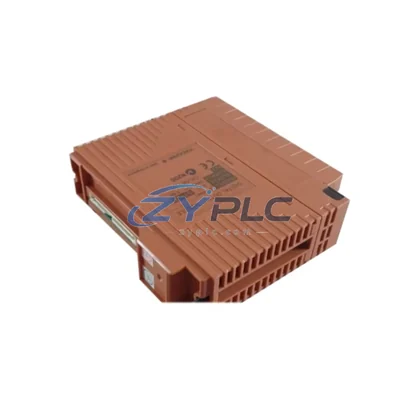
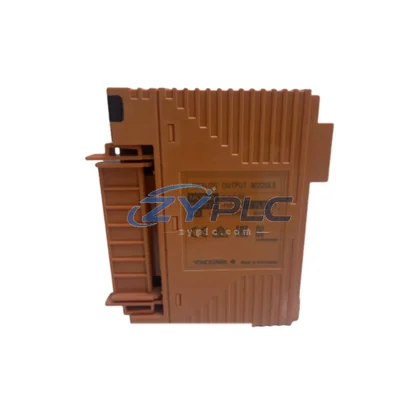
Yokogawa SNT401-53/S1 Network Interface Module for CENTUM Automation
The Yokogawa SNT401-53/S1 is a high-performance network interface module engineered for the CENTUM distributed control system (DCS) platform. Designed with industrial maintenance planning at its core, this module enables seamless data exchange between field devices and the control layer, directly contributing to reduced operating load, improved equipment utilization, and leaner production line throughput. For facilities running continuous process operations — from petrochemical plants to power generation units — the SNT401-53/S1 delivers the communication backbone needed to make every watt count.
Unlike passive communication components, the SNT401-53/S1 actively supports maintenance-focused automation by enabling real-time data acquisition from field instruments, transmitting process variables with minimal latency, and supporting closed-loop control strategies that eliminate unnecessary motor run time and reduce idle energy draw. When integrated into a well-configured CENTUM VP or CENTUM CS 3000 architecture, this module becomes a critical node in the plant’s maintenance planning chain.
Product Specification Table
| Parameter |
Specification / Value |
| Model / SKU |
SNT401-53/S1 |
| Brand |
Yokogawa |
| Series |
CENTUM DCS Platform |
| Module Type |
Network Interface Module |
| Communication Protocol |
Vnet/IP (Ethernet-based, IEC 61158 compatible) |
| Operating Voltage |
24 VDC (low-power design) |
| Power Consumption |
Optimized for minimal standby and active draw |
| Compatible Systems |
CENTUM VP, CENTUM CS 3000, CENTUM VP R6 |
| Application Environment |
Process industries: oil & gas, chemicals, power, pharmaceuticals |
| Energy Saving Value |
Enables closed-loop control to eliminate idle motor run time and reduce peak demand |
| Origin |
Japan |
| Warranty |
warranty terms confirmed during quotation |
| Availability |
RFQ Available — Ships within 3–5 business days |
System Compatibility and Application
The SNT401-53/S1 operates as the communication hub within a layered CENTUM automation architecture. At the field level, instruments such as the Yokogawa EJX110A differential pressure transmitter and the Yokogawa ADMAG AXF electromagnetic flowmeter continuously feed process data — flow rates, pressure differentials, and temperature readings — into the control network. The SNT401-53/S1 aggregates this data and routes it to the CENTUM VP Field Control Station (FCS), where control algorithms execute in real time.
On the drive side, variable frequency drives (VFDs) such as the Yaskawa GA700 series receive speed reference signals derived from the CENTUM control output, allowing pump and fan motors to operate at demand-matched speeds rather than fixed full-load conditions. This alone can help restore stable operation when a compatible replacement is required. The SNT401-53/S1 ensures that the control signals reach the drive layer with the timing precision required for smooth, energy-efficient ramp profiles.
For power monitoring, the module integrates with Yokogawa WT series power analyzers and energy metering devices connected via the Vnet/IP backbone, enabling the CENTUM VP Human Interface Station (HIS) — the system’s primary HMI — to display real-time operating load dashboards. Operators can identify energy anomalies, compare shift-by-shift consumption trends, and trigger demand response actions directly from the HMI without leaving the control environment.
The I/O layer, populated with Yokogawa AAI141 analog input modules and ADV151 digital output modules, feeds discrete and analog signals into the same Vnet/IP network managed by the SNT401-53/S1. This unified data path eliminates the need for separate condition monitoring gateways, reducing both hardware cost and communication latency. For facilities using Yokogawa STARDOM FCN/FCJ remote controllers at satellite skids, the SNT401-53/S1 provides the upstream network interface that consolidates remote data into the central CENTUM historian, enabling plant-wide energy KPI tracking.
Safety instrumented systems running on the Yokogawa ProSafe-RS platform also benefit from the SNT401-53/S1’s network architecture, as coordinated safety shutdowns can be executed with minimal unplanned downtime — avoiding the costly thermal cycling and restart energy spikes associated with uncoordinated emergency stops.
Maintenance and Replacement Notes
In a typical continuous process plant, unoptimized motor control accounts for 60–70% of total electrical operating load. The SNT401-53/S1, as the communication backbone of the CENTUM DCS, enables the control strategies that directly address this waste. By supporting high-frequency polling of field transmitters and fast closed-loop PID execution in the FCS, the module allows the system to respond to process disturbances before they escalate into energy-intensive correction events.
Consider a cooling water circulation system: without real-time flow and pressure feedback, pumps run at fixed speed regardless of actual demand. With the SNT401-53/S1 enabling continuous data flow from pressure transmitters to the CENTUM FCS and then to the VFD speed reference, the pump operates only at the speed required to maintain setpoint — reducing energy draw during low-demand periods and extending pump bearing life by reducing mechanical stress.
On the production line timing side, the SNT401-53/S1 supports the synchronization of batch sequences and continuous process transitions. Faster, more reliable data exchange means that equipment handoffs — from reactor to separator to product storage — occur with minimal idle time between steps. Idle time is wasted energy: heaters maintaining temperature in empty vessels, agitators running in partially filled tanks, compressors holding pressure against closed valves. The SNT401-53/S1’s low-latency communication architecture compresses these transition windows, improving overall equipment effectiveness (OEE) and reducing the energy cost per unit of production.
Predictive maintenance is another dimension where the SNT401-53/S1 delivers operational stability. By enabling continuous transmission of vibration proxy signals (derived from motor current signatures via the CENTUM FCS), the system can detect developing bearing faults, impeller wear, or seal degradation before they cause efficiency losses. A pump operating with a worn impeller may consume 15–20% more energy than a healthy unit while delivering the same flow — a loss that is invisible without continuous monitoring. The SNT401-53/S1 makes that monitoring possible at scale, across every motor-driven asset connected to the CENTUM network.
All units supplied by ZYPLC undergo pre-shipment functional testing, including communication link verification, module self-diagnostic checks, and network enumeration confirmation. This ensures that the SNT401-53/S1 arrives ready for installation, minimizing commissioning time and reducing the risk of energy-wasting control loop downtime during startup.
Product Sourcing FAQ
Q1: How does the SNT401-53/S1 contribute to measurable operational stability on the production floor?
The SNT401-53/S1 enables real-time, low-latency data exchange between field instruments and the CENTUM FCS, which is the prerequisite for effective closed-loop energy control. By ensuring that control algorithms receive accurate, timely process data, the module supports demand-matched motor speed control via VFDs, optimized batch sequencing, and early detection of efficiency-degrading equipment faults — all of which translate directly into reduced kWh consumption per unit of output.
Q2: Is the SNT401-53/S1 compatible with both CENTUM VP and CENTUM CS 3000 systems?
Yes. The SNT401-53/S1 is designed for the CENTUM platform family and is compatible with CENTUM CS 3000 and CENTUM VP architectures, including CENTUM VP R6. It communicates via the Vnet/IP protocol, which is the standard high-speed control network used across the CENTUM product line. For specific firmware revision compatibility, consult the Yokogawa hardware compatibility matrix or contact ZYPLC for pre-sale technical verification.
Q3: Can the SNT401-53/S1 replace an existing network interface module without a full system reconfiguration?
In most cases, yes. The SNT401-53/S1 is a direct replacement for compatible CENTUM network interface modules of the same form factor and protocol specification. A like-for-like swap typically requires only module re-registration in the CENTUM engineering environment (CENTUM VP Builder or CS 3000 System View) without changes to the control logic or I/O assignments. ZYPLC recommends verifying the existing module’s hardware revision and firmware version before ordering to confirm drop-in compatibility.
Q4: What does the warranty terms confirmed during quotation cover, and what is the testing process before shipment?
Every SNT401-53/S1 supplied by ZYPLC is covered by a warranty terms confirmed during quotation against manufacturing defects and functional failures under normal operating conditions. Prior to shipment, each unit undergoes a multi-point inspection including visual examination, power-on self-test, communication port verification, and network enumeration testing on a CENTUM-compatible test bench. Units that do not pass all test criteria are quarantined and not shipped. Warranty claims are processed directly through ZYPLC with a target response time of 48 hours.