
ZYPLC Blog
EV Charging Spare Lead Times: Controllers, OCPP Gateways, and Field Kits
The June 25, 2026 CISA advisory for EVoke Systems Charging Station Management System is a useful signal for procurement teams watching the spread of networked EV charging infrastructure. The advisory focuses on CSMS and WebSocket/OCPP-related weaknesses, but the supply-chain lesson is broader. When chargers, gateways, meters, and backend platforms become operationally important, spare lead times […]
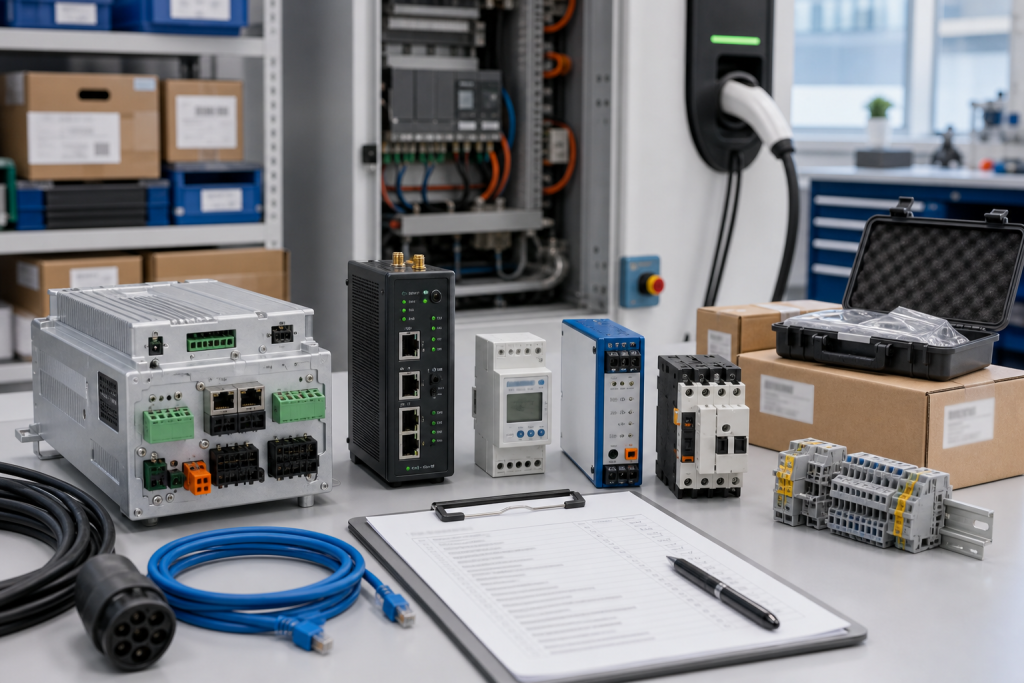
The June 25, 2026 CISA advisory for EVoke Systems Charging Station Management System is a useful signal for procurement teams watching the spread of networked EV charging infrastructure. The advisory focuses on CSMS and WebSocket/OCPP-related weaknesses, but the supply-chain lesson is broader. When chargers, gateways, meters, and backend platforms become operationally important, spare lead times need to be ranked before a site outage or security review forces the issue.
EV charging assets are often purchased through facility, fleet, energy, or project budgets rather than through the normal automation spare-parts process. That can leave maintenance with weak records: charger model, controller board, gateway, modem, meter, firmware, accessories, and backend ownership may not be documented in one place. ZYPLC sees the same pattern with other distributed automation assets. The installed base grows faster than the spare plan.
Rank the charging system by recovery consequence
Start with function. Which chargers support critical fleet dispatch, emergency vehicles, production logistics, employee transportation, or energy management commitments? Which sites are remote or hard to access? Which chargers can operate locally if the backend is unavailable? Those answers define Class A, B, and C spare priority.
Class A items are high consequence and hard to replace quickly. They may include charger controllers, OCPP gateways, cellular routers, power meters, contactors, power supplies, and site-specific accessory kits. Class B items have alternatives but require engineering or vendor approval. Class C items are lower consequence or easy to source. This ranking fits naturally with ZYPLC’s lead time and supply approach.
Lead time is not only the main controller
A charger controller can be available while the gateway, antenna, SIM detail, terminal connector, meter, or mounting accessory is not. For field recovery, a kit is often more useful than a single device. The kit should reflect the installed environment: indoor depot, outdoor parking lot, remote utility area, or high-traffic industrial site.
Communication details deserve special attention. OCPP gateway, router, modem, Ethernet switch, SIM card, carrier band, firewall approval, and backend registration can all affect recovery. Procurement should write down what is known and what remains unknown. Hidden uncertainty turns into email delay during a maintenance window.
How to structure the RFQ
A strong RFQ includes charger model photos, controller label, gateway label, quantity, condition requirement, required date, destination, accessory scope, and whether the request is for emergency stock, preventive stock, or a CSMS mitigation window. If substitutes can be reviewed, define which details cannot change: voltage, communication protocol, mounting, cabinet fit, firmware range, or backend compatibility.
Condition matters. Factory sealed, new surplus, refurbished, and tested used parts carry different risk. For Class A sites, buyers should request photos, accessory confirmation, packing details, and dispatch timing. For export orders, include receiving site and any customs description requirements early. ZYPLC’s export and logistics guidance is relevant when multiple depots or plants are ordering together.
Do not compare quotes only by price. A cheaper gateway with unknown region or missing antenna may not restore service. A slightly higher quote with verified model, accessories, and realistic shipping may be the better maintenance decision.
Keep the list alive after the first review
Charger networks change quickly. New stations are added, backend providers change, firmware updates arrive, and carrier arrangements shift. Review the Class A list monthly or after any advisory, outage, or platform change. Update stock status and supplier confidence, not just model numbers.
Use the request quote workflow when the priority list is ready. Send the highest-risk items first with photos and deadline. That gives suppliers a better chance to provide usable availability rather than generic matches.
Procurement should also record supplier confidence. A quote with actual photos, confirmed accessories, and a realistic dispatch date is stronger than a line that only repeats the model number. For high-priority charger sites, track which suppliers can confirm region, gateway type, and accessory scope quickly. That record saves time when another charger fails or another CSMS notice arrives.
Receiving inspection should be part of the lead-time plan. Open the kit, compare model labels, check connector condition, verify accessory count, and label the package by site or charger family. If backend registration or SIM activation is still required, write that on the spare record so maintenance does not mistake delivered hardware for ready hardware.
It is also worth grouping charger spares by region. A gateway, modem, or cellular accessory that works in one country may not work in another. If the company operates multiple depots, mark regional compatibility clearly before stock is shared across sites.
FAQ
Should EV charging spares be managed like industrial automation spares?
Yes, when chargers support fleet, utilities, energy operations, or site availability. They are networked field assets with hardware and configuration dependencies.
What charging spares usually deserve priority?
Controllers, OCPP gateways, routers, meters, contactors, power supplies, antennas, terminal kits, and site-specific communication accessories usually deserve early review.
Can we buy only one universal charger controller?
Only if engineering confirms compatibility across charger family, firmware, backend registration, voltage, accessories, and site communication requirements.
What should be included in a charger spare RFQ?
Include model photos, gateway details, quantity, condition requirement, kit scope, destination, deadline, and whether alternatives can be reviewed.
If your team is ranking EV charging spare lead times after a CSMS security review, send ZYPLC the installed photos, site priority, quantities, and delivery requirements. We can help separate urgent field kits from lower-risk stock.
© 2026 ZYPLC. All rights reserved. Official Website: https://zyplc.com Inquiry: plc.sales@zyplc.com | WhatsApp/Tel: +86 19859288691
Continue reading
Related sourcing guides
 Jun 26, 2026
Schneider PowerLogic P7 Advisory: Ranking Relay Spares by Outage Risk
CISA’s June 25, 2026 advisory for Schneider Electric PowerLogic P7 should be read by more than cybersecurity teams. The advisory lists vulnerabilities that can affect availability and configuration functionality, and Schneider points users to firmware version V02.004.001. For procurement and reliability teams, the practical issue is lead-time risk: if a protection relay needs firmware work, […]
 Jun 25, 2026
ControlLogix L6x Lead-Time Risk: Which Spares Deserve Priority First
For many factories, ControlLogix L6x hardware is no longer a simple reorder item. The platform has been reliable enough to remain installed, but lifecycle status, exact-match availability, and global spare demand make the lead-time question more important in 2026. A purchasing team should not wait for a failed processor or communication card to discover which […]