
ZYPLC Blog
Schneider PowerLogic P7 Advisory: Ranking Relay Spares by Outage Risk
CISA’s June 25, 2026 advisory for Schneider Electric PowerLogic P7 should be read by more than cybersecurity teams. The advisory lists vulnerabilities that can affect availability and configuration functionality, and Schneider points users to firmware version V02.004.001. For procurement and reliability teams, the practical issue is lead-time risk: if a protection relay needs firmware work, […]
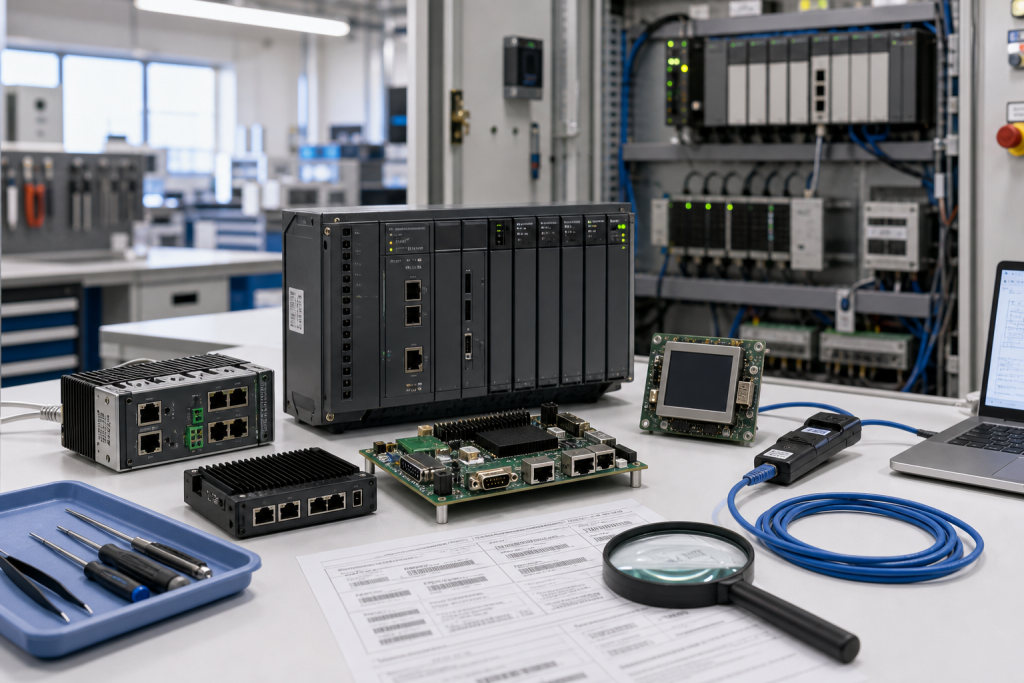
CISA’s June 25, 2026 advisory for Schneider Electric PowerLogic P7 should be read by more than cybersecurity teams. The advisory lists vulnerabilities that can affect availability and configuration functionality, and Schneider points users to firmware version V02.004.001. For procurement and reliability teams, the practical issue is lead-time risk: if a protection relay needs firmware work, replacement, or rollback support, do you know which spare should be ready first?
Protection relays are easy to undercount in automation spare programs. PLC modules and HMI panels appear in the normal maintenance register, while electrical protection devices may sit in a separate list owned by the electrical department. That separation becomes a problem when a firmware advisory creates an outage window. The plant needs backups, test equipment, relay spares, communication notes, and electrical approval aligned before work begins.
Rank relay assets by consequence first
Start with the installed population. Record each PowerLogic P7 or related protection device by location, function, firmware, criticality, feeder or asset protected, communication role, and backup status. A relay protecting a main incomer, transformer, generator, or critical motor deserves higher priority than a relay on a noncritical auxiliary panel. The model number matters, but consequence should drive the first ranking.
ZYPLC recommends using a simple A/B/C priority structure. Class A relays have high production or safety consequence, long sourcing lead time, or weak backup quality. Class B relays have alternatives or planned access windows but still require engineering approval. Class C relays are lower consequence or already covered by tested before shipment. This structure fits naturally with lead time and supply planning because it helps purchasing act before the outage date is fixed.
Firmware work changes spare requirements
A relay firmware update may require reboot, testing, configuration backup, and validation. That means the spare decision is not only about the physical relay. The plant should know whether the configuration file is current, who owns the protection settings, which test set is required, and what proof is needed before returning the relay to service. If the firmware update fails or the device becomes unavailable, the spare must be more than a box on the shelf.
Ask whether a prepared spare can be configured offline. For high-consequence assets, it may be useful to prepare a replacement relay with the correct firmware and documented settings under engineering control. For lower-risk assets, holding a tested exact spare may be enough. In both cases, the spare record should include firmware, configuration reference, and commissioning owner.
What procurement should collect
A useful RFQ includes full model, firmware, option details, photos, quantity, condition requirement, destination, deadline, and whether the part is for emergency stock, planned firmware work, or long-term shelf stock. If an exact match is required, say so. If engineering can review a compatible alternative, define what can vary and what cannot.
Condition language is important. A tested used relay, new surplus relay, or factory-supported replacement may all be acceptable in different situations. Price alone does not describe risk. Ask for photos, condition statement, accessories, terminal details, warranty, and realistic dispatch timing. For export orders, specify packing and receiving requirements early.
Use ZYPLC’s request quote workflow when the relay priority list is ready. Mark Class A items first and attach the clearest photos. That helps suppliers focus on the spares that protect the outage window.
Keep the electrical and automation teams connected
Relay work often crosses team boundaries. Electrical engineers own protection settings. Automation teams may own SCADA links, communication networks, or HMI visibility. Procurement owns availability and delivery. If those teams do not share the same evidence, the plant may buy a relay that is correct physically but not ready operationally.
After the advisory response, keep the priority list alive. Relay spare availability can change, and firmware windows may move. A monthly review of Class A and Class B items is much easier than rebuilding the list during a shutdown. ZYPLC’s maintenance planning notes can help structure this as a repeatable spare-review habit.
Receiving inspection should be assigned before the order ships. The warehouse can check packing and visible damage, but an electrical owner should confirm model, options, terminal arrangement, firmware note, and configuration reference. If the spare is for a protection function, do not bury it in general stores without a relay-specific label. The label should tell maintenance which panel, feeder, or asset the spare is intended to support.
Lead-time notes should also capture uncertainty. If a supplier can quote the relay but not confirm firmware or accessories, mark the offer as conditional. That gives engineering a fair comparison instead of making every quoted line look equally ready.
FAQ
Does the PowerLogic P7 advisory mean every relay needs replacement?
No. Review firmware, vendor guidance, exposure, backup quality, and operational consequence first. Replacement or spare action is most important where recovery risk is high.
What makes a relay spare high priority?
High production consequence, long lead time, limited substitution, weak backup quality, and difficult testing all raise priority.
Should relay configuration files be part of the RFQ?
Do not send sensitive settings unless a support agreement allows it, but note whether configuration backup is current, unknown, or under review.
What should a Schneider relay RFQ include?
Include model, firmware, option details, photos, quantity, condition requirement, destination, deadline, and whether exact match is mandatory.
If your plant is ranking PowerLogic P7 or other protection relay spares after the June 2026 advisory, send ZYPLC the installed photos, firmware notes, priority level, and required date. We can help separate urgent outage-risk items from ordinary stock.
© 2026 ZYPLC. All rights reserved. Official Website: https://zyplc.com Inquiry: plc.sales@zyplc.com | WhatsApp/Tel: +86 19859288691
Continue reading
Related sourcing guides
 Jun 27, 2026
EV Charging Spare Lead Times: Controllers, OCPP Gateways, and Field Kits
The June 25, 2026 CISA advisory for EVoke Systems Charging Station Management System is a useful signal for procurement teams watching the spread of networked EV charging infrastructure. The advisory focuses on CSMS and WebSocket/OCPP-related weaknesses, but the supply-chain lesson is broader. When chargers, gateways, meters, and backend platforms become operationally important, spare lead times […]
 Jun 25, 2026
ControlLogix L6x Lead-Time Risk: Which Spares Deserve Priority First
For many factories, ControlLogix L6x hardware is no longer a simple reorder item. The platform has been reliable enough to remain installed, but lifecycle status, exact-match availability, and global spare demand make the lead-time question more important in 2026. A purchasing team should not wait for a failed processor or communication card to discover which […]