ZYPLC Blog
Foxboro FCP270 P0917YZ Spares: I/A Series Processor Evidence Before a DCS Recovery
A Foxboro FCP270 is the working point between the I/A Series control database and the field control environment. When the processor is replaced, the rack, firmware, network, control strategy, FBM I/O, redundancy, and configuration backups all become part of the recovery decision. ZYPLC readers need a Foxboro processor RFQ that gives engineering enough evidence to […]
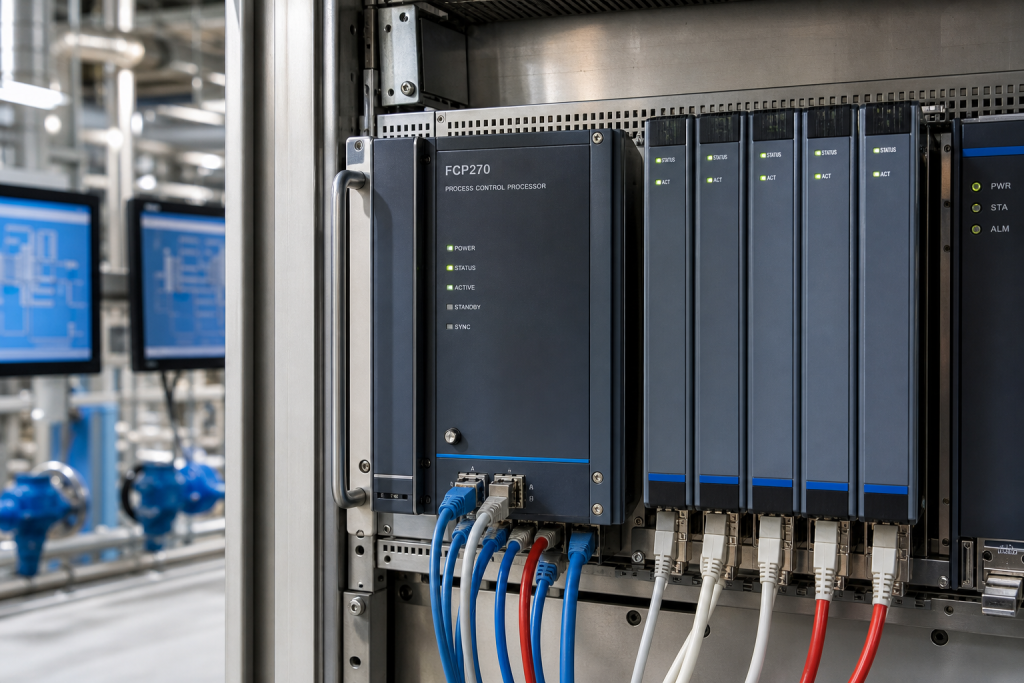
A Foxboro FCP270 is the working point between the I/A Series control database and the field control environment. When the processor is replaced, the rack, firmware, network, control strategy, FBM I/O, redundancy, and configuration backups all become part of the recovery decision.
ZYPLC readers need a Foxboro processor RFQ that gives engineering enough evidence to approve a replacement without treating the FCP270 as an isolated black box.
Identify the FCP270 control role
Record processor model and suffix, I/A Series node, rack, firmware, control database, network, FBM family, redundancy, power, diagnostics, and process consequence.
The live Foxboro FCP270 reference is a product match for an RFQ. Compare the installed label, rack, firmware, database, network, and FBM record before approval.
Photograph processor label, rack, network ports, power, status lights, adjacent FBMs, cable routing, and cabinet context.
Do not let the processor hide FBM dependencies
A processor can be available while an FBM output, bus connector, network switch, or control database remains the real recovery constraint. List those dependencies and their owners before ordering.
The related Foxboro FBM215 output reference shows why processor and field output hardware must be checked as separate items.
Request exact, tested exchange, repair, substitute, and migration options separately, with firmware, database scope, actual-item photos, condition, warranty, and dispatch timing.
Acceptance must prove the control loop
After replacement, verify processor recognition, database restore, network, FBM communication, I/O, alarms, trends, operator visibility, redundancy, diagnostics, and approved process testing.
Mark the item exact, database restore pending, bench-tested, substitute, or engineering review required.
Keep processor and rack labels, database backup, FBM evidence, diagnostic logs, network checks, and final process acceptance together.
Build the RFQ around the installed function
A useful spare request starts with the installed function, not only a familiar brand name. State what the device does, where it sits, what it connects to, and what failure would stop, trip, blind, or slow the process. Add the exact label, revision, connector view, power information, accessory scope, condition requirement, destination, and required date. This gives procurement and engineering the same starting point.
Separate an exact replacement from a possible substitute, repair exchange, bench item, and migration candidate. These options can all be commercially useful, but they carry different approval burdens. An exact spare may support a short outage window. A substitute may need wiring changes, parameter review, software work, validation, or a production trial before it can be counted as recovery stock.
The live product references in this article are catalog matches, not permission to skip engineering checks. Compare every product page with the installed label and plant record. If a suffix, connector, voltage, protocol, firmware family, or mechanical interface differs, keep the item conditional until the responsible engineer closes that gap.
Receiving inspection should repeat the evidence used for the RFQ. Photograph the received label, packaging, connectors, terminals, mounting features, and included accessories. Record what was checked and what remains unknown. A clean-looking item is not automatically a field-ready spare, and an item that powers up is not automatically accepted by the control, safety, motion, or protection function.
Review the spare before the maintenance window, not only after a failure. Confirm that the item is physically present, packaging and accessories are intact, the backup or test procedure is available, and the responsible engineer is still named. When a substitute is considered, write down the exact gap it is intended to close and the evidence needed to approve it.
The most useful quotation response mirrors the plant record. It should state the exact model, actual condition, test scope, included hardware, lead time, warranty, and any unresolved compatibility question. Avoid a quote that quietly combines an exact part, an exchange repair, and a possible substitute under one heading.
Finally, define the acceptance owner before the part is ordered. Procurement can verify item identity and commercial terms; stores can verify packaging and label; maintenance can verify installation; and the responsible controls, safety, motion, or reliability engineer can approve functional recovery.
A good record shows why the model was selected, which evidence was checked, what remained conditional, and how the installed function was accepted.
A good quotation should also state what the supplier cannot determine from a catalog page. Unknown firmware, missing drawings, unclear terminals, incomplete accessories, and untested condition should remain open items rather than being hidden in a generic compatible statement.
Before the maintenance window, confirm the spare location, packaging, accessory scope, backup media, test equipment, and named decision owner today.
Record the final decision in the asset file with the installed model, product match, evidence reviewed, unresolved risks, test result, and approval date. This gives the next engineer a faster starting point and prevents procurement from repeating an uncertain model search today.
FAQ
What must match on an FCP270 spare?
Match I/A Series role, rack, suffix, firmware, control database, network, FBM communication, redundancy, power, and diagnostics.
Can an FBM215 replace an FCP270?
No. The processor and field output interface have different system roles and approval paths.
What should the RFQ include?
Send processor and rack labels, firmware and database backup status, network and FBM photos, condition, test scope, and deadline.
What proves Foxboro recovery?
Processor recognition, database restore, network, FBM communication, I/O, alarms, trends, diagnostics, and approved process testing.
Send ZYPLC the FCP270 and rack labels, network and FBM photos, database backup status, process role, and deadline. We can help prepare a traceable Foxboro spare RFQ.
© 2026 ZYPLC. All rights reserved. Official Website: https://zyplc.com Inquiry: sales@zyplc.com | WhatsApp/Tel: +86 18359293191
Continue reading