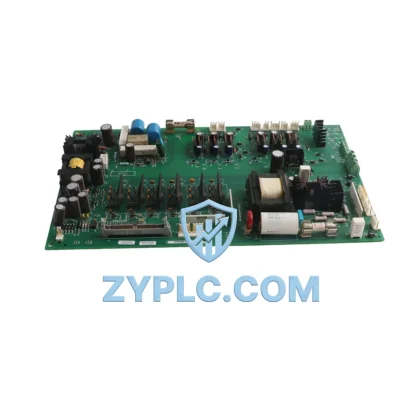
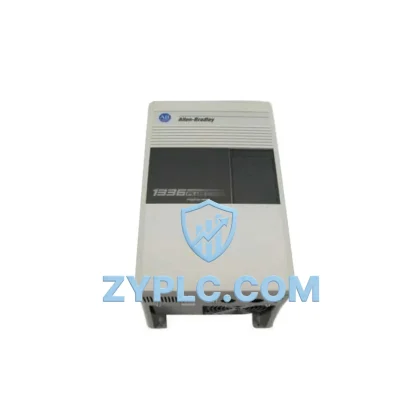
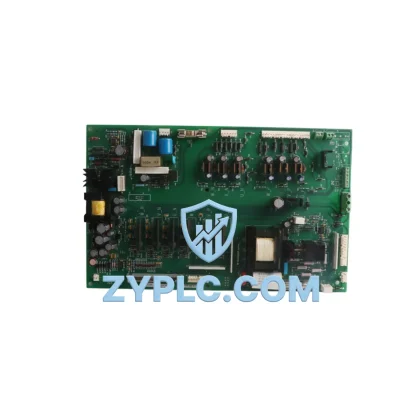
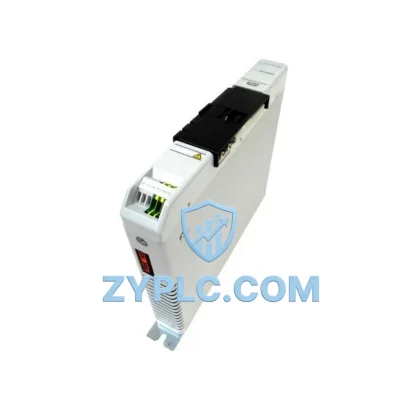
ABB 086351-001 System-Ready Push Button Board for ACS Drive Architecture
The ABB 086351-001 Push Button Board is a precision-engineered operator interface component designed to function as an integral element within ABB’s ACS and DCS variable frequency drive control architecture. Rather than operating as a standalone accessory, this board occupies a defined role within the layered automation hierarchy — bridging the human-machine interface (HMI) layer with the drive control layer to ensure seamless command transmission, status feedback, and operational continuity across the full control system stack.
In modern industrial automation environments, the integrity of a drive system depends not only on the performance of the central processing unit but equally on the reliability of every interface component that connects operators to the control logic. The ABB 086351-001 serves this function by providing a robust, electrically stable push button interface that integrates directly with the ACS drive’s internal control bus. Its design conforms to ABB’s modular architecture philosophy, ensuring that replacement, commissioning, and long-term maintenance can be performed without disrupting adjacent system layers.
Within a complete ACS-series drive system, the 086351-001 Push Button Board works in coordination with the RMIO-11C main control board, which handles the core speed reference, torque control, and fieldbus communication tasks. The RMIO board processes signals from the push button interface and translates operator commands into drive-level instructions, maintaining closed-loop control integrity. Alongside this, the RDCO-03 communication option board manages PROFIBUS DP or DeviceNet connectivity, ensuring that the drive’s operational state is continuously reported to the supervisory PLC or DCS layer — typically an ABB AC500 or AC800M controller in large-scale installations.
The power supply architecture supporting the 086351-001 typically includes the ABB PSU-A1 or equivalent 24 VDC auxiliary power module, which provides stable low-voltage power to the control electronics independently of the main DC bus. This separation of control power from drive power is a fundamental redundancy design principle in industrial drive systems, ensuring that operator interface functions remain available even during main power fluctuations or controlled shutdown sequences.
At the I/O layer, the 086351-001 interfaces with the drive’s digital input terminals, which may be extended using RAIO-01 analog I/O extension modules or RDIO-01 digital I/O extension boards. These modules expand the drive’s ability to receive process signals from field instruments — including pressure transmitters, flow sensors, and temperature controllers — and feed them into the drive’s PID control loop. The push button board provides the local override capability that allows maintenance engineers to manually command start, stop, and speed reference functions without relying on the fieldbus network, a critical feature for commissioning and fault isolation procedures.
From a network architecture perspective, the ACS drive system incorporating the 086351-001 typically sits at the field device layer of a three-tier automation hierarchy. Above it, the SCADA or DCS system — often running on ABB’s System 800xA platform — monitors drive status, energy consumption, and fault history in real time. The communication path from the drive to the supervisory system passes through the RDCO communication board and the plant’s PROFIBUS or Ethernet/IP backbone, with the push button board’s local commands logged as operator events within the historian database.
For installations requiring high availability, the ACS drive architecture supports redundant control configurations where a standby drive unit can assume load without process interruption. In these configurations, the 086351-001 Push Button Board must be present and fully functional on both the primary and standby drive units to ensure that local operator control capability is maintained regardless of which unit is active. The board’s consistent electrical interface specification simplifies spare parts management and reduces the risk of compatibility issues during emergency replacements.
Long-term maintenance planning for systems incorporating the ABB 086351-001 benefits from ABB’s standardized spare parts ecosystem. The board is compatible across multiple ACS drive generations, reducing the inventory complexity for maintenance teams managing large fleets of drives across a facility. Procurement through ZYPLC ensures access to verified, traceable components backed by a 12-Month Warranty, with technical support available for installation verification and system integration guidance.
Architecture Specification Table
| Parameter |
Specification |
| System Role |
Operator Interface / Push Button Control Board |
| Compatible Drive Series |
ABB ACS Series, DCS Series Variable Frequency Drives |
| Control Layer |
HMI-to-Drive Interface Layer |
| Electrical Interface |
Low-voltage digital I/O, internal control bus connection |
| Auxiliary Power |
24 VDC (supplied by drive control power circuit) |
| Communication Capability |
Local command interface; integrates with RDCO fieldbus option boards |
| Installation Environment |
Drive control cabinet, DIN rail or panel-mount per ACS drive enclosure standard |
| Country of Origin |
Germany |
| Product Type |
Drive Control Board |
| Warranty |
12-Month Warranty (ZYPLC) |
Coordinated Control System Design
The ABB 086351-001 Push Button Board achieves its full operational value when considered within the context of a coordinated ACS drive control system. A typical system architecture integrating this board includes the following components working in concert:
The RMIO-11C Main Control Board serves as the computational core of the ACS drive, executing speed and torque control algorithms while processing digital inputs from the 086351-001. The RDCO-03 Communication Option Board extends the drive’s connectivity to PROFIBUS DP or DeviceNet networks, enabling the supervisory PLC — such as an ABB AC500 PLC — to monitor and command the drive remotely. Local operator visibility is provided by the ACS-CP-D Control Panel, which displays drive status, fault codes, and parameter values in real time.
Power integrity for the control electronics is maintained by the ABB PSU-A1 24VDC Power Supply Module, which isolates control circuit power from the main drive bus. At the I/O expansion layer, the RDIO-01 Digital I/O Extension Module and RAIO-01 Analog I/O Extension Module provide additional signal channels for process feedback integration. The drive’s output connects to motor loads through ABB du/dt output filters and ABB ACH series motor cables, which protect motor insulation from switching transients. For installations requiring network-level redundancy, the RDNA-01 DeviceNet Adapter provides an alternative fieldbus path, ensuring communication continuity if the primary PROFIBUS segment experiences a fault.
Together, these components form a cohesive, maintainable drive system architecture in which the 086351-001 Push Button Board plays a defined and non-redundant role at the local operator interface layer.
Application in Layered Automation Systems
The ABB 086351-001 Push Button Board finds application across a wide range of industrial sectors where ABB ACS-series drives are deployed as part of layered automation systems. In manufacturing and assembly lines, the board provides local start/stop control for conveyor drives, allowing line operators to manage individual drive sections without requiring PLC intervention — a critical capability during product changeovers and maintenance windows.
In water and wastewater treatment facilities, ACS drives equipped with the 086351-001 control pump and blower motors across multiple process stages. The local push button interface allows field operators to manually override automatic control during filter backwash cycles or emergency bypass operations, maintaining process continuity when SCADA communication is temporarily unavailable.
Within power generation and electrical substation environments, the board supports auxiliary drive systems controlling cooling fans, oil pumps, and ventilation equipment. The reliability of the push button interface is critical in these applications, where manual control capability must be maintained as a fallback during planned maintenance of the supervisory control system.
In petrochemical and refinery applications, ACS drives with integrated push button boards control compressor auxiliaries, agitator drives, and transfer pump systems. The 086351-001’s compatibility with the drive’s internal diagnostics system allows maintenance engineers to read fault history and parameter data locally, reducing the time required to diagnose and resolve drive faults in hazardous area installations.
For mining and mineral processing operations, where drives are subject to high ambient temperatures, vibration, and dust ingress, the 086351-001’s robust construction and ABB’s proven ACS drive platform provide the operational reliability required for continuous process applications such as conveyor drives, crusher auxiliaries, and slurry pump systems.
Architecture Engineering FAQ
Q1: Is the ABB 086351-001 Push Button Board compatible with all ACS drive variants, and how do I verify compatibility before installation?
The 086351-001 is designed for use within specific ABB ACS and DCS drive series. Compatibility should be verified against the drive’s hardware manual and the component’s part number cross-reference documentation. ZYPLC’s technical team can assist with compatibility verification based on your drive’s nameplate data and firmware version prior to shipment.
Q2: Can the 086351-001 be used in a redundant drive architecture where two ACS drives share a common load?
Yes. In redundant drive configurations, the 086351-001 should be installed in both the primary and standby drive units to ensure consistent local operator control capability. The board’s standardized electrical interface ensures that both units present identical operator interface behavior, simplifying switchover procedures and reducing operator training requirements.
Q3: What does the 12-Month Warranty cover, and what support is available for installation and commissioning?
The 12-Month Warranty provided by ZYPLC covers manufacturing defects and component failures under normal operating conditions. It does not cover damage resulting from incorrect installation, overvoltage events, or environmental conditions outside the drive’s rated specifications. ZYPLC’s technical support team is available to assist with installation verification, parameter configuration guidance, and fault diagnosis throughout the warranty period. Contact us at +86 19859288691 or plc.sales@zyplc.com for pre-sales and post-sales technical support.
© 2026 ZYPLC. All rights reserved.
Original Source: https://zyplc.com
Contact: +86 19859288691 | plc.sales@zyplc.com