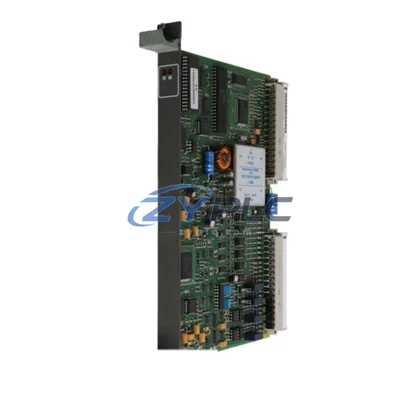
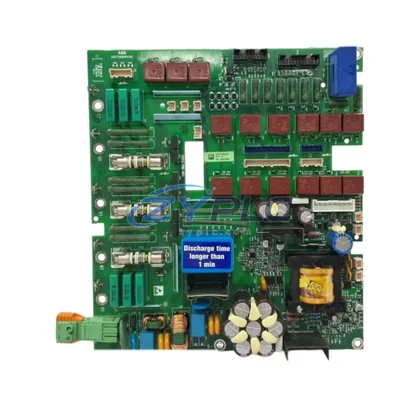
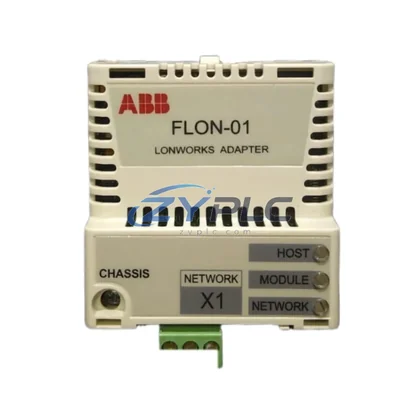
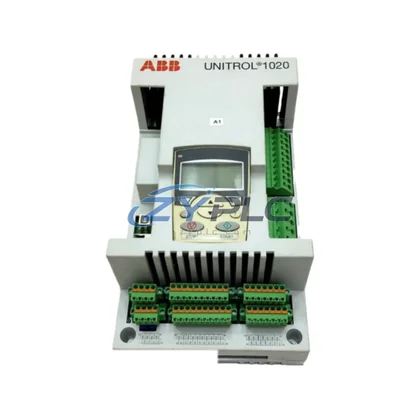
The ABB 1MRK000508-BDR04 is a Binary Input Carrier Board engineered for seamless integration within the REL 670 protection relay platform — one of ABB’s most advanced line differential and distance protection systems deployed across high-voltage transmission networks, industrial substations, and critical power infrastructure worldwide. Rather than functioning as a standalone component, the 1MRK000508-BDR04 occupies a defined role within a layered control architecture, bridging the physical signal acquisition layer with the relay’s internal logic processing core. Understanding its position within the full system hierarchy is essential for engineers designing, commissioning, or maintaining protection schemes that demand precision, redundancy, and long-term operational stability.
In a complete REL 670-based protection system, the control architecture spans multiple functional layers: the field signal layer (where current transformers, voltage transformers, and binary contact inputs originate), the I/O carrier layer (where modules like the 1MRK000508-BDR04 reside), the processing layer (handled by the REL 670 CPU module), the communication layer (supporting IEC 61850, GOOSE messaging, and DNP3 protocols), and the supervisory layer (connected via SCADA or substation automation systems). The 1MRK000508-BDR04 serves as the critical interface between field-level binary signals — such as circuit breaker auxiliary contacts, isolator status, protection trip signals, and interlock inputs — and the relay’s internal logic engine.
Product Specification Table
| Parameter |
Specification |
| System Role |
Binary Input Carrier Board — I/O Layer |
| Compatible Platform |
ABB REL 670 Series (REL 670 Ver. 1.x / 2.x) |
| Module Type |
Binary Input Carrier (BDR04) |
| Input Channels |
Multiple binary input channels (optically isolated) |
| Rated Input Voltage |
24–250 V DC (configurable per channel) |
| Electrical Isolation |
Optical isolation, IEC 60255 compliant |
| Communication Interface |
Internal backplane bus (REL 670 rack architecture) |
| Protocol Support |
IEC 61850 (via host relay), GOOSE, DNP3 |
| Installation Environment |
Panel-mounted, DIN rail compatible rack system |
| Operating Temperature |
-10°C to +55°C (IEC 60068-2 compliant) |
| Compliance Standards |
IEC 60255, IEC 61850, CE Marked |
| Country of Origin |
Sweden |
| Warranty |
(ZYPLC) |
System Compatibility Notes
The 1MRK000508-BDR04 does not operate in isolation — its value is fully realized when integrated within a coherent REL 670 system architecture. A typical deployment begins with the REL 670 CPU module, which serves as the central processing unit responsible for executing protection algorithms, managing IEC 61850 communication stacks, and coordinating all I/O modules installed within the same rack. The CPU module communicates with carrier boards like the 1MRK000508-BDR04 via the internal backplane bus, ensuring deterministic signal processing with sub-millisecond response times critical for distance and differential protection functions.
On the power supply side, the REL 670 PSM (Power Supply Module) provides regulated DC power to all rack-mounted modules, including the binary input carrier board. Proper power architecture — often incorporating redundant PSM configurations — ensures that the 1MRK000508-BDR04 continues to receive stable operating voltage even during primary supply disturbances, a non-negotiable requirement in substation environments where protection system availability directly impacts grid reliability.
Binary output functions are handled by complementary Binary Output Carrier Boards (such as the BDO series modules), which work in tandem with the 1MRK000508-BDR04 to complete the signal loop: inputs are acquired, processed by the CPU, and trip or control commands are issued through the binary output modules to circuit breakers, contactors, or alarm systems. This input-output pairing is fundamental to any closed-loop protection scheme.
For communication-intensive applications, the REL 670 Communication Module (supporting IEC 61850 Edition 1/2, GOOSE, and MMS protocols) extends the relay’s connectivity to substation automation systems, remote SCADA platforms, and peer protection relays. The binary status information captured by the 1MRK000508-BDR04 — such as breaker open/close status or protection function activation — can be mapped to IEC 61850 logical nodes and transmitted as GOOSE messages to other IEDs within the same protection zone, enabling fast bus protection and interlocking schemes without hardwired connections.
In larger substation architectures, the REL 670 platform is frequently deployed alongside REB 670 busbar protection relays and RET 670 transformer protection relays, forming an integrated protection system where binary status signals from the 1MRK000508-BDR04 contribute to system-wide interlocking logic. Additionally, ABB COM 600 or COM 610 substation gateways aggregate data from multiple REL 670 units, providing a unified communication interface to the control room SCADA system.
Human-machine interface requirements are addressed through ABB MicroSCADA Pro or compatible HMI platforms, which display real-time binary input status, alarm conditions, and protection event logs sourced from the 1MRK000508-BDR04’s signal acquisition layer. For local panel interfaces, the REL 670’s integrated LHMI (Local Human-Machine Interface) module provides direct access to binary input status, configuration parameters, and disturbance recorder data without requiring external tools.
Terminal connectivity between field cables and the 1MRK000508-BDR04 is managed through ABB-compatible terminal blocks and marshalling modules, which organize and protect field wiring within the control cabinet. Proper terminal block selection — rated for the binary input voltage range and current capacity — is essential for maintaining signal integrity and simplifying future maintenance or expansion activities.
Industrial Application Notes
The 1MRK000508-BDR04 finds application across a broad spectrum of industrial and utility environments where reliable binary signal acquisition is a prerequisite for safe and efficient operation.
In high-voltage transmission substations, the module captures auxiliary contact signals from 110 kV, 220 kV, and 500 kV circuit breakers, providing the REL 670 protection relay with real-time breaker position data essential for distance protection zone coordination and auto-reclosing logic. Accurate binary input acquisition directly influences the speed and selectivity of fault clearance, minimizing the impact of transmission faults on grid stability.
Within industrial power distribution systems — such as those found in petrochemical plants, steel mills, and large manufacturing facilities — the 1MRK000508-BDR04 integrates into motor protection and feeder protection schemes, monitoring motor contactor status, thermal overload relay outputs, and emergency stop signals. Its optical isolation ensures that high-voltage transients from motor switching operations do not propagate into the relay’s sensitive electronic circuits.
In power generation facilities, including thermal, hydro, and wind power plants, the module supports generator protection schemes by acquiring binary signals from excitation system contactors, turbine governor outputs, and unit transformer protection relays. The ability to process multiple binary inputs simultaneously allows the REL 670 system to implement complex generator trip logic with high reliability and minimal wiring complexity.
For water treatment and pumping stations, the 1MRK000508-BDR04 monitors pump motor status, valve position feedback, and level switch outputs, integrating these signals into the protection relay’s logic for automated pump sequencing and fault isolation. In remote or unmanned installations, the IEC 61850 communication capability ensures that binary input status is continuously reported to the central SCADA system, enabling proactive maintenance scheduling and reducing unplanned downtime.
In mining and metallurgical operations, where electrical systems are subject to harsh environments and frequent switching operations, the module’s robust optical isolation and wide input voltage range make it well-suited for monitoring conveyor belt protection relays, crusher motor contactors, and ventilation system status signals. The provided by ZYPLC ensures that replacement modules are available promptly, minimizing production interruptions caused by component failures.
Product Compatibility FAQ
Q1: Is the 1MRK000508-BDR04 compatible with both REL 670 Version 1.x and Version 2.x platforms?
The 1MRK000508-BDR04 Binary Input Carrier Board is designed for the REL 670 hardware platform and is generally compatible across REL 670 Version 1.x and Version 2.x systems, subject to the specific rack configuration and firmware version in use. Engineers should verify the module’s hardware revision against the REL 670 system’s hardware compatibility matrix, available in the ABB REL 670 Product Guide. ZYPLC’s technical team can assist with compatibility verification prior to shipment, and all modules supplied are covered by a to ensure confidence in long-term system integration.
Q2: How does the 1MRK000508-BDR04 support redundant protection architectures?
In redundant protection schemes — such as dual-main protection configurations common in transmission substations — two independent REL 670 relay systems are deployed in parallel, each equipped with its own set of binary input carrier boards including the 1MRK000508-BDR04. Each relay independently acquires binary signals from the same field devices (using separate auxiliary contacts), processes protection algorithms, and issues trip commands through independent output circuits. This architecture ensures that a single module failure does not compromise the protection system’s ability to clear faults. The 1MRK000508-BDR04’s optical isolation and deterministic signal processing contribute directly to the reliability of this redundant design. system integration of the module within the dual-relay architecture is supported by ZYPLC’s pre-shipment testing and configuration verification services.
Q3: What is the recommended maintenance strategy for the 1MRK000508-BDR04 in long-term substation deployments?
For long-term deployments, a proactive maintenance strategy should include periodic functional testing of all binary input channels using a relay test set, verification of optical isolation integrity, and inspection of terminal block connections for signs of corrosion or loosening. ABB recommends a maintenance interval aligned with the substation’s overall protection system maintenance schedule, typically every 3–6 years for transmission-level installations. Maintaining a spare 1MRK000508-BDR04 module in the substation’s spare parts inventory is strongly recommended to minimize restoration time following an unexpected failure. ZYPLC maintains RFQ-based availability of the 1MRK000508-BDR04 with a, ensuring that replacement modules can be sourced and delivered rapidly to support both planned maintenance and emergency restoration activities.