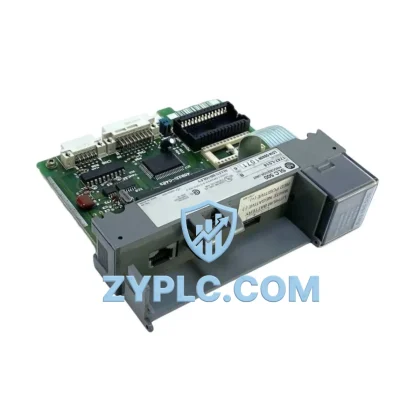
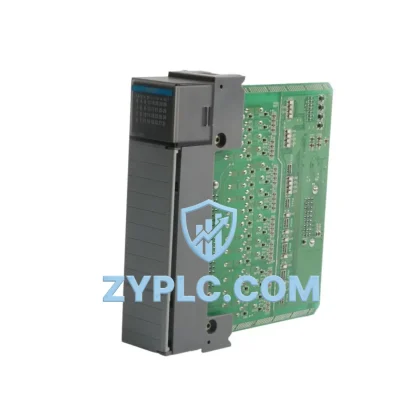
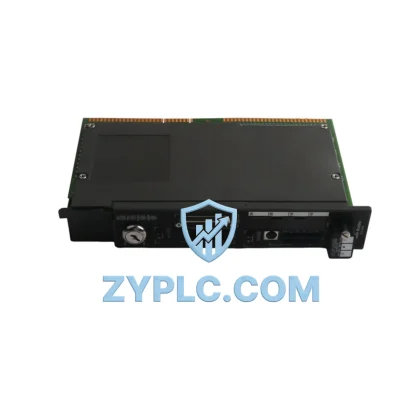
ABB 1SAP130300R0271 Energy-Saving PLC CPU Module for Optimized AC500 Automation
In modern industrial facilities where every kilowatt-hour counts, the ABB PM573-ETH (1SAP130300R0271) stands as a precision instrument for energy-aware automation. As the central processing unit of the ABB AC500 PLC platform, this CPU module governs the logic, timing, and communication that determine how efficiently a production line consumes power, responds to load changes, and sustains throughput without unnecessary energy expenditure. Rather than simply executing ladder logic, the PM573-ETH actively participates in a broader energy optimization architecture — one that spans from field-level sensor acquisition to drive-level power modulation and up to supervisory energy dashboards.
The PM573-ETH integrates a built-in Ethernet port that enables real-time data exchange with SCADA systems, energy monitoring platforms, and cloud-based analytics tools. When paired with the ABB CI592-CS31 communication interface module, the CPU can extend its reach across CS31 field buses, collecting granular energy data from distributed I/O nodes without adding latency to the control loop. This tight integration between communication and control is what allows plant engineers to correlate machine cycle times with actual power draw — a prerequisite for meaningful energy reduction.
Efficiency Performance Table
| Parameter |
Specification / Value |
| SKU / Part Number |
PM573-ETH | 1SAP130300R0271 |
| Series |
ABB AC500 |
| Product Type |
PLC CPU Module |
| Communication |
Built-in Ethernet (10/100 Mbps), CS31 via expansion |
| Program Memory |
Up to 1 MB user program |
| Power Consumption |
Low-power design; optimized for 24 VDC bus operation |
| Operating Temperature |
-25°C to +60°C |
| Compatible Systems |
ABB AC500 V2/V3 platform, Automation Builder IDE |
| Application Environment |
Industrial automation, energy management, motor control, process control |
| Energy Saving Value |
Enables demand-based motor scheduling, load shedding logic, and cycle optimization |
| Origin |
Germany (DE) |
| Warranty |
12-Month Warranty | Tested before shipment |
Energy-Aware Automation Architecture
The PM573-ETH does not operate in isolation. Its true energy optimization potential is realized when it functions as the orchestration layer within a carefully designed automation architecture. In a typical motor-driven production line, the CPU communicates with ABB ACS580 variable speed drives over Ethernet/IP or Modbus TCP, dynamically adjusting motor speed references based on real-time production demand. Instead of running motors at fixed full speed, the PM573-ETH issues speed setpoints that match actual load requirements — a strategy that can reduce motor energy consumption by 20–50% depending on the application profile.
On the I/O side, the ABB AI523 analog input module feeds the CPU with 4–20 mA signals from current transformers and power transducers installed on the main distribution panel. These signals allow the PLC program to calculate instantaneous power demand and trigger load-shedding routines when consumption approaches contractual peak thresholds. Complementing this, the ABB AO523 analog output module translates CPU commands into precise voltage or current signals that control proportional valves, variable-speed pumps, and damper actuators — all critical components in HVAC and fluid handling systems where energy waste is most prevalent.
For digital field signals, the ABB DI524 digital input module captures status feedback from motor contactors, thermal relays, and proximity sensors, enabling the CPU to build an accurate real-time model of equipment utilization. When a machine enters an idle state, the PM573-ETH can automatically issue a standby command to the associated ACS580 drive, reducing its output frequency to near-zero and cutting no-load losses. This idle detection and standby sequencing logic is one of the most impactful energy-saving features available in a well-programmed AC500 system.
Operator visibility is provided through the ABB CP635 touch panel HMI, which displays live energy KPIs — including kWh per production unit, peak demand trends, and drive efficiency curves — directly on the factory floor. Maintenance teams can use this interface to identify underperforming equipment before it escalates into unplanned downtime. The CP635 communicates with the PM573-ETH over Ethernet, ensuring that display refresh rates do not interfere with the deterministic scan cycle of the control program.
For applications requiring functional safety alongside energy efficiency, the ABB SM560-S safety CPU module can be integrated into the same AC500 rack, sharing the backplane with the PM573-ETH and handling SIL-rated safety functions independently. This architecture eliminates the need for a separate safety PLC, reducing panel footprint, wiring complexity, and overall system power consumption. Terminal unit modules such as the TU515 and TU516 further simplify field wiring by providing pre-wired screw or spring-clamp connections that reduce installation time and the risk of wiring errors that could cause energy-wasting fault conditions.
Power Optimization in Real Production Lines
Consider a packaging line running three-phase conveyor motors, pneumatic actuators, and vision inspection systems. Without intelligent control, all motors run continuously at rated speed regardless of whether product is present on the belt. The PM573-ETH changes this dynamic by implementing a zone-based motor control strategy: each conveyor segment is activated only when a product is detected by upstream sensors, and the corresponding ACS580 drive ramps up smoothly using an S-curve acceleration profile that minimizes inrush current and mechanical stress simultaneously.
The result is a measurable reduction in both energy consumption and mechanical wear. Fewer hard starts mean longer bearing life, reduced gearbox maintenance intervals, and lower lubricant consumption — all of which translate into lower total cost of ownership. The PM573-ETH logs runtime hours for each drive axis, and when cumulative run hours approach the manufacturer’s recommended service interval, the CPU triggers a maintenance alert on the CP635 HMI and optionally sends an email notification via the Ethernet port. This predictive maintenance capability prevents the energy spikes and production losses associated with unexpected equipment failures.
In process industries such as water treatment or chemical manufacturing, the PM573-ETH manages pump scheduling to minimize energy consumption during peak tariff periods. By reading time-of-use tariff schedules stored in the CPU’s data memory and comparing them against real-time production requirements, the control program can pre-fill buffer tanks during off-peak hours and reduce pump activity when electricity prices are highest. This demand-response capability, implemented entirely within the AC500 platform, can deliver significant reductions in monthly energy bills without requiring any changes to the physical production process.
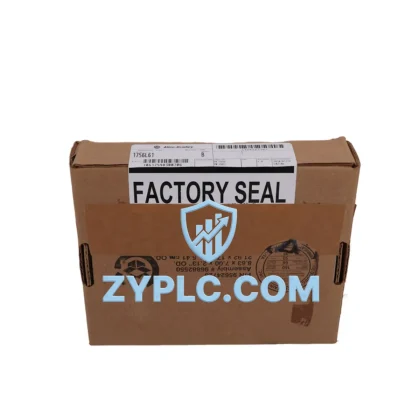
All products shipped from ZYPLC undergo full functional testing prior to dispatch. Each PM573-ETH unit is verified for communication integrity, program execution, and I/O response before being packaged for shipment. Stock is maintained on-hand for fast delivery, and every unit is covered by a 12-month warranty from the date of purchase.
Energy Optimization FAQ
Q1: How much energy can the PM573-ETH (1SAP130300R0271) help save in a motor-driven application?
A: When used to implement demand-based speed control via ABB ACS580 or ACS355 variable speed drives, the AC500 platform can reduce motor energy consumption by 20–50% compared to fixed-speed operation. Actual savings depend on load profile, duty cycle, and the number of controlled axes.
Q2: Is the 1SAP130300R0271 compatible with existing ABB AC500 V2 systems?
A: Yes. The PM573-ETH is fully compatible with the AC500 V2 and V3 hardware platforms and is programmed using ABB Automation Builder, which supports IEC 61131-3 languages including Structured Text, Function Block Diagram, and Ladder Diagram. Existing programs can be migrated with minimal modification.
Q3: What is the recommended replacement or upgrade path for older AC500 CPU modules?
A: The PM573-ETH is a direct functional replacement for earlier PM571 and PM572 CPU variants. It adds built-in Ethernet connectivity, eliminating the need for a separate CI590-CS31-HA communication interface in many applications, which reduces both cost and power consumption at the rack level.
Q4: What does the 12-month warranty cover, and how is pre-shipment testing conducted?
A: Every PM573-ETH unit sold by ZYPLC is tested for communication port functionality, program memory integrity, and I/O bus operation before shipment. The 12-month warranty covers manufacturing defects and functional failures under normal operating conditions. Replacement or repair is arranged promptly to minimize production downtime.
© 2026 ZYPLC. All rights reserved.
Original Source: https://zyplc.com
Contact: +86 19859288691 | plc.sales@zyplc.com