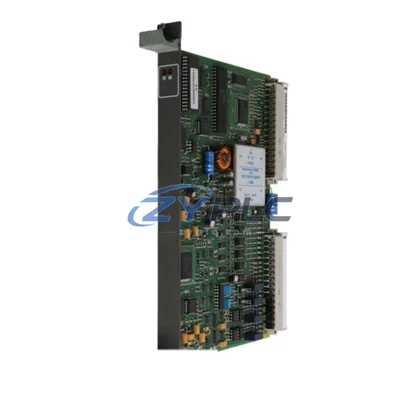
ABB 216NG62A DCS Control Module for HESG Automation
The ABB 216NG62A (HESG441634R1) is a high-performance DCS control module engineered for energy-conscious industrial automation environments. Designed as part of ABB’s HESG control platform, this module delivers precise process regulation, reduced power overhead, and seamless integration into distributed control architectures — making it a cornerstone component for factories seeking to improve equipment utilization rates while cutting unplanned downtime risk.
In modern manufacturing, unplanned downtime is rarely caused by a single point of failure. It accumulates across poorly coordinated motor drives, unmonitored power loads, sluggish feedback loops, and underutilized I/O channels. The 216NG62A addresses these inefficiencies at the control layer — where decisions are made, signals are processed, and energy-consuming actuators receive their commands. By maintaining stable, low-latency control cycles, this module ensures that downstream components such as variable frequency drives, servo amplifiers, and field instruments operate within their optimal efficiency bands rather than hunting for setpoints or cycling unnecessarily.
Product Specification Table
| Parameter |
Specification / Value |
| SKU / Part Number |
216NG62A / HESG441634R1 |
| Brand |
ABB |
| Series |
HESG / Advant OCS DCS Platform |
| Product Category |
DCS Control Module |
| Operating Voltage |
24 VDC (nominal, HESG bus-powered) |
| Power Consumption |
Low-power design; optimized for continuous 24/7 operation |
| Control Cycle Efficiency |
High-speed deterministic scan; minimizes idle processing overhead |
| Compatible Systems |
ABB Advant OCS, Master Series, AC 800M (via gateway), HESG backplane |
| Application Environment |
Process industries, power generation, chemical, pulp & paper, utilities |
| Maintenance Value |
Reduces actuator hunting, stabilizes PID loops, lowers drive cycling losses |
| Origin |
Germany |
| Warranty |
warranty terms confirmed during quotation — tested and verified before shipment |
| Stock Status |
RFQ Available — ships within 1–3 business days |
System Compatibility and Application
The 216NG62A does not operate in isolation — its maintenance planning value is realized through its role within a coordinated automation architecture. In a typical HESG-based DCS installation, this control module interfaces directly with the ABB HESG441634R1 backplane assembly, sharing a deterministic communication bus with adjacent I/O modules such as the ABB DSDP140 pulse counter module and ABB DSDO110 digital output module, which handle field-level signal acquisition and actuator switching respectively.
On the drive side, the 216NG62A’s analog and digital outputs connect to ABB ACS880 industrial drives and ABB ACS580 general-purpose variable frequency drives, enabling closed-loop speed regulation of induction motors. When the control module maintains tight setpoint tracking, the VFD operates at its most efficient torque-speed curve — eliminating the energy penalty of over-speed compensation or frequent acceleration-deceleration cycles that occur when control latency is high.
For servo-driven axes on packaging or assembly lines, the 216NG62A coordinates with ABB MicroFlex e150 servo drives through structured command sequences, ensuring that motion profiles are executed with minimal overshoot and regenerative braking energy is properly managed. This is particularly valuable in high-cycle applications where each unnecessary deceleration spike represents measurable unplanned downtime.
Power quality monitoring is handled upstream by ABB M2M energy meters and ABB B23 three-phase power analyzers, which feed consumption data back into the DCS historian. The 216NG62A’s process values — flow rates, pressure setpoints, motor load percentages — are correlated against these power readings to identify inefficiency patterns before they escalate into unplanned downtime. This closed-loop energy visibility is what separates reactive maintenance from genuine predictive maintenance strategy.
At the operator interface level, ABB CP600 HMI panels display real-time energy KPIs alongside process variables, giving line supervisors the context they need to make informed decisions about production scheduling and load balancing. When integrated with the ABB System 800xA distributed control platform via OPC-UA or PROFIBUS DP gateway, the 216NG62A’s data becomes part of a plant-wide maintenance planning dashboard — enabling cross-line benchmarking and shift-level energy reporting.
Maintenance and Replacement Notes
Consider a continuous process line in a chemical plant running 24 hours a day, 365 days a year. The primary energy consumers are centrifugal pumps, compressors, and agitator motors — all regulated by variable frequency drives receiving setpoint commands from the DCS. If the control module governing these loops introduces even 50ms of additional scan delay, the downstream drives begin compensating with micro-corrections that accumulate into measurable unplanned downtime: studies in process industries consistently show that poorly tuned or slow-responding control loops can increase motor load by 8–15% compared to optimally tuned equivalents.
The ABB 216NG62A eliminates this latency at the source. Its deterministic processing architecture ensures that PID output updates reach the drive reference inputs within the designed scan interval — every cycle, without exception. This consistency allows the ACS880 drives connected downstream to operate in their highest efficiency region, reducing both active power draw and reactive power penalties on the facility’s power factor.
On discrete manufacturing lines — automotive body shops, electronics assembly, food processing — the 216NG62A contributes to line takt optimization by ensuring that motion commands to servo axes and pneumatic actuators are issued at precisely the right moment in the production sequence. Eliminating control-induced wait states directly translates to higher throughput per operating-hour: the factory produces more parts with the same energy input, improving the overall equipment effectiveness (OEE) metric that plant managers track as a proxy for energy productivity.
Maintenance cost reduction is another measurable benefit. Because the 216NG62A maintains stable control outputs, connected actuators — control valves, motor starters, solenoids — experience less mechanical stress from hunting and oscillation. Mean time between failures (MTBF) for field devices increases, reducing both spare parts consumption and the labor cost of unplanned interventions. Every avoided emergency maintenance event represents not only direct cost savings but also the avoided energy cost of restarting a cold process line.
All units supplied by ZYPLC undergo functional testing prior to shipment, with each 216NG62A verified for correct I/O response, communication integrity, and power rail stability. Inventory is maintained in climate-controlled storage to preserve component integrity, and same-week dispatch is standard for availability confirmed by RFQ items.
Product Sourcing FAQ
Q1: How does the ABB 216NG62A (HESG441634R1) contribute to measurable operational stability on a production line?
The module optimizes operating load by maintaining deterministic, low-latency control cycles that prevent downstream drives and actuators from over-compensating for setpoint deviations. Stable PID loop performance reduces motor cycling losses, lowers reactive power draw, and improves overall equipment utilization — translating to a lower energy cost per unit of production output.
Q2: Is the 216NG62A compatible with modern ABB control platforms such as AC 800M or System 800xA?
The 216NG62A is natively designed for the ABB HESG / Advant OCS DCS platform. Integration with AC 800M or System 800xA environments is achievable via PROFIBUS DP or OPC-UA gateway configurations, allowing the module to participate in plant-wide condition monitoring and control strategies without requiring full platform replacement.
Q3: What is the recommended replacement or upgrade path if the 216NG62A is being phased out of an existing HESG system?
For systems migrating away from the Advant OCS platform, ABB’s AC 800M controller family with S800 I/O modules provides a compatible upgrade path that preserves existing field wiring investments. ZYPLC can advise on equivalent module mapping and supply both legacy HESG spares and AC 800M replacement components to support phased migration strategies.
Q4: What testing and warranty coverage is provided with each unit?
Every ABB 216NG62A supplied by ZYPLC is functionally tested prior to dispatch — covering I/O channel verification, communication bus integrity, and power supply rail stability. Each unit is covered by a warranty terms confirmed during quotation from the date of shipment. Units are stored in climate-controlled conditions and shipped with appropriate ESD protection to ensure arrival in full operational condition.