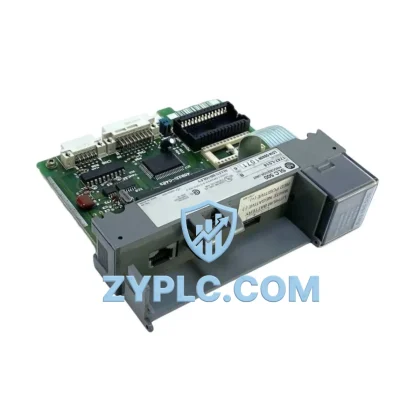
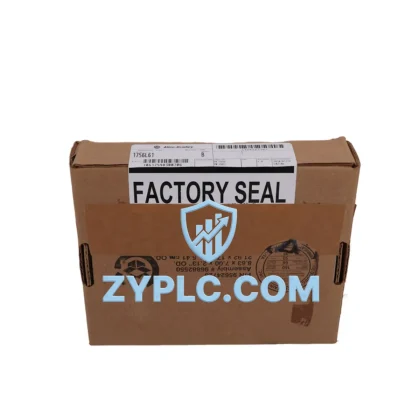
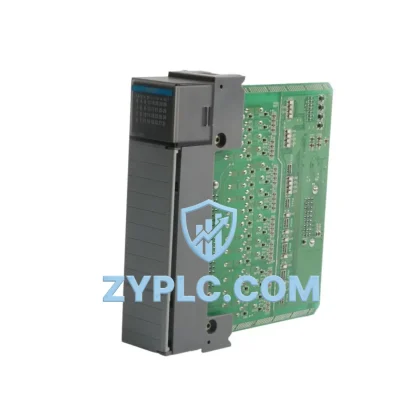
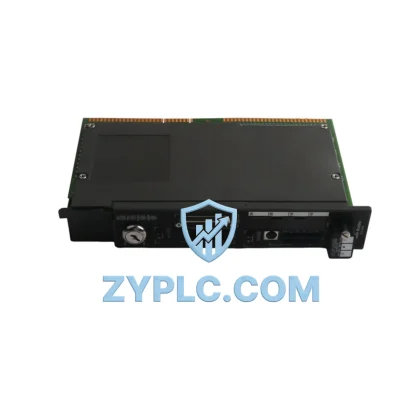
ABB 3BDH000606R1 PM875-2 Energy-Saving PLC CPU for AC500 Automation
The ABB PM875-2 (part number 3BDH000606R1) is a high-performance CPU module within the ABB AC500 programmable logic controller platform, engineered to deliver precision energy control across demanding industrial environments. Rather than functioning as a standalone processor, the PM875-2 serves as the computational core of an integrated energy-aware automation architecture — coordinating signal acquisition, drive regulation, I/O processing, and system feedback in a unified control loop that measurably reduces energy waste and improves production line throughput.
In modern manufacturing facilities, energy inefficiency rarely stems from a single component failure. It emerges from mismatched control cycles, uncoordinated motor starts, excessive idle-state power draw, and the absence of real-time feedback between the control layer and the execution layer. The PM875-2 addresses these systemic issues by providing a high-speed processing environment capable of executing complex energy optimization routines — including load-adaptive PID control, demand-side management logic, and predictive shutdown sequences — with cycle times that keep pace with fast-moving production lines in automotive, food processing, water treatment, and chemical manufacturing sectors.
The PM875-2 operates within the AC500 modular rack system, where it communicates directly with expansion I/O modules such as the DC532 digital input/output module and the AI523 analog input module, enabling granular monitoring of energy consumption at the field device level. When paired with the TU515 or TU516 terminal units, the CPU integrates cleanly into compact control cabinet configurations without sacrificing processing headroom. This modularity allows engineers to scale the control system incrementally — adding energy monitoring channels or communication nodes without redesigning the base architecture.
On the drive coordination side, the PM875-2 interfaces with ABB ACS880 variable frequency drives and ACS580 general-purpose drives via PROFIBUS-DP or Modbus RTU, enabling closed-loop speed and torque regulation that eliminates the energy penalties associated with fixed-speed motor operation. By dynamically adjusting drive output in response to real-time load signals — rather than running motors at full capacity regardless of demand — the system can achieve measurable reductions in motor energy consumption across pump, fan, compressor, and conveyor applications. The CP635 HMI panel provides operators with live energy dashboards, allowing production supervisors to identify inefficient operating windows and intervene before energy costs escalate.
The PM875-2 also supports PROFINET and Ethernet/IP communication protocols, enabling integration with plant-level SCADA systems and energy management platforms. This connectivity allows the CPU to participate in demand response programs, where production loads are automatically shifted or throttled during peak tariff periods — a capability increasingly required in energy-intensive industries operating under time-of-use electricity pricing. The CM589-PNIO PROFINET communication module extends this capability without requiring a separate gateway device, keeping the control cabinet footprint compact and the communication latency low.
From a maintenance and lifecycle perspective, the PM875-2 supports online program modification and hot-swap diagnostics, reducing the need for planned shutdowns during software updates or parameter adjustments. This capability directly supports predictive maintenance strategies, where control logic is updated in response to condition monitoring data without interrupting production. The SD card slot on the PM875-2 enables rapid program backup and restoration, minimizing recovery time in the event of an unplanned CPU replacement — a critical feature for facilities where downtime costs exceed component costs by orders of magnitude.
Every PM875-2 unit supplied by ZYPLC undergoes a multi-stage functional verification process prior to shipment, including power-on testing, communication port validation, and memory integrity checks. Units are sourced from verified supply channels and are accompanied by a 12-Month Warranty, providing procurement teams and maintenance engineers with the assurance needed to specify this module in both new installations and retrofit projects. Stock availability is maintained to support urgent replacement requirements, with expedited shipping options available for time-critical production environments.
Efficiency Performance Table
| Parameter |
Specification |
| Product Series |
ABB AC500 |
| Part Number |
3BDH000606R1 |
| Model |
PM875-2 |
| CPU Processing Speed |
High-speed multi-tasking, sub-millisecond cycle time |
| Program Memory |
Up to 16 MB user program memory |
| Communication Interfaces |
2× Ethernet (PROFINET / Modbus TCP), 1× USB, SD card slot |
| Fieldbus Support |
PROFIBUS-DP, Modbus RTU, PROFINET, Ethernet/IP (via CM modules) |
| Operating Voltage |
24 VDC |
| Operating Temperature |
-25°C to +70°C |
| Protection Rating |
IP20 (panel-mount installation) |
| Compatible I/O Modules |
AC500 S500 series (DC532, AI523, AO523, DI524, etc.) |
| Compatible Terminal Units |
TU515, TU516, TU531 |
| Energy Optimization Value |
Closed-loop drive control, demand-side load management, predictive shutdown |
| Country of Origin |
Germany |
| Warranty |
12-Month Warranty (ZYPLC) |
Energy-Aware Automation Architecture
The PM875-2 achieves its energy optimization potential not in isolation, but through coordinated interaction with a carefully selected set of system components. In a typical AC500-based energy management installation, the PM875-2 CPU communicates with the CM589-PNIO PROFINET communication module to relay real-time energy data to the plant SCADA layer, while the DC532 digital I/O module handles discrete control signals for motor contactors, valve actuators, and circuit breakers. The AI523 analog input module collects 4–20 mA signals from current transformers and power transducers, feeding the CPU with the raw energy consumption data needed to execute load-balancing algorithms.
On the drive side, the PM875-2 coordinates with ABB ACS880 industrial drives and ACS580 general-purpose drives via PROFIBUS-DP, enabling variable-speed motor control that eliminates throttling losses and reduces reactive power demand. For servo-driven positioning axes — common in packaging and assembly lines — the ABB MicroFlex e190 servo drive can be integrated into the same control network, allowing the PM875-2 to synchronize motion profiles with energy-efficient acceleration and deceleration ramps. The CP635 operator panel provides the human-machine interface layer, displaying energy KPIs, alarm states, and drive status in a format accessible to both operators and energy managers. The TU516 terminal unit provides the physical mounting and wiring interface for the PM875-2 within the control cabinet, ensuring reliable electrical connections across the full industrial temperature range.
Power Optimization in Real Production Lines
In water and wastewater treatment facilities, the PM875-2 manages pump scheduling logic that staggers motor starts to avoid simultaneous inrush current peaks — a common cause of demand charge spikes on industrial electricity bills. By distributing start sequences across a 30–60 second window and coordinating with ACS880 drives operating in energy-optimization mode, the control system reduces peak demand without affecting process throughput. In food and beverage production lines, the PM875-2 executes recipe-based speed profiles that match conveyor and mixer motor speeds to actual production rates, eliminating the energy waste associated with running equipment at maximum speed during low-demand periods.
In chemical and petrochemical plants, the PM875-2 supports continuous process control loops where compressor and pump drives must respond to fluctuating process pressures and flow rates. The CPU’s fast scan cycle ensures that drive speed adjustments track process variables closely, preventing the energy-intensive overshoot and correction cycles that occur when control response is too slow. In automotive body shop applications, the PM875-2 coordinates robot controller interfaces and conveyor drive systems, enabling energy-saving standby modes during line stoppages that can reduce idle-state power consumption significantly. Across all these applications, the 12-Month Warranty provided by ZYPLC ensures that replacement units are available and supported throughout the initial production ramp-up period — the phase when control system reliability is most critical.
Energy Optimization FAQ
Q1: How does the PM875-2 contribute to measurable energy savings in motor-driven applications?
The PM875-2 executes closed-loop control algorithms that continuously adjust drive output — via PROFIBUS-DP or Modbus RTU commands to ACS880 or ACS580 drives — in response to real-time load signals from analog input modules. This eliminates fixed-speed motor operation, which is the primary source of energy waste in pump, fan, and compressor applications. The CPU also supports demand-side management logic that shifts non-critical loads away from peak tariff periods, reducing electricity costs without affecting production output.
Q2: Is the PM875-2 compatible with existing AC500 installations, and can it replace older CPU modules without rewiring?
The PM875-2 is designed for the ABB AC500 platform and is compatible with the S500 series I/O modules and TU515/TU516 terminal units used in existing AC500 installations. In most cases, the CPU can be replaced without rewiring the I/O terminal units, as the program and configuration data can be restored from an SD card backup. Engineers should verify firmware compatibility between the PM875-2 and installed communication modules (such as the CM589-PNIO) before proceeding with a direct replacement in a live system.
Q3: What testing and quality assurance does ZYPLC perform before shipping the PM875-2?
Every PM875-2 unit undergoes power-on functional testing, communication port verification (Ethernet and USB), memory read/write validation, and visual inspection for physical damage prior to shipment. Units are sourced from verified supply channels and are individually tested rather than batch-sampled. The 12-Month Warranty covers functional defects identified during installation and commissioning, and ZYPLC’s technical team is available to support troubleshooting via the contact details below.
Q4: What is the recommended approach for integrating the PM875-2 into an energy monitoring system?
For energy monitoring integration, the PM875-2 should be paired with analog input modules (AI523 or equivalent) connected to current transformers or power meters at key load points. The CM589-PNIO module enables the CPU to publish real-time energy data to a PROFINET-connected SCADA or energy management system. For facilities using Modbus TCP-based energy management platforms, the PM875-2’s onboard Ethernet port supports direct Modbus TCP server functionality without requiring an additional communication module.
© 2026 ZYPLC. All rights reserved.
Original Source: https://zyplc.com
Contact: +86 19859288691 | [email protected]