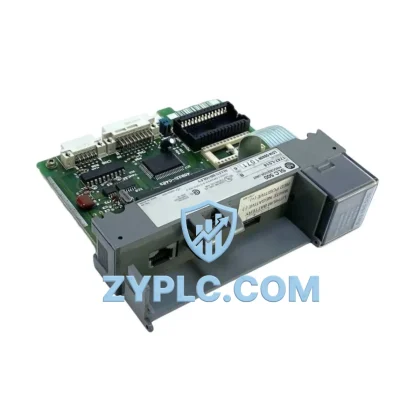
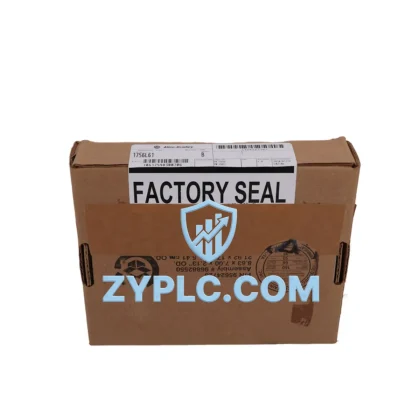
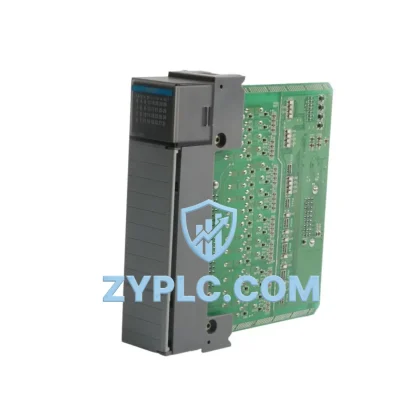
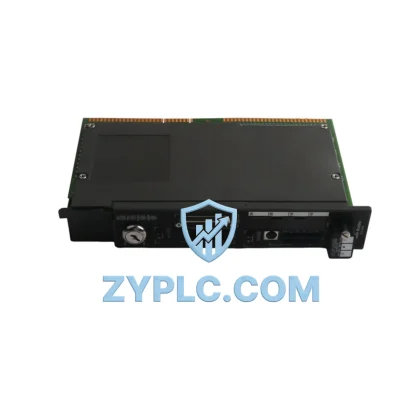
ABB 3BHB007211R0101 XVC768AE101 System-Ready Excitation Controller for ACS/AC80 Control System Architecture
The ABB 3BHB007211R0101 (XVC768AE101) is a precision-engineered excitation control module designed to operate as a core functional component within the ABB ACS Series and AC80 drive and control architecture. Far from a standalone device, this module is purpose-built to integrate seamlessly across multiple system layers — from the power conversion and field excitation layer through to the supervisory control, communication, and human-machine interface tiers — delivering consistent, reliable performance in demanding industrial environments.
Excitation control is a foundational discipline in high-power drive systems, synchronous motor applications, and generator control architectures. The 3BHB007211R0101 XVC768AE101 governs the field current supplied to the rotor winding of a synchronous machine, directly regulating terminal voltage, reactive power output, and power factor. In grid-connected or island-mode generator systems, precise excitation control is the difference between stable voltage regulation and catastrophic voltage collapse. This module provides the closed-loop excitation response necessary to maintain system stability across load transients, fault conditions, and planned switching events.
Manufactured in Germany and verified against ABB’s original engineering specifications, every unit supplied by ZYPLC undergoes pre-shipment functional testing to confirm excitation response accuracy, communication integrity, and hardware condition — backed by a 12-month warranty covering all manufacturing defects and hardware failures under normal operating conditions.
Architecture Specification Table
| Parameter |
Specification |
| Product SKU |
3BHB007211R0101 / XVC768AE101 |
| Brand |
ABB |
| Series |
ACS Series / AC80 Drive Architecture |
| Module Type |
Excitation Control Module |
| System Role |
Field Excitation Regulation, Voltage Control, Reactive Power Management |
| Applicable Machines |
Synchronous Motors, Wound-Rotor Generators, Brushless Excitation Systems |
| Communication Capability |
DDCS Fiber Optic Link / PROFIBUS DP / Modbus RTU (via gateway) |
| Electrical Interface |
Backplane-integrated / Rack-mounted within ACS/AC80 drive cabinet |
| Network Compatibility |
ABB ACS 6000, ACS 5000, AC80 Controller Platform |
| Installation Environment |
Industrial Drive Cabinet, Power Plant Control Room, MCC Panel |
| Origin |
Germany (DE) |
| Warranty |
12 Months |
| Availability |
In Stock — Ready to Ship |
Coordinated Control System Design
Within the ABB ACS/AC80 control architecture, the 3BHB007211R0101 XVC768AE101 does not operate in isolation. Its function is deeply embedded in a coordinated hierarchy of hardware layers, each contributing to the overall stability and performance of the drive or generator system.
At the power layer, the excitation module works in direct coordination with the ABB ACS 6000 Medium Voltage Drive or ACS 5000 High-Power Drive thyristor bridge, receiving setpoint commands from the drive’s master control board and translating them into precise field current adjustments. The ABB SDCS-CON-4 Control Board — the central processing unit of the DC drive platform — communicates with the XVC768AE101 via the DDCS (Distributed Drive Control System) fiber optic link, ensuring deterministic, noise-immune data exchange even in high-EMI environments typical of large motor control centers.
At the I/O and signal layer, analog feedback signals from current transformers (CTs) and voltage transformers (VTs) installed on the generator terminals are routed into the excitation module’s measurement inputs. These real-time electrical measurements — terminal voltage, field current, stator current — form the closed-loop feedback that the XVC768AE101 uses to execute its AVR (Automatic Voltage Regulator) algorithm. Alongside the excitation module, ABB SDCS-IOB-3 I/O Extension Boards provide additional analog and digital I/O channels for protection relay inputs, manual/auto mode switching, and fault annunciation outputs.
At the communication and supervisory layer, the ABB AC80 Controller — or an upstream ABB AC 800M PLC — issues high-level setpoints (voltage reference, power factor target, reactive power limit) to the excitation system via the DDCS link or a PROFIBUS DP gateway module. These setpoints are processed by the XVC768AE101 in real time, with the module continuously adjusting field current to track the commanded reference. Fault events and diagnostic data are simultaneously forwarded to the plant’s ABB Advant Station HMI or ABB 800xA Distributed Control System, where operators can monitor excitation status, review historical trends, and acknowledge alarms without interrupting the excitation control loop.
For redundant architectures — common in power generation, petrochemical, and critical infrastructure applications — the XVC768AE101 can be configured in a hot-standby arrangement alongside a second excitation control board. The ABB SDCS-COM-8 PROFIBUS Adapter facilitates seamless switchover logic, ensuring that a primary board failure triggers automatic transfer to the standby unit within milliseconds, maintaining continuous excitation and preventing machine trip. Terminal modules and ABB SNAT 601 CNT Pulse Encoder Interface Boards complete the signal conditioning layer, ensuring that speed and position feedback from the machine shaft is accurately delivered to the control system for vector control and synchronization functions.
Application in Layered Automation Systems
The ABB 3BHB007211R0101 XVC768AE101 finds its most critical applications in industries where synchronous machine control, voltage stability, and power quality are non-negotiable operational requirements.
In power generation and grid-connected applications, this excitation controller is deployed in hydro, thermal, and gas turbine generator sets where it regulates terminal voltage and reactive power output in response to grid demand signals. Its AVR function maintains voltage within ±0.5% of the setpoint across the full load range, supporting grid code compliance and preventing voltage instability during load rejection events.
In petrochemical and refinery facilities, large synchronous motors driving compressors, pumps, and blowers rely on precise excitation control to maintain power factor correction and reduce reactive power penalties. The XVC768AE101’s integration with the plant DCS via PROFIBUS DP allows the control room to remotely adjust excitation setpoints in response to process load changes, eliminating the need for manual intervention at the motor control center.
In mining and metallurgical operations, synchronous drives powering ball mills, crushers, and hoists demand robust excitation systems capable of surviving frequent starts, heavy load transients, and harsh electromagnetic environments. The 3BHB007211R0101’s industrial-grade hardware design and fiber optic communication links provide the noise immunity and reliability required in these demanding conditions.
In water treatment and pumping stations, variable-speed synchronous pump drives benefit from the XVC768AE101’s ability to maintain unity power factor across a wide speed range, reducing energy consumption and extending motor insulation life. Integration with SCADA systems via OPC UA or Modbus TCP gateways enables remote monitoring of excitation current, field voltage, and machine temperature from centralized control rooms.
In packaging and continuous process manufacturing, where production line synchronization is critical, the excitation controller’s fast dynamic response ensures that synchronous motors track speed references accurately during product changeovers and line speed adjustments, maintaining product quality and minimizing waste.
Architecture Engineering FAQ
Q1: Is the ABB 3BHB007211R0101 XVC768AE101 compatible with both ACS 5000 and ACS 6000 drive platforms, and what communication interfaces are supported?
Yes. The XVC768AE101 is designed for use within the ABB ACS Series high-power drive family, including the ACS 5000 and ACS 6000 platforms, as well as AC80-based control architectures. Communication with the master drive controller is handled via the DDCS fiber optic link, which provides deterministic, high-speed data exchange immune to electromagnetic interference. For integration with plant-level SCADA or DCS systems, PROFIBUS DP and Modbus RTU connectivity is available through compatible gateway modules such as the ABB SDCS-COM-8, enabling seamless contextual integration with existing automation infrastructure.
Q2: How does the excitation controller support redundant system architectures, and what is the switchover behavior during a primary board failure?
The 3BHB007211R0101 XVC768AE101 supports hot-standby redundancy configurations where a second excitation control board monitors the primary unit’s health via the DDCS link. Upon detection of a primary board fault — whether due to hardware failure, communication loss, or watchdog timeout — the standby board assumes control of the field excitation circuit within milliseconds, preventing machine trip and maintaining continuous voltage regulation. This redundancy architecture is particularly critical in power generation and petrochemical applications where unplanned machine shutdowns carry significant safety and financial consequences. ZYPLC maintains verified stock of both primary and standby units to support rapid replacement during maintenance windows.
Q3: What does the 12-month warranty cover, and what pre-shipment testing is performed on each unit?
Every ABB 3BHB007211R0101 XVC768AE101 supplied by ZYPLC undergoes a structured pre-shipment inspection that verifies hardware integrity, communication port functionality, and excitation response characteristics against ABB’s original factory specifications. The 12-month warranty covers all manufacturing defects and hardware failures occurring under normal operating conditions from the date of delivery. In the event of a warranty claim, ZYPLC provides technical support, failure analysis documentation, and replacement unit coordination to minimize system downtime. Long-term maintenance stock is maintained on-hand, ensuring that replacement units are available for immediate dispatch to support both planned maintenance schedules and emergency repair requirements.
—
© 2026 ZYPLC. All rights reserved.
Original Source: https://zyplc.com
Contact: +86 19859288691 | plc.sales@zyplc.com