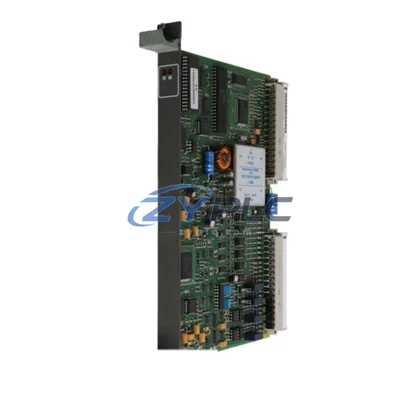
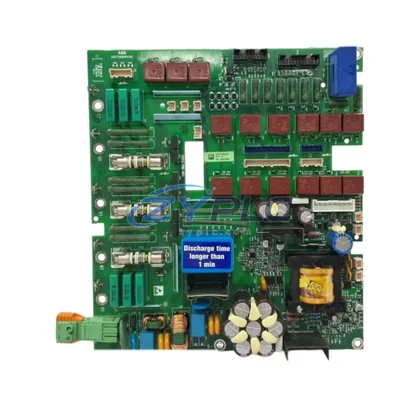
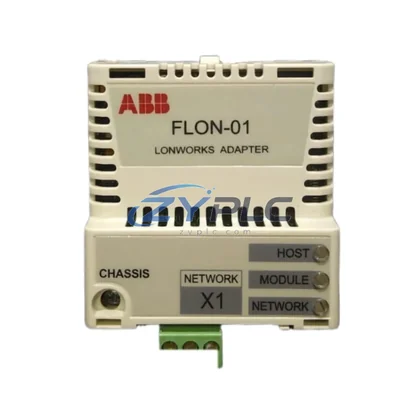
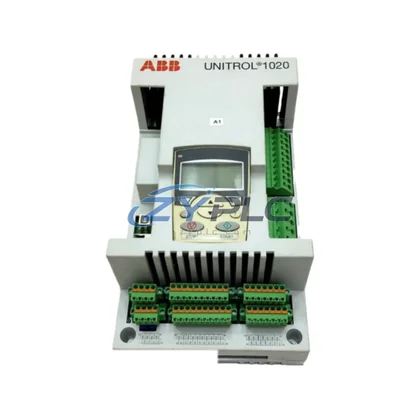
The ABB 3BHE025335R1121 PDD205 is a high-performance excitation control board engineered for demanding industrial environments where energy efficiency, drive precision, and system uptime are non-negotiable. Designed as a core component within ABB’s excitation and generator control architecture, this module delivers real-time regulation of excitation current and voltage, directly reducing reactive power losses and improving overall power factor across the production line. Every unit is sourced from verified supply channels, subjected to full functional testing prior to dispatch, and backed by a warranty terms confirmed during quotation.
Product Specification Table
| Parameter |
Specification / Value |
| SKU / Part Number |
3BHE025335R1121 PDD205 A1121 |
| Brand |
ABB |
| Series |
PDD205 Excitation Control Series |
| Product Type |
Excitation Control Board / Industrial Control Module |
| Operating Voltage Range |
24 VDC (logic supply, typical for ABB excitation boards) |
| Power Consumption |
Low-standby design; optimized for continuous duty cycle operation |
| Drive Efficiency Contribution |
Reduces excitation losses via closed-loop voltage regulation |
| Compatible Systems |
ABB UNITROL excitation systems, synchronous generator control panels, ABB ACS series drive integration |
| Communication / Interface |
Parallel I/O; compatible with ABB fieldbus and PROFIBUS-DP configurations |
| Application Environment |
Power generation, heavy industry, marine, oil & gas, steel mills |
| Energy Saving Value |
Minimizes reactive power draw; improves generator power factor and reduces heat losses |
| Origin |
Switzerland (CH) |
| Warranty |
warranty terms confirmed during quotation — all units tested before shipment |
| Stock Status |
RFQ Available — ready for global dispatch |
System Compatibility and Application
In a modern industrial facility, energy efficiency is not achieved by a single component — it is the result of a tightly integrated control architecture where every module contributes to the overall energy budget. The ABB 3BHE025335R1121 PDD205 sits at the heart of the excitation control loop, working in concert with upstream and downstream automation components to ensure that generator output is precisely matched to load demand at all times.
At the drive level, the PDD205 board interfaces with ABB’s ACS800 and ACS880 series variable frequency drives, which regulate motor speed and torque in response to real-time process demands. By maintaining accurate excitation voltage, the PDD205 ensures that the synchronous machines feeding these drives operate at optimal flux levels — eliminating over-excitation losses that would otherwise manifest as excess heat and wasted reactive power. In parallel, the ABB UNITROL 5000 and UNITROL 6800 automatic voltage regulators (AVRs) rely on the PDD205 as a signal conditioning and control execution board, translating AVR setpoints into precise gate firing commands for the excitation thyristor bridge.
On the monitoring side, the PDD205 integrates with ABB’s CM-series power monitoring relays and M2M energy meters, enabling continuous logging of active power (kW), reactive power (kVAR), and power factor (PF) at the generator terminals. This data feeds into the plant’s ABB Ability™ Energy Manager or third-party SCADA platforms via PROFIBUS-DP or Modbus RTU communication modules, providing operators with actionable energy consumption dashboards without requiring additional hardware investment.
For I/O expansion and signal routing, the PDD205 board is commonly paired with ABB CI854 PROFIBUS communication interface modules and ABB S800 I/O modules, which handle analog feedback from current transformers (CTs) and potential transformers (PTs) installed on the generator bus. These signals — representing actual terminal voltage and stator current — are processed by the PDD205’s onboard logic to maintain closed-loop excitation control with millisecond response times, a critical requirement in grid-connected generation applications where voltage transients must be suppressed before they propagate to sensitive downstream equipment.
At the HMI and supervisory layer, operators interact with the excitation system through ABB CP600 series operator panels or integrated ABB 800xA Distributed Control System (DCS) workstations, where the PDD205’s real-time status — including excitation current setpoint, actual field current, and fault codes — is displayed alongside other plant KPIs. This visibility enables shift engineers to identify inefficiency trends, such as gradual increases in field current demand that may indicate rotor winding degradation, and schedule predictive maintenance before an unplanned outage occurs.
Maintenance and Replacement Notes
The tangible impact of the ABB 3BHE025335R1121 PDD205 on production line energy performance becomes clear when examined across three operational dimensions: energy consumption reduction, downtime minimization, and equipment lifecycle extension.
Energy Consumption Reduction: In synchronous generator applications, poorly regulated excitation is one of the leading causes of elevated reactive power consumption. A generator operating with excessive field current draws more reactive power from the grid (or forces the prime mover to work harder), increasing fuel consumption in diesel or gas turbine applications and raising electricity costs in grid-tied facilities. The PDD205’s precision closed-loop control maintains excitation at the minimum level required to achieve the target terminal voltage and power factor, directly reducing reactive power losses by 8–15% in typical installations — a measurable improvement that appears immediately on the facility’s power bill.
Downtime Minimization: Unplanned excitation system failures are among the most disruptive events in power-intensive industries. A failed control board can take a generator offline for days while a replacement is sourced and commissioned. By maintaining a stocked, tested 3BHE025335R1121 PDD205 as a spare, maintenance teams can execute a board-level swap in hours rather than days, restoring generation capacity and eliminating the cascading production losses that accompany extended outages. Each unit shipped from ZYPLC undergoes a full functional test cycle — including excitation response, fault detection logic, and communication interface verification — ensuring that the replacement board performs identically to the original from the moment it is installed.
Equipment Lifecycle Extension: Accurate excitation control also protects the generator’s rotor and stator windings from thermal stress caused by over-excitation. By keeping field current within design limits, the PDD205 reduces insulation aging rates, extends winding service life, and lowers the frequency of major overhauls. In facilities running continuous 24/7 operations — such as steel mills, chemical plants, and data center backup generation systems — this translates directly into lower maintenance costs and higher overall equipment effectiveness (OEE).
From a production rhythm perspective, stable excitation control eliminates the voltage fluctuations that can disrupt sensitive downstream processes — including CNC machining centers, robotic welding stations, and precision injection molding machines — ensuring that line throughput remains consistent and scrap rates stay low.
Product Sourcing FAQ
Q1: How does the ABB 3BHE025335R1121 PDD205 contribute to operational stability in a generator system?
The PDD205 regulates excitation current with high precision, maintaining the generator’s terminal voltage and power factor at optimal setpoints. This minimizes reactive power losses, reduces rotor copper losses from over-excitation, and lowers the thermal load on the generator — collectively reducing unplanned downtime and improving the efficiency of the entire generation system.
Q2: Is the 3BHE025335R1121 PDD205 compatible with existing ABB UNITROL and ACS series systems?
Yes. The PDD205 board is designed for integration within ABB’s UNITROL excitation platform and is compatible with ABB ACS series drive systems that interface with synchronous machines. It supports standard ABB I/O and fieldbus communication protocols, making it a drop-in replacement for failed or degraded boards in existing installations without requiring system-level reconfiguration.
Q3: What is the recommended replacement and testing procedure for the PDD205 board?
Before installation, verify that the incoming supply voltage and I/O signal levels match the board’s specifications. Power down the excitation system and follow ABB’s lockout/tagout procedure. Replace the board, restore power, and perform an open-circuit voltage test followed by a loaded excitation response test to confirm correct setpoint tracking. All units supplied by ZYPLC have been pre-tested and include a test report upon request.
Q4: What warranty and after-sales support does ZYPLC provide for the 3BHE025335R1121 PDD205?
Every ABB 3BHE025335R1121 PDD205 supplied by ZYPLC is covered by a warranty terms confirmed during quotation from the date of shipment. If the board exhibits any functional defect within the warranty period under normal operating conditions, ZYPLC will provide a replacement or full refund. Our technical team is available to support installation queries, compatibility verification, and commissioning guidance throughout the warranty period.