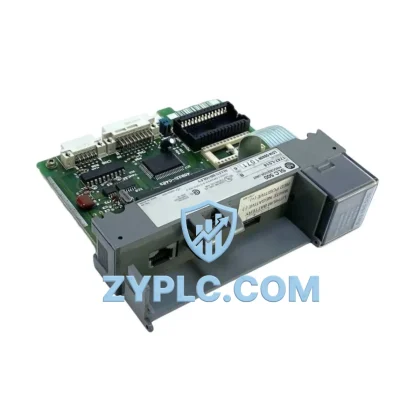
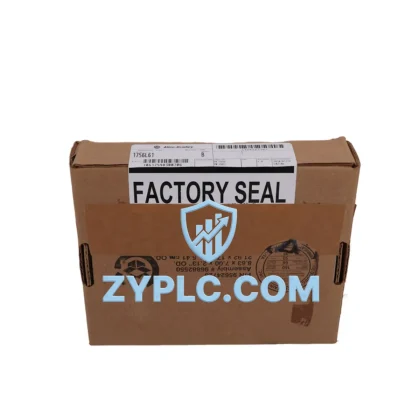
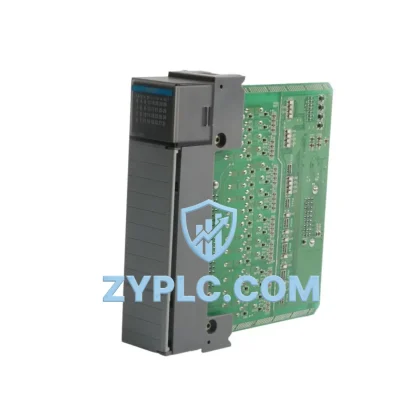
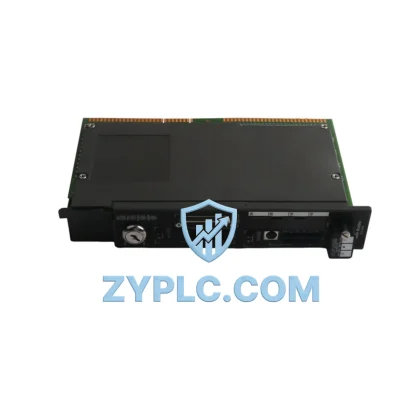
ABB 3BHE028959R0101 PPC902CE101 Energy-Saving Communication Processor for Optimized Symphony Plus Automation
The ABB 3BHE028959R0101 PPC902CE101 is a high-performance communication processor engineered for the ABB Symphony Plus Distributed Control System (DCS) platform. Designed to serve as the central communication backbone of process automation architectures, this module enables real-time data exchange between field devices, I/O subsystems, and supervisory control layers — directly contributing to measurable reductions in energy consumption, unplanned downtime, and operational inefficiency across industrial production lines.
In modern manufacturing and process industries, communication latency and data bottlenecks are silent energy drains. When a DCS communication processor operates below its rated throughput, controllers issue delayed commands to variable frequency drives, servo amplifiers, and motor starters — causing motors to run longer than necessary, drives to hunt for setpoints, and actuators to overcorrect. The 3BHE028959R0101 PPC902CE101 eliminates these inefficiencies by maintaining deterministic, high-speed communication across the Symphony Plus control network, ensuring that every downstream device receives accurate, timely instructions.
Efficiency Performance Table
| Parameter |
Specification / Value |
| Part Number |
3BHE028959R0101 PPC902CE101 |
| Brand / Manufacturer |
ABB |
| Series / Platform |
Symphony Plus DCS |
| Module Type |
Communication Processor Board |
| Typical Power Consumption |
Low-power embedded processor architecture |
| Communication Protocol Support |
PROFIBUS, Modbus, IEC 61850, OPC-UA (platform-dependent) |
| Compatible Systems |
ABB Symphony Plus, AC800M, S+ Operations, S+ Engineering |
| Application Environment |
Power generation, oil & gas, pulp & paper, chemical processing, water treatment |
| Energy Optimization Value |
Reduces motor over-run, drive hunting, and actuator overcorrection via deterministic control signaling |
| Origin |
Sweden (SE) |
| Warranty |
12-Month Warranty — All units shipped after full functional and communication testing |
| Stock Status |
In Stock — Ready to Ship |
Energy-Aware Automation Architecture
The ABB 3BHE028959R0101 PPC902CE101 sits at the heart of a tightly integrated energy-aware control architecture. In a typical Symphony Plus deployment, this communication processor interfaces directly with the ABB AC800M controller — the primary process execution engine — to relay real-time setpoints and feedback signals across the control network. When paired with ABB ACS880 variable frequency drives, the processor ensures that motor speed references are delivered with minimal jitter, allowing drives to operate at their most efficient torque-speed curve rather than compensating for communication delays with excess energy draw.
On the field side, the PPC902CE101 coordinates data flow from ABB S800 I/O modules, which aggregate analog and digital signals from temperature transmitters, flow meters, pressure sensors, and power quality analyzers. This real-time field data feeds directly into the Symphony Plus energy management loop, enabling the DCS to dynamically adjust drive references, valve positions, and pump speeds in response to actual process conditions — rather than relying on fixed schedules that waste energy during low-demand periods.
For power monitoring integration, the processor supports communication with ABB M2M power measurement units and compatible energy metering modules, enabling the DCS to track per-asset energy consumption at the control loop level. This granular visibility allows plant engineers to identify which motors, compressors, or conveyors are consuming disproportionate energy relative to their production contribution — a critical input for both real-time optimization and long-term capital planning.
In servo-driven applications, the PPC902CE101 maintains synchronization with ABB MicroFlex e190 servo drives and associated servo motor feedback encoders, ensuring that multi-axis motion sequences execute with the timing precision required to minimize cycle time variance and eliminate energy-wasting dwell periods between production steps. When integrated with ABB Panel Builder HMI terminals running S+ Operations, operators gain a unified visualization layer that surfaces energy KPIs alongside production metrics — enabling informed, real-time decisions about load shedding, speed reduction, and equipment sequencing.
The module also supports integration with ABB Ability™ Asset Monitor edge analytics nodes, which use vibration, temperature, and current signature data to detect early-stage motor and drive degradation. By catching these conditions before they escalate into unplanned failures, the system prevents the energy spikes and production losses associated with emergency restarts and cold-start ramp-up sequences.
Power Optimization in Real Production Lines
In continuous process industries — including pulp and paper, chemical manufacturing, and power generation — the ABB 3BHE028959R0101 PPC902CE101 delivers energy savings through three primary mechanisms: reduced idle energy consumption, optimized drive control response, and predictive maintenance-driven uptime improvement.
Reduced Idle Energy Consumption: When communication between the DCS and field drives is unreliable or slow, drives default to conservative, energy-inefficient operating modes to avoid process upsets. A healthy, high-throughput communication processor like the PPC902CE101 allows drives to operate in tightly regulated closed-loop modes, reducing the energy overhead of conservative open-loop fallback operation. In facilities with dozens of variable-speed drives, this alone can represent a meaningful reduction in baseline energy draw.
Optimized Drive Control Response: Production line throughput is directly tied to the speed and accuracy of control loop execution. When the communication processor delivers setpoint updates to ACS880 drives and S800 I/O modules with deterministic timing, the control system can implement faster, more aggressive PID tuning without risking process instability. Faster, more accurate control means less energy wasted in overshoot, undershoot, and correction cycles — and a tighter production rhythm that reduces per-unit energy cost.
Predictive Maintenance and Uptime: Unplanned equipment failures are among the most energy-intensive events in industrial operations. Emergency restarts, cold-start ramp-up sequences, and manual override periods all consume significantly more energy than steady-state operation. By maintaining reliable communication between the DCS and condition monitoring systems, the PPC902CE101 supports predictive maintenance workflows that schedule interventions during planned downtime windows — preserving both energy efficiency and production continuity. Every unit supplied by ZYPLC undergoes full functional testing and communication verification before shipment, and is backed by a 12-month warranty to ensure long-term operational confidence.
For facilities managing aging DCS infrastructure, replacing a failed or degraded communication processor with a tested, in-stock 3BHE028959R0101 PPC902CE101 can restore full system performance within hours rather than weeks — avoiding the extended energy and production losses associated with waiting for OEM lead times. ZYPLC maintains ready inventory of this module to support urgent MRO requirements across global industrial sites.
Energy Optimization FAQ
Q1: How does replacing the 3BHE028959R0101 PPC902CE101 improve energy efficiency in a Symphony Plus DCS?
A degraded or failed communication processor forces downstream drives and controllers into conservative, high-energy fallback modes. Replacing it with a fully tested PPC902CE101 restores deterministic communication, allowing variable frequency drives and servo systems to operate in optimized closed-loop modes — directly reducing unnecessary energy consumption across the control network.
Q2: Is the 3BHE028959R0101 PPC902CE101 compatible with current ABB Symphony Plus system versions?
Yes. The PPC902CE101 is designed for the ABB Symphony Plus platform and is compatible with AC800M controllers, S800 I/O modules, S+ Operations, and S+ Engineering environments. For specific firmware version compatibility, we recommend verifying against your site’s current DCS software revision before installation.
Q3: What is the recommended replacement process, and how quickly can the module be deployed?
For most Symphony Plus installations, the PPC902CE101 is a direct drop-in replacement for the existing communication processor slot. ZYPLC ships all units with full test documentation. Typical site installation and commissioning can be completed within a planned maintenance window, minimizing production disruption. Contact our technical team for site-specific guidance.
Q4: What warranty and testing assurance does ZYPLC provide for this module?
Every ABB 3BHE028959R0101 PPC902CE101 supplied by ZYPLC is tested for full communication functionality and operational performance prior to shipment. All units are covered by a 12-month warranty from the date of delivery. In the event of a warranty claim, ZYPLC provides direct technical support and replacement coordination to minimize site downtime.
© 2026 ZYPLC. All rights reserved.
Original Source: https://zyplc.com
Contact: +86 19859288691 | plc.sales@zyplc.com