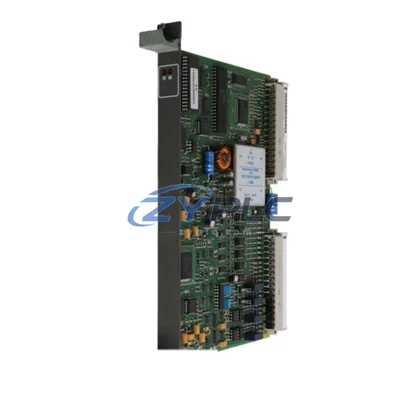
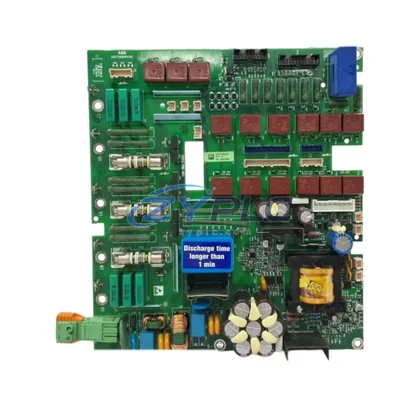
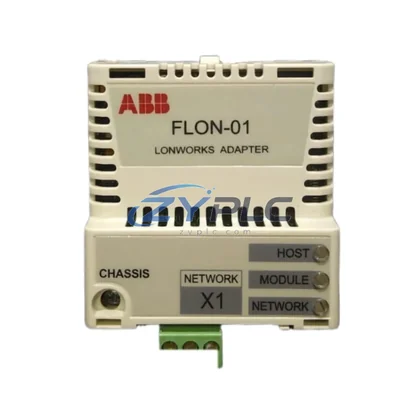
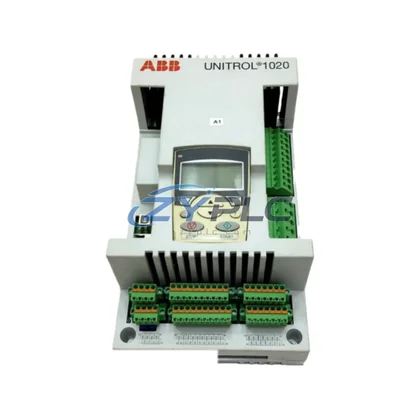
ABB 3BHE060478R0102 DDC779 D102 Industrial Network Interface: Powering Smart Factory Data Links
The ABB 3BHE060478R0102 DDC779 D102 is a high-performance industrial communication interface board engineered for seamless data exchange across complex automation architectures. Designed to operate within ABB’s DDC779 Series control platform, this module serves as a critical node in the industrial data chain — bridging field-level devices, PLC controllers, remote I/O systems, HMI panels, SCADA platforms, variable frequency drives, and edge computing gateways into a unified, real-time network fabric. Whether deployed in power generation, process automation, or discrete manufacturing, the 3BHE060478R0102 delivers the protocol conversion capability and network stability that modern smart factories demand.
Compatibility & Integration Notes
| Specification |
Details |
| SKU / Part Number |
3BHE060478R0102 DDC779 D102 |
| Brand / Manufacturer |
ABB |
| Series |
DDC779 |
| Product Type |
Industrial Communication Gateway / PCB Control Board |
| Protocol Support |
PROFIBUS DP, Modbus RTU/TCP, IEC 61850, DNP3, OPC UA (platform-dependent) |
| Interface Types |
Backplane bus, serial RS-485, Ethernet (system-integrated) |
| Transmission Capability |
Real-time cyclic and acyclic data exchange; deterministic low-latency communication |
| Network Compatibility |
ABB Symphony Plus, ABB AC500, ABB Ability™ SCADA, third-party DCS/PLC systems |
| System Applications |
Power plant automation, process control, remote I/O integration, HMI/SCADA data acquisition |
| Origin |
Germany |
| Warranty |
warranty terms confirmed during quotation |
| Shipping |
DHL / FedEx global express; availability confirmed by RFQ shipment arranged after confirmation |
Connected Automation Data Flow
In a typical smart factory deployment, the ABB 3BHE060478R0102 DDC779 D102 sits at the heart of the control network, managing bidirectional data flow between layers of the automation hierarchy. At the field level, sensors and actuators — including ABB TZIDC digital positioners and ABB ACS880 variable frequency drives — transmit process signals upward through the communication bus. The DDC779 D102 board receives these signals, performs protocol normalization, and forwards structured data packets to the supervisory layer.
Within the same control cabinet, the module interfaces directly with ABB AC500 PLC controllers, enabling synchronized I/O scanning and deterministic loop execution. Remote I/O expansion modules such as the ABB CI854 PROFIBUS DP interface module extend the network reach to distributed field panels, allowing the 3BHE060478R0102 to aggregate data from multiple remote nodes without introducing latency spikes. This architecture is particularly valuable in large-scale process plants where field devices are spread across hundreds of meters of plant floor.
Moving up the network stack, the DDC779 D102 feeds real-time process data into ABB Ability™ Symphony Plus DCS, where operators interact with the system through ABB Panel Builder 600 HMI terminals. The HMI layer displays live values — flow rates, temperatures, pressures, motor speeds — sourced directly from the communication board’s data registers. Simultaneously, the SCADA layer, often running ABB Ability™ SCADA or third-party platforms such as Wonderware or Ignition, subscribes to OPC UA data streams routed through the DDC779 gateway, enabling plant-wide visibility and historian logging.
For edge computing integration, the 3BHE060478R0102 can interface with ABB Edge Computing Gateways, pushing pre-processed data to cloud analytics platforms for predictive maintenance and maintenance planning. Alarm events generated at the field level — such as drive fault signals from ABB ACS580 drives or pressure threshold breaches from Endress+Hauser transmitters — are captured by the DDC779 D102, timestamped with millisecond precision, and forwarded to the SCADA alarm management system for operator notification and audit logging. This end-to-end data chain — from signal acquisition through protocol conversion, network transmission, real-time monitoring, alarm feedback, and remote diagnostics — represents the full connectivity value of the ABB 3BHE060478R0102 DDC779 D102 in an integrated smart factory environment.
Solving Data Isolation in Industrial Sites
One of the most persistent challenges in industrial automation is the coexistence of legacy and modern communication protocols across the same plant floor. Older field devices may speak Modbus RTU while newer PLCs and drives operate on PROFIBUS DP or Industrial Ethernet — creating data silos that prevent unified monitoring and control. The ABB 3BHE060478R0102 DDC779 D102 addresses this directly by acting as a protocol gateway, translating between heterogeneous communication standards and presenting a unified data interface to the supervisory layer.
Remote monitoring is another critical pain point in distributed industrial sites. Without a reliable communication backbone, maintenance engineers must physically visit field panels to diagnose faults — a costly and time-consuming process. The DDC779 D102 enables remote diagnostics by maintaining persistent network connections and exposing device health registers to the SCADA system, allowing engineers to identify communication errors, signal degradation, or device faults from the control room or even from mobile devices via secure VPN access.
Production line transparency — knowing exactly what every machine is doing at any given moment — is a prerequisite for lean manufacturing and OEE optimization. By ensuring that every field device’s data reaches the SCADA historian without loss or delay, the 3BHE060478R0102 supports real-time KPI dashboards, shift reports, and automated production scheduling. System expansion is equally straightforward: the DDC779 architecture supports modular addition of new I/O nodes and communication channels without requiring a full network redesign, protecting the customer’s existing infrastructure investment as production capacity grows.
Every unit of the ABB 3BHE060478R0102 DDC779 D102 supplied by ZYPLC undergoes pre-shipment functional testing, verifying communication link establishment, data integrity, and hardware integrity before dispatch. Stock is maintained in-warehouse for immediate fulfillment, and all units are covered by a warranty terms confirmed during quotation against manufacturing defects and communication failures.
Industrial Connectivity FAQ
Q1: What communication protocols does the ABB 3BHE060478R0102 DDC779 D102 support?
The DDC779 D102 is designed for ABB’s DDC779 Series control platform and supports the communication protocols native to that architecture, including PROFIBUS DP and serial-based fieldbus standards. Compatibility with Modbus TCP/RTU and OPC UA depends on the host system configuration. Please contact our technical team with your specific network topology for a compatibility assessment.
Q2: How does this module ensure network stability in high-noise industrial environments?
The 3BHE060478R0102 is built to ABB’s industrial-grade hardware standards, incorporating EMI shielding, surge protection on communication interfaces, and watchdog-supervised firmware to automatically recover from transient network faults. Its deterministic communication cycle ensures that data delivery is not disrupted by electrical noise common in motor-heavy industrial environments.
Q3: Can the DDC779 D102 be integrated with third-party SCADA or HMI systems?
Yes. When the host ABB controller exposes data via OPC UA or Modbus TCP, third-party SCADA platforms — including Wonderware, Ignition, and Siemens WinCC — can subscribe to process data routed through the DDC779 D102. Direct integration feasibility depends on the communication driver support of the SCADA platform and the ABB system version in use.
Q4: What does the warranty terms confirmed during quotation cover, and what is the lead time for availability confirmed by RFQ units?
The warranty terms confirmed during quotation covers hardware defects and communication interface failures under normal operating conditions. Availability is confirmed via RFQ for same-day or next-business-day dispatch via DHL or FedEx international express. For bulk orders or urgent requirements, please contact our sales team directly for priority fulfillment arrangements.