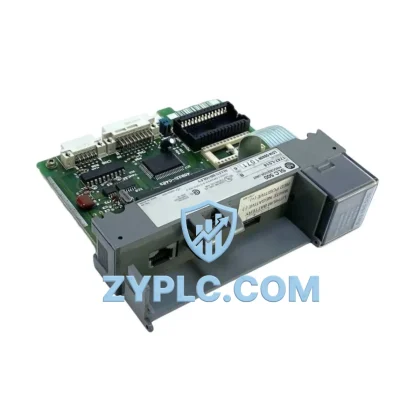
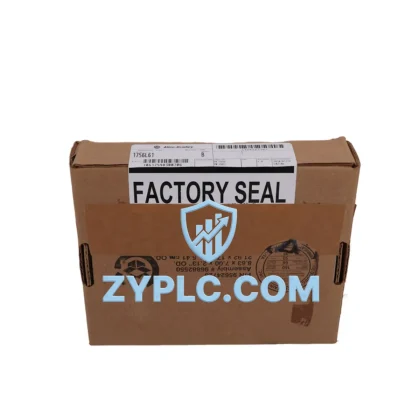
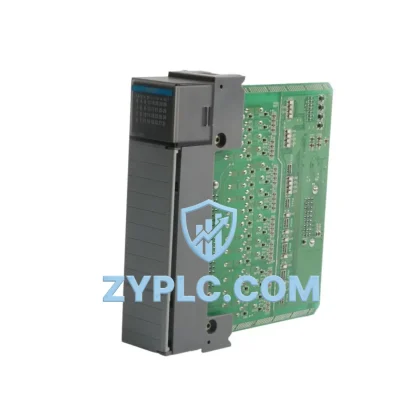
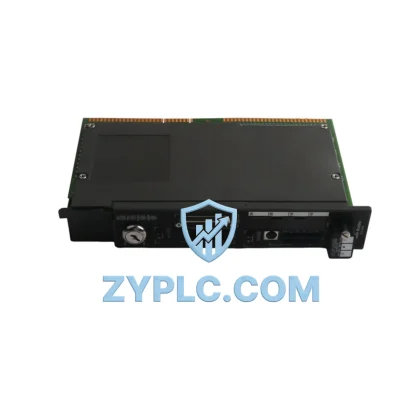
ABB 3BSE003641R1 System-Ready Processor Module for AC450 Architecture
The ABB 3BSE003641R1, commercially designated as the PM150 processor module, serves as the central processing backbone within the ABB Advant AC450 distributed control system (DCS) architecture. Designed to coordinate real-time data exchange across control, I/O, network, power, and human-machine interface layers, this module ensures deterministic execution of logic programs while maintaining seamless communication with field-level devices and supervisory platforms. Its role within the AC450 system hierarchy positions it as the primary intelligence node responsible for scan cycle management, alarm processing, and coordinated failover in redundant configurations.
Architecture Specification Table
| Parameter |
Specification |
| System Role |
Central Processor Unit — Advant AC450 DCS |
| Part Number / SKU |
3BSE003641R1 |
| Module Designation |
PM150 |
| Brand |
ABB |
| Series / Platform |
Advant AC450 |
| Communication Protocols |
MasterBus 300, AF100, Serial RS-232/RS-485 |
| Backplane Interface |
Advant AC450 Rack Backplane |
| Power Supply Requirement |
24 VDC (via system rack PSU) |
| Operating Temperature |
0 °C to +55 °C |
| Mounting |
DIN-rail / Rack Slot |
| Protection Rating |
IP20 |
| Origin |
Sweden |
| Warranty |
12-Month Warranty |
Coordinated Control System Design
Within a fully configured Advant AC450 control cabinet, the 3BSE003641R1 PM150 processor module operates in close coordination with several critical companion modules that together form a resilient and high-performance automation platform. The processor communicates upstream with the ABB CI532V02 AF100 communication interface (3BSE003826R1), which bridges the controller to plant-wide Ethernet or fiber-optic supervisory networks, enabling SCADA and MES-level data visibility. On the fieldbus side, the CI520V1 MasterBus 300 communication module (3BSE003827R1) extends deterministic I/O polling to remote racks and distributed peripherals, ensuring sub-millisecond response times for safety-critical loops.
Power integrity across the rack is maintained by the SD831 power supply module and the SS832 power voting unit, both of which provide redundant 24 VDC rails to the processor and its adjacent cards. In configurations where high-availability is mandated — such as continuous chemical processing or power generation — dual PM150 processors can be deployed in a hot-standby redundancy pair, with automatic bumpless transfer managed through the system’s built-in redundancy firmware.
Analog signal acquisition is handled by the AI830A analog input module, which feeds 4–20 mA and 1–5 V process signals directly into the PM150’s scan cycle for PID regulation, cascade control, and feedforward compensation. Discrete control tasks — motor start/stop sequencing, valve interlock logic, and conveyor permissive chains — rely on the DI831 digital input module and the DO831 digital output module, both of which interface through the rack backplane under the processor’s deterministic scheduling.
For applications requiring high-speed pulse counting, frequency measurement, or turbine monitoring, the TB820V2 ModuleBus cluster module aggregates specialty I/O cards and presents consolidated data to the PM150 over the internal ModuleBus. Meanwhile, the TP830 baseplate terminal unit provides a standardized wiring interface between field cables and the I/O modules, simplifying commissioning and reducing mean time to repair during maintenance windows.
The architectural synergy among these components — processor, communication interfaces, power modules, analog and digital I/O, and terminal infrastructure — reflects ABB’s design philosophy of layered modularity. Each element can be individually replaced or upgraded without disrupting adjacent modules, a characteristic that significantly reduces unplanned downtime and extends the operational lifecycle of the entire AC450 installation.
Application in Layered Automation Systems
The ABB 3BSE003641R1 PM150 processor module finds its strongest application in industries where continuous process control, high signal density, and long-term system availability are non-negotiable requirements. In thermal and combined-cycle power plants, the AC450 platform — anchored by the PM150 — manages boiler drum level control, turbine governor loops, and flue gas desulfurization sequencing, all while maintaining sub-second failover to the standby processor in the event of a hardware fault.
In petrochemical refineries and upstream oil and gas facilities, the PM150 coordinates compressor anti-surge control, distillation column temperature profiling, and tank farm inventory management. The module’s deterministic scan cycle ensures that safety-instrumented functions execute within their required proof-test intervals, supporting compliance with IEC 61511 and site-specific safety integrity level (SIL) targets.
Water and wastewater treatment plants leverage the AC450 architecture for multi-stage filtration sequencing, chemical dosing PID loops, and remote pump station telemetry aggregated through MasterBus 300 networks. The PM150’s ability to handle large I/O counts — often exceeding several thousand points per installation — makes it well suited for municipal utilities that must scale capacity as population and regulatory demands grow.
In metals and mining operations, the processor module governs conveyor interlocking across kilometers of material handling systems, mill speed regulation, and flotation cell level control. Its robust operating temperature range and noise-immune backplane communication ensure reliable performance in electrically harsh environments characterized by variable-frequency drives, arc furnaces, and heavy inductive loads.
Packaging and discrete manufacturing lines also benefit from the AC450 platform when integrated with ABB’s broader automation portfolio. The PM150 can exchange data with Freelance or 800xA controllers at the supervisory level, enabling hybrid architectures where legacy Advant hardware coexists with modern platforms during phased migration programs — protecting capital investment while progressively introducing advanced analytics and cybersecurity features.
Architecture Engineering FAQ
Q1: Can the 3BSE003641R1 PM150 operate in a redundant processor configuration within the AC450 rack?
Yes. The PM150 supports hot-standby redundancy when paired with a second identical processor module and the appropriate redundancy link cable. Bumpless transfer occurs automatically upon detection of a primary processor fault, with typical switchover times under 100 milliseconds. This configuration is standard practice in power generation, petrochemical, and water treatment installations where uninterrupted process control is mandatory.
Q2: What communication modules are required to connect the PM150 to a plant-wide Ethernet supervisory network?
To bridge the AC450 controller to an Ethernet-based SCADA or DCS supervisory layer, the CI532V02 AF100 communication interface (3BSE003826R1) is typically installed in the same rack. This module translates the internal MasterBus protocol to TCP/IP-compatible data streams, enabling integration with ABB 800xA, Freelance, or third-party OPC servers. For field-level I/O expansion, the CI520V1 MasterBus 300 module (3BSE003827R1) handles deterministic polling of remote I/O racks.
Q3: How does the 12-Month Warranty apply, and what maintenance considerations should be planned?
Every 3BSE003641R1 PM150 processor module shipped by ZYPLC is covered by a 12-Month Warranty from the date of delivery, ensuring replacement or repair in the event of manufacturing defects or premature component failure. For long-term maintenance planning, it is recommended to maintain at least one spare PM150 on site, verify firmware revision compatibility with existing rack modules during installation, and schedule annual diagnostic checks using ABB’s engineering tools to confirm memory integrity, communication bus health, and watchdog timer functionality.
© 2026 ZYPLC. All rights reserved.
Original Source: https://zyplc.com
Contact: +86 19859288691 | plc.sales@zyplc.com