ABB 3BSE003644R1 Energy-Saving Processor Module for Optimized Advant OCS Automation
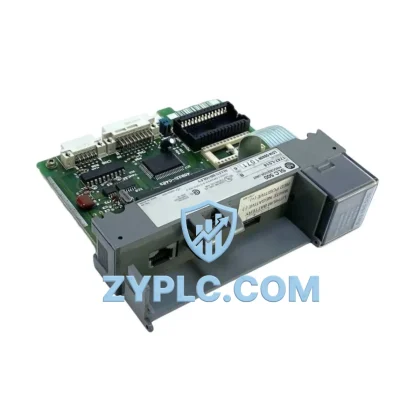
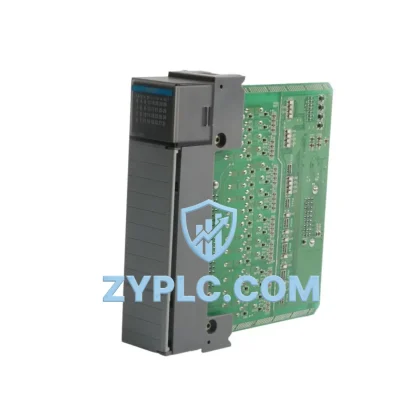
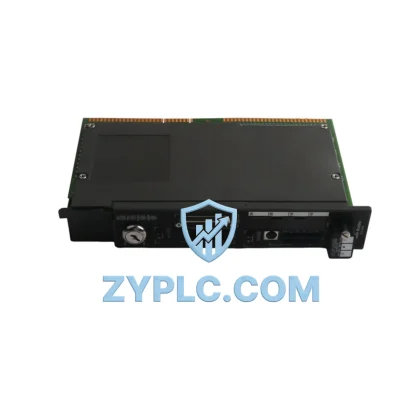
The ABB PM153 (3BSE003644R1) is a high-performance central processor module engineered for the Advant OCS distributed control system platform. Designed to operate within ABB’s AC450 controller architecture, this module serves as the computational core that governs real-time process execution, energy-aware task scheduling, and deterministic control loop management across complex industrial automation environments. For facilities seeking to reduce operational energy expenditure while maintaining precise production line rhythm, the PM153 represents a proven, field-validated solution.
In modern manufacturing, energy efficiency is no longer a secondary concern — it is a primary driver of profitability. The PM153 processor module directly contributes to this goal by enabling tighter scan cycle management, reducing idle processing overhead, and supporting high-speed communication with field devices. When integrated with ABB’s CI532V02 PROFIBUS communication interface, the PM153 can coordinate real-time data exchange with variable frequency drives, servo amplifiers, and remote I/O stations — eliminating polling delays that would otherwise translate into wasted energy cycles and degraded line throughput.
Efficiency Performance Table
| Parameter |
Specification |
| Model / SKU |
PM153 / 3BSE003644R1 |
| Brand |
ABB |
| Series |
Advant OCS / AC450 |
| Product Type |
Central Processor Module |
| Operating Voltage |
24 VDC (via backplane) |
| Typical Power Consumption |
≤ 5 W (processor core) |
| Execution Efficiency |
Deterministic real-time scan cycle |
| Compatible Systems |
ABB Advant OCS, AC450 Controller |
| Communication Support |
PROFIBUS, MasterBus 300, Ethernet (via CI modules) |
| Application Environment |
Process industry, power generation, oil & gas, utilities |
| Energy Optimization Value |
Reduces idle CPU load; supports demand-driven control loops |
| Origin |
Germany |
| Warranty |
12 Months |
Energy-Aware Automation Architecture
The PM153 does not operate in isolation — its energy optimization value is fully realized when deployed within a well-structured Advant OCS architecture. At the field level, analog input modules such as the AI830A collect real-time process variables including current draw, temperature, and pressure, feeding this data upstream to the PM153 for energy-aware decision-making. On the output side, the AO820 analog output module translates processor commands into precise 4–20 mA signals that regulate valve actuators and variable speed drives, ensuring that energy is delivered to the process in exact proportion to demand — no more, no less.
For drive-level energy control, the PM153 communicates with ABB’s ACS800 series industrial drives via the CI854AK01 PROFIBUS DP communication adapter. This integration allows the processor to dynamically adjust motor speed references based on real-time load conditions, a technique that can reduce motor energy consumption by 20–50% compared to fixed-speed operation. When paired with the TB840A redundancy module, the system maintains uninterrupted control even during module replacement, eliminating the energy waste associated with unplanned shutdowns and cold restarts.
At the supervisory level, the DP840 communication processor extends the PM153’s reach to plant-wide SCADA and MES systems, enabling energy consumption data to be aggregated, trended, and acted upon at the enterprise level. Complementary processor modules such as the PM151 and PM152 can be deployed in parallel controller cabinets to distribute processing load, preventing CPU saturation that would otherwise force conservative, energy-inefficient control strategies. The TC520 termination unit and SA811F signal conditioner further ensure signal integrity across long cable runs, preventing measurement errors that could cause unnecessary actuator cycling and associated energy losses.
Power Optimization in Real Production Lines
Consider a continuous process plant — a paper mill, a chemical reactor, or a water treatment facility — where dozens of motors, pumps, and compressors run simultaneously. Without precise processor-level coordination, these assets tend to operate at fixed setpoints regardless of actual process demand, consuming energy at maximum rated capacity even during low-load periods. The PM153 changes this dynamic fundamentally.
By executing energy-optimized control logic at scan rates as fast as 10 ms, the PM153 enables demand-following control strategies that modulate pump speeds, compressor staging, and heat exchanger bypass valves in real time. The result is a measurable reduction in peak demand charges — often the largest single line item on an industrial electricity bill. Facilities that have migrated from legacy fixed-speed control to PM153-coordinated variable-speed architectures report energy savings of 15–35% on motor-driven loads alone.
Beyond energy savings, the PM153 contributes to production line rhythm optimization. Its deterministic execution model ensures that control actions are delivered at precisely timed intervals, preventing the micro-delays that accumulate into macro-level throughput losses. In high-speed packaging or assembly lines, this translates directly into higher overall equipment effectiveness (OEE) scores and reduced scrap rates — both of which have significant indirect energy implications, since every scrapped unit represents wasted manufacturing energy.
Predictive maintenance is another dimension where the PM153 delivers energy value. By continuously monitoring process variables and detecting subtle deviations from baseline — a bearing beginning to wear, a heat exchanger fouling, a valve starting to stick — the processor enables maintenance teams to intervene before failures occur. Unplanned downtime is not only costly in lost production; it also carries a significant energy penalty in the form of cold-start energy surges and inefficient warm-up cycles. The PM153’s real-time diagnostic capabilities help eliminate these hidden energy costs.
All units supplied by ZYPLC are sourced from verified supply channels, subjected to pre-shipment functional testing, and covered by a 12-month warranty. Stock is maintained for prompt dispatch, supporting both planned maintenance schedules and urgent replacement requirements.
Energy Optimization FAQ
Q1: How does the PM153 (3BSE003644R1) contribute to measurable energy savings on the production floor?
The PM153 enables demand-driven control by executing real-time logic that adjusts drive setpoints, valve positions, and actuator commands based on actual process load rather than fixed schedules. When integrated with variable frequency drives via PROFIBUS, this approach typically reduces motor energy consumption by 20–50% on variable-torque loads such as pumps and fans.
Q2: Is the 3BSE003644R1 compatible with existing ABB Advant OCS installations, and can it replace older PM153 variants?
Yes. The 3BSE003644R1 is the standard catalog reference for the PM153 processor module and is designed for direct installation into AC450 controller racks. It is backward-compatible with existing Advant OCS configurations, making it a straightforward replacement for aging or failed processor modules without requiring software migration or rack modifications.
Q3: What pre-shipment testing does ZYPLC perform on the PM153 before dispatch?
Each PM153 unit undergoes a functional power-on test and visual inspection prior to shipment. Units are verified for correct backplane communication and basic I/O response. All testing is documented, and units are shipped with anti-static packaging to prevent transit damage. The 12-month warranty covers functional defects identified after installation.
Q4: What is the recommended replacement strategy for PM153 modules in critical process applications?
For critical applications, ZYPLC recommends maintaining at least one spare PM153 (3BSE003644R1) on-site to support rapid swap-out in the event of module failure. Pairing the PM153 with the TB840A redundancy module provides hot-standby capability, allowing the spare processor to assume control within milliseconds of a primary module fault — minimizing both downtime and the associated energy costs of process restart.
© 2026 ZYPLC. All rights reserved.
Original Source: https://zyplc.com
Contact: +86 19859288691 | plc.sales@zyplc.com