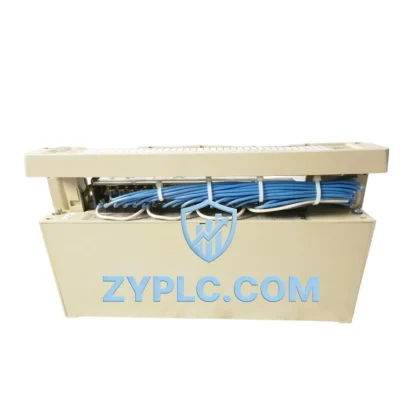
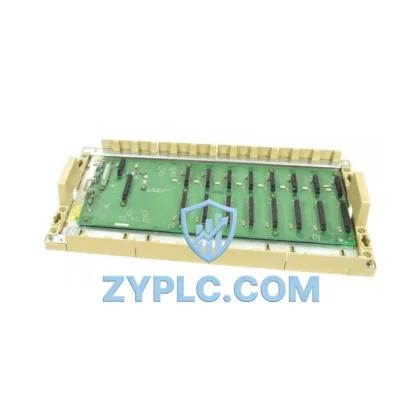
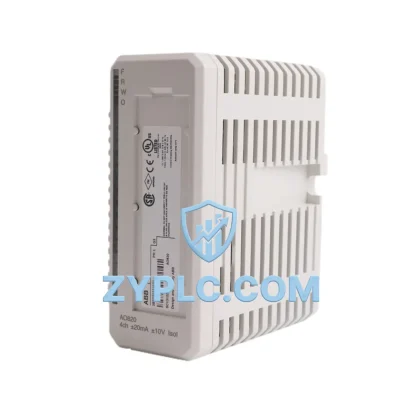
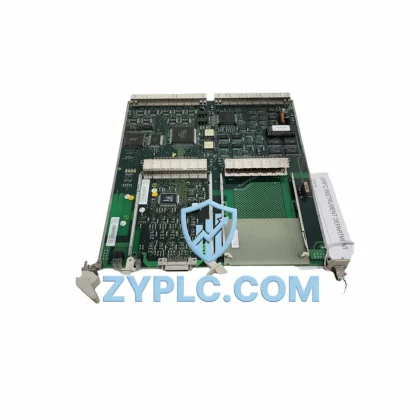
ABB 3HAC022545-001 Energy-Saving Robot Wrist Unit for Optimized IRB 6600 Automation
The ABB 3HAC022545-001 is a precision-engineered robot wrist unit designed for the IRB 6600 series — one of ABB’s most widely deployed heavy-payload industrial robots. In high-throughput manufacturing environments, the wrist unit is the final mechanical link between the robot arm and the end-effector, and its mechanical efficiency directly determines how much energy is consumed per production cycle. A worn or misaligned wrist unit forces the servo drive system to compensate with excess torque, increasing power draw, accelerating motor wear, and degrading positional repeatability. Replacing it with a verified 3HAC022545-001 restores the system to factory-spec performance — reducing unnecessary energy consumption at the point of motion execution.
This unit is fully compatible with the ABB IRC5 controller platform, which manages coordinated multi-axis motion across the IRB 6600 robot cell. When the wrist unit operates within its designed mechanical tolerances, the IRC5’s motion planner can execute optimized path profiles without over-torquing the wrist axes, directly lowering the energy demand on the ABB DSQC series servo drives that power each joint. In facilities running multi-shift operations, this mechanical precision translates into measurable reductions in per-cycle energy consumption — particularly on axes 4, 5, and 6, which the wrist unit governs.
Efficiency Performance Table
| Parameter |
Specification |
| SKU |
3HAC022545-001 |
| Compatible Robot Series |
ABB IRB 6600 |
| Product Category |
Robot Wrist Unit / Motion Control Component |
| Power Consumption Impact |
Restores factory-spec torque efficiency; reduces servo overdrive |
| Operating Efficiency |
Optimized axis 4/5/6 motion with minimal mechanical loss |
| Compatible Control System |
ABB IRC5 Controller |
| Application Environment |
Heavy-payload industrial automation, welding, material handling |
| Energy Saving Value |
Reduces compensatory torque demand; lowers per-cycle kWh draw |
| Origin |
Sweden (ABB Robotics) |
| Condition |
Verified Refurbished / Tested |
| Warranty |
12-Month Warranty |
Energy-Aware Automation Architecture
In a fully integrated IRB 6600 robot cell, the 3HAC022545-001 wrist unit does not operate in isolation — it is part of a tightly coupled energy chain that begins at the power supply and ends at the tool center point. Understanding this architecture is essential for engineers seeking to reduce total cell energy consumption rather than optimizing individual components in isolation.
The ABB IRC5 controller serves as the central intelligence of the robot cell, coordinating motion profiles across all six axes. Its integrated motion optimization algorithms calculate the most energy-efficient path for each move cycle. However, these algorithms can only deliver their full benefit when the mechanical system — including the wrist unit — operates without excess friction or backlash. A degraded 3HAC022545-001 introduces mechanical resistance that the ABB DSQC663 servo drive module must overcome with additional current, increasing heat generation and reducing drive efficiency.
The IRC5 cabinet also houses the ABB DSQC609 power distribution board, which manages DC bus voltage across all servo channels. When wrist axis loads are within spec, the DSQC609 maintains stable bus voltage with minimal ripple — a condition that directly supports efficient regenerative braking on deceleration moves. Replacing a worn wrist unit restores this balance, allowing the regenerative energy from deceleration to be fed back into the DC bus rather than dissipated as heat.
For facilities that monitor energy consumption at the cell level, integrating the robot cell with an ABB B23 energy meter or compatible power monitoring module provides real-time visibility into per-cycle kWh consumption. When paired with the ABB Ability™ Connected Services platform, this data can be trended over time to detect gradual mechanical degradation — including early signs of wrist unit wear — before it escalates into unplanned downtime.
On the I/O side, the ABB DSQC652 digital I/O board manages tool activation signals and process interlocks within the robot cell. Precise wrist positioning — enabled by a correctly functioning 3HAC022545-001 — ensures that tool activation signals are triggered at the exact programmed position, eliminating the energy waste associated with repeated positioning corrections or false-trigger events.
For facilities running coordinated multi-robot lines, the ABB MultiMove function within the IRC5 platform synchronizes motion across multiple IRB 6600 units. In this configuration, wrist unit mechanical consistency across all robots is critical — any unit operating outside tolerance creates timing offsets that force the entire line to slow its production cadence, reducing throughput per kWh across the cell.
The ABB FlexPendant (DSQC679) provides the operator interface for jogging, programming, and monitoring the robot. During commissioning of a replacement wrist unit, the FlexPendant is used to run calibration routines that verify axis 4/5/6 zero positions — a step that directly affects the accuracy of energy-optimized path execution in production.
Power Optimization in Real Production Lines
In automotive body-in-white welding lines, IRB 6600 robots equipped with the 3HAC022545-001 wrist unit perform thousands of weld cycles per shift. Each cycle involves rapid wrist axis movements to position the welding torch at precise angles. A mechanically sound wrist unit completes these movements with minimal servo current demand, keeping the thermal load on the DSQC servo drives within their optimal operating range. This reduces cooling energy requirements within the IRC5 cabinet and extends the service interval of drive components.
In foundry and material handling applications, where the IRB 6600 handles heavy payloads at high cycle rates, wrist unit integrity is directly linked to energy efficiency. A worn wrist bearing increases the effective inertia seen by the servo drive, requiring higher peak currents on every acceleration phase. Over a full production shift, this excess current draw accumulates into significant additional energy consumption — and accelerates wear on the motor windings of the wrist axis servo motors.
Predictive maintenance programs that include periodic wrist unit inspection and timely replacement with verified components like the 3HAC022545-001 have demonstrated measurable reductions in unplanned downtime. Each hour of unplanned downtime in a high-volume production line represents not only lost throughput but also the energy cost of restarting thermal processes, re-homing robots, and running quality verification cycles. Proactive wrist unit replacement eliminates this hidden energy penalty.
Every 3HAC022545-001 unit supplied by ZYPLC undergoes functional testing prior to shipment, verifying axis rotation smoothness, backlash within ABB specification, and mechanical integrity of the wrist housing. Units are shipped with full documentation and are backed by a 12-month warranty, supporting your maintenance planning and inventory management strategy.
Energy Optimization FAQ
Q1: How does replacing the wrist unit reduce energy consumption in an IRB 6600 robot cell?
A worn wrist unit increases mechanical resistance on axes 4, 5, and 6, forcing the servo drives to supply excess torque to complete each programmed move. This excess torque demand increases current draw, generates additional heat, and reduces the efficiency of regenerative braking. Replacing the 3HAC022545-001 with a verified unit restores factory-spec mechanical efficiency, allowing the IRC5 motion planner to execute energy-optimized paths as designed.
Q2: Is the 3HAC022545-001 compatible with all IRC5 controller variants?
Yes. The 3HAC022545-001 is the OEM wrist unit for the IRB 6600 series and is fully compatible with all IRC5 single-cabinet and dual-cabinet configurations. It is also compatible with IRB 6600 robots running RobotWare 5.x and 6.x software versions. No controller parameter changes are required beyond the standard axis calibration procedure performed after any wrist unit replacement.
Q3: What is the recommended replacement interval, and how do I assess wrist unit condition?
ABB recommends wrist unit inspection as part of the standard 12,000-hour or annual maintenance schedule, whichever comes first. Signs of degradation include increased axis 4/5/6 positioning error (visible in IRC5 event logs), audible bearing noise during slow-speed jogging, and elevated servo drive current readings during standard test cycles. If any of these indicators are present, replacement with a 3HAC022545-001 should be prioritized to prevent cascading drive and motor damage.
Q4: What does the 12-month warranty cover, and what is the testing process before shipment?
Every 3HAC022545-001 unit is functionally tested before shipment, including verification of wrist axis rotation smoothness, backlash measurement against ABB specification, and mechanical housing integrity inspection. The 12-month warranty covers defects in materials and workmanship under normal operating conditions. ZYPLC maintains in-stock inventory of this unit to support rapid deployment and minimize production line downtime.
© 2026 ZYPLC. All rights reserved.
Original Source: https://zyplc.com
Contact: +86 19859288691 | [email protected]