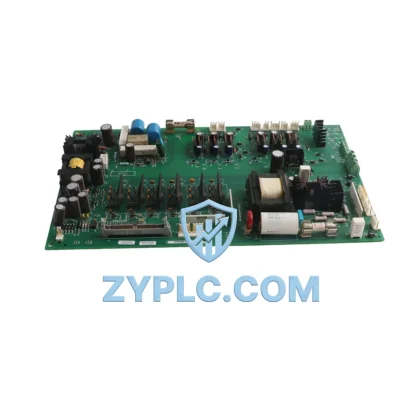
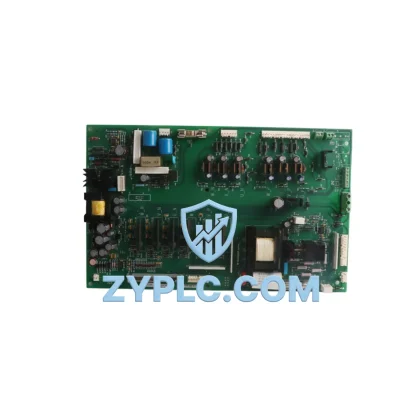
ABB 3HAC022996-001 Energy-Saving Robot Power Supply IRB: Precision Energy Control for Optimized Production Lines
The ABB 3HAC022996-001 is a high-efficiency robot power supply module engineered for the IRB 6600 and IRB 7600 heavy-duty industrial robot series. In modern manufacturing environments where energy costs and equipment uptime directly impact profitability, this power supply unit plays a central role in stabilizing drive voltage, reducing reactive power losses, and ensuring that servo axes receive clean, regulated power at every stage of the motion cycle. Whether deployed in automotive body welding lines, foundry handling cells, or heavy-payload palletizing stations, the 3HAC022996-001 delivers the electrical foundation that keeps robotic systems running at peak efficiency.
Unlike generic replacement modules, the 3HAC022996-001 is designed to integrate seamlessly with ABB’s IRC5 controller architecture, communicating directly with the drive unit stack to maintain voltage stability across all six robot axes. This tight integration eliminates the energy overhead caused by mismatched power conditioning, a common source of hidden energy waste in retrofit installations. Every watt delivered to the servo drives is precisely regulated, reducing thermal dissipation and extending the service life of downstream components such as the ABB DSQC661 drive unit and DSQC662 axis computer board.
Efficiency Performance Table
| Parameter |
Specification / Value |
| SKU / Part Number |
3HAC022996-001 |
| Compatible Robot Series |
ABB IRB 6600, IRB 7600 |
| Controller Platform |
ABB IRC5 |
| Power Supply Category |
Robot Drive Power Supply Module |
| Input Voltage Range |
3-phase AC, 200–600 V (nominal) |
| Output Regulation |
Stabilized DC bus for servo drive stack |
| Thermal Management |
Integrated heat dissipation, low idle-state losses |
| Energy Optimization Value |
Reduces reactive power loss; stabilizes drive bus voltage |
| Compatible Systems |
IRC5 Single / Dual Cabinet, IRC5 Panel Mounted Controller |
| Application Environment |
Automotive, Foundry, Heavy Payload Handling, Palletizing |
| Origin |
Sweden (ABB Robotics) |
| Inventory Status |
In Stock — Ready to Ship |
| Warranty |
12-Month Warranty |
| Pre-shipment Testing |
Full functional and load test performed before dispatch |
Energy-Aware Automation Architecture
Achieving genuine energy efficiency in a robotic cell requires more than a single component — it demands a coordinated architecture where power supply, drive control, motion execution, and data feedback all operate in harmony. The ABB 3HAC022996-001 sits at the heart of this architecture, feeding regulated DC power to the ABB DSQC663 rectifier unit and the downstream servo drive modules that control each robot axis.
At the motion control layer, the ABB IRC5 main computer (DSQC1000) orchestrates axis trajectories and communicates energy demand profiles to the drive stack in real time. When the robot decelerates or enters a hold state, regenerative braking energy is managed through the drive bus — a process that depends entirely on the stability provided by the 3HAC022996-001 power supply. Unstable bus voltage during regeneration events is a leading cause of drive faults and unnecessary energy dumping through braking resistors.
For facilities running multiple robot cells, integrating the ABB Power Analytics module or a compatible third-party energy meter at the cabinet input allows engineers to correlate power draw data with cycle time logs from the ABB FlexPendant (IRC5 teach pendant). This pairing makes it straightforward to identify which motion segments consume disproportionate energy and to optimize path planning accordingly. The ABB DSQC609 power distribution board further supports this by cleanly distributing 24 V logic power to I/O modules and safety circuits without interfering with the main drive bus.
On the communication side, the IRC5 controller supports PROFINET, EtherNet/IP, and DeviceNet fieldbus protocols, enabling the robot cell to exchange energy status signals with upstream SCADA systems or MES platforms. When the 3HAC022996-001 is operating within its rated parameters, the controller can report drive bus health data upstream, allowing plant-level energy management systems to schedule high-load robot tasks during off-peak tariff windows — a straightforward strategy for reducing peak demand charges without sacrificing throughput.
For facilities also operating ABB’s IRB 4600 or IRB 2600 series robots on the same IRC5 platform, the power supply architecture shares common design principles, making cross-cell maintenance procedures consistent and reducing the spare parts inventory burden on maintenance teams.
Power Optimization in Real Production Lines
In a typical automotive stamping transfer line running three IRB 7600 robots in sequence, the power supply module is one of the most thermally and electrically stressed components in the cabinet. A degraded or out-of-spec power supply introduces micro-voltage fluctuations on the DC bus that manifest as axis following errors, increased servo current draw, and — in worst cases — unplanned E-stops that break production rhythm and trigger costly restart sequences.
Replacing an aging or failed unit with a tested ABB 3HAC022996-001 restores the drive bus to specification, which has a direct and measurable impact on energy consumption. Servo drives operating on a stable bus voltage draw current more efficiently, reducing I²R losses in the motor windings of the ABB IRB 7600 servo motors and lowering the thermal load on the cabinet cooling system. In facilities where cabinet cooling is provided by air conditioning units, this secondary reduction in heat output translates to additional energy savings at the facility level.
From a predictive maintenance perspective, monitoring the input current waveform of the 3HAC022996-001 over time provides early warning of capacitor aging or rectifier degradation — both of which cause bus voltage ripple to increase before a hard failure occurs. Maintenance teams using ABB’s Ability™ Connected Services platform can log these parameters remotely and schedule replacement during planned downtime windows, eliminating the energy and productivity cost of unplanned stops.
Each unit supplied by ZYPLC undergoes a full functional load test prior to shipment, verifying output voltage regulation, ripple levels, and thermal performance under simulated drive load conditions. This pre-shipment validation process ensures that the module performs to ABB specification from the first power-on, avoiding the hidden energy waste associated with marginal or untested replacement parts. Stock is maintained on-hand for immediate dispatch, minimizing the production downtime window between fault identification and restoration.
Energy Optimization FAQ
Q1: How does replacing the 3HAC022996-001 power supply reduce energy consumption in an IRB 7600 cell?
A degraded power supply introduces DC bus voltage instability, which forces servo drives to draw higher peak currents to maintain torque output. A new, in-spec 3HAC022996-001 restores bus stability, reducing peak current draw, lowering I²R losses in motor windings, and decreasing the thermal load on cabinet cooling — all of which contribute to measurable reductions in cell-level energy consumption.
Q2: Is the 3HAC022996-001 compatible with both IRC5 Single Cabinet and Dual Cabinet configurations?
Yes. The 3HAC022996-001 is designed for use in ABB IRC5 controller cabinets supporting the IRB 6600 and IRB 7600 robot series, including both Single Cabinet and Dual Cabinet variants. Always verify the cabinet revision and drive unit configuration against ABB’s spare parts documentation before installation.
Q3: What is the recommended replacement interval, and how can I identify early signs of power supply degradation?
ABB does not publish a fixed calendar-based replacement interval for the 3HAC022996-001, as service life depends heavily on operating environment, duty cycle, and cabinet cooling effectiveness. Early indicators of degradation include increasing DC bus voltage ripple (visible in drive diagnostic logs), rising cabinet temperatures, and intermittent axis following errors during high-load motion segments. Proactive replacement during scheduled maintenance is recommended when any of these symptoms appear.
Q4: What does the 12-month warranty cover, and what is the return process if a fault is identified after installation?
All units supplied by ZYPLC carry a 12-month warranty covering manufacturing defects and functional failures under normal operating conditions. Each unit is load-tested before shipment. If a fault is identified after installation, contact ZYPLC directly via the details below to initiate a return and replacement process. Warranty claims are handled promptly to minimize production downtime.
© 2026 ZYPLC. All rights reserved.
Original Source: https://zyplc.com
Contact: +86 19859288691 | plc.sales@zyplc.com