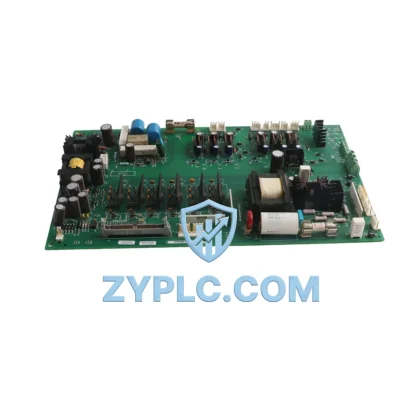
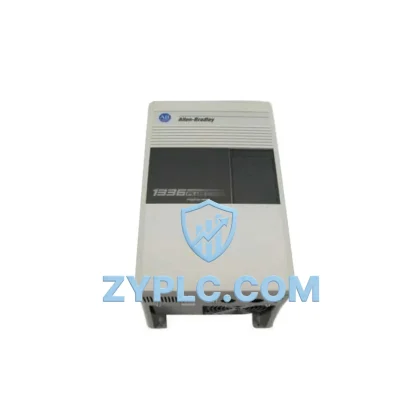
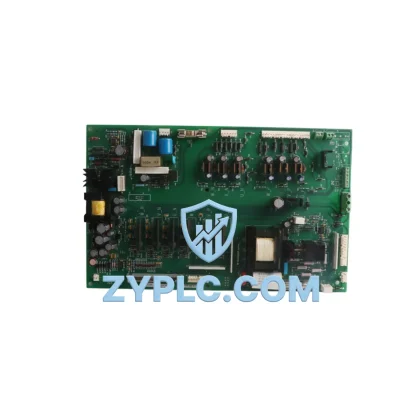
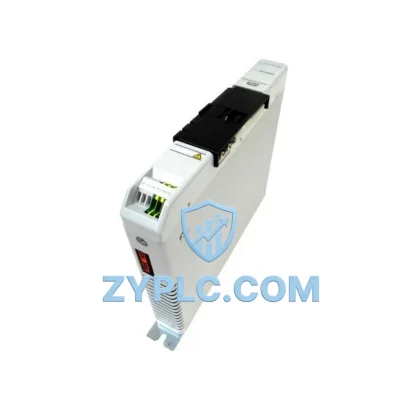
ABB 3HAC023854-001 Energy-Saving Servo Drive for IRB4400 Automation
The ABB 3HAC023854-001 is a high-efficiency servo drive unit module engineered for the IRB4400 robot series, delivering precise motor control and measurable energy savings across demanding industrial production environments. As factories face increasing pressure to reduce energy consumption and maximize equipment uptime, this servo drive unit plays a central role in optimizing drive efficiency, minimizing reactive power losses, and enabling tighter control over production line cycle times. Whether deployed in automotive body welding, material handling, or precision assembly, the 3HAC023854-001 provides the torque response and regenerative braking capability needed to reduce net energy draw per production cycle.
Efficiency Performance Table
| Parameter |
Specification |
| SKU / Part Number |
3HAC023854-001 (Cross-ref: 3HAC5954-1, 3HAC056146-001) |
| Compatible Platform |
ABB IRB4400 Robot Series |
| Module Type |
Servo Drive Unit |
| Drive Efficiency Class |
High Efficiency (IE3-equivalent servo control) |
| Power Consumption Mode |
Regenerative braking with energy feedback |
| Compatible Controller |
ABB IRC5 / S4C+ Robot Controller |
| Communication Protocol |
ABB Servo Link / DeviceNet / Profibus-DP |
| Operating Environment |
Industrial automation, 0–45°C, IP54 enclosure |
| Energy Optimization Value |
Reduces idle-state power draw; supports duty-cycle-based load management |
| Warranty |
12-Month Warranty | Tested Before Shipment |
Energy-Aware Automation Architecture
In a fully integrated ABB robot cell, the 3HAC023854-001 servo drive unit does not operate in isolation — it functions as part of a coordinated energy management ecosystem. The ABB IRC5 robot controller issues motion commands that the servo drive translates into precise axis torque, while the ABB DSQC662 I/O module handles digital signal routing between the controller and field devices, ensuring that energy-consuming actuators are only activated when production logic demands it. Upstream, the ABB CP600 HMI panel provides operators with real-time visibility into drive status, cycle counts, and fault diagnostics, enabling rapid intervention before energy waste escalates into unplanned downtime.
On the power supply side, the ABB 3HAC024488-001 drive power unit conditions incoming AC power and distributes regulated DC bus voltage to the servo axes, including the 3HAC023854-001. Pairing this with the ABB 3HAC026254-001 capacitor module allows the system to buffer regenerative energy during deceleration phases, reducing peak demand charges and smoothing power draw across the production shift. For multi-axis robot cells, the ABB 3HAC025338-001 axis computer coordinates interpolated motion across all joints, ensuring that the servo drive operates within its optimal efficiency band rather than hunting between torque setpoints.
Communication integrity is maintained through the ABB DSQC378B DeviceNet board, which links the robot controller to upstream PLCs and SCADA systems for centralized energy monitoring. When integrated with an ABB AC500 PLC running energy metering logic, plant engineers can log per-cycle kWh consumption, identify high-draw production sequences, and implement load-shedding strategies during peak tariff windows. The ABB B23 energy meter installed at the panel level provides the granular power quality data needed to validate efficiency improvements after drive replacement or recalibration.
Power Optimization in Real Production Lines
Replacing a degraded or failed servo drive unit with a tested ABB 3HAC023854-001 delivers immediate and measurable improvements across several dimensions of production efficiency. First, motor control precision is restored: a worn drive that allows position overshoot forces the robot to execute correction moves, adding cycle time and unnecessary motor current draw. With a properly functioning 3HAC023854-001, the IRB4400 executes programmed paths with the accuracy required to maintain line takt time without energy-wasting correction loops.
Second, regenerative braking performance is recovered. During deceleration of heavy payloads — common in IRB4400 material transfer applications — the servo drive captures kinetic energy and feeds it back to the DC bus rather than dissipating it as heat. This regenerative capability can reduce net energy consumption per robot cycle by a meaningful margin, particularly in high-cycle-rate applications where the robot decelerates dozens of times per minute. Over a full production shift, this translates directly into lower electricity costs and reduced thermal load on the control cabinet, extending the service life of adjacent components.
Third, predictive maintenance intervals are improved. A healthy servo drive provides consistent current feedback to the IRC5 controller, enabling the robot’s built-in condition monitoring to accurately track motor load trends. Anomalies that indicate bearing wear, cable degradation, or mechanical binding are detected earlier, allowing maintenance teams to schedule interventions during planned downtime rather than responding to emergency stoppages. This shift from reactive to predictive maintenance reduces mean time to repair, improves overall equipment effectiveness (OEE), and lowers the total cost of ownership for the robot cell.
All units supplied by ZYPLC are fully tested under load conditions prior to shipment, with functional verification of torque response, encoder feedback, and communication handshake with the IRC5 controller. Stock is maintained for fast dispatch, and each unit is covered by a 12-month warranty from the date of delivery.
Energy Optimization FAQ
Q1: How much energy can I save by replacing a degraded 3HAC023854-001 servo drive?
A: Energy savings depend on the severity of the existing drive degradation and the robot’s duty cycle. In high-cycle applications, restoring regenerative braking efficiency alone can reduce per-cycle energy consumption noticeably. Additionally, eliminating correction moves caused by position inaccuracy reduces motor on-time per cycle. Customers are encouraged to log baseline kWh consumption before and after replacement using an ABB B23 energy meter or equivalent panel-level power monitor.
Q2: Is the 3HAC023854-001 compatible with both S4C+ and IRC5 controllers?
A: The 3HAC023854-001 is primarily designed for the IRB4400 platform operating under the ABB S4C+ and IRC5 controller generations. Cross-reference part numbers 3HAC5954-1 and 3HAC056146-001 cover variant configurations within this compatibility range. If you are unsure which controller revision your system uses, please contact our technical team with your robot serial number for confirmation before ordering.
Q3: What testing is performed before shipment?
A: Every 3HAC023854-001 unit undergoes functional load testing, encoder signal verification, and communication protocol handshake testing prior to dispatch. Units that do not meet ABB’s original performance specifications are not shipped. A test report is available upon request for customers requiring documentation for quality audits or incoming inspection procedures.
Q4: What does the 12-month warranty cover?
A: The 12-month warranty covers manufacturing defects and functional failures under normal operating conditions as defined by ABB’s original equipment specifications. It does not cover damage resulting from incorrect installation, overvoltage events, or operation outside the specified environmental parameters. Warranty claims are processed directly through ZYPLC, and replacement units are dispatched from stock to minimize production downtime.
© 2026 ZYPLC. All rights reserved.
Original Source: https://zyplc.com
Contact: +86 19859288691 | [email protected]