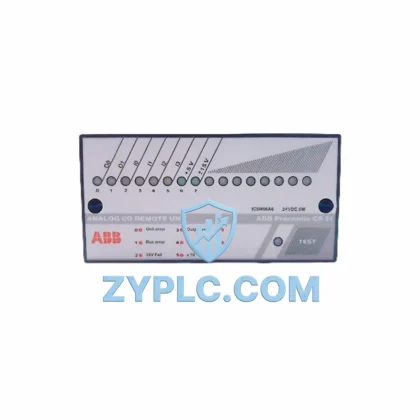
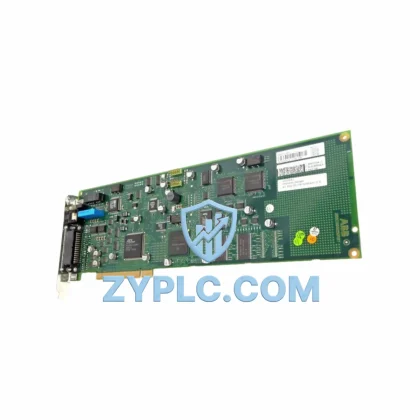
ABB 3HAC025917-001 DSQC652 I/O Unit for IRC5
The ABB DSQC652 (3HAC025917-001) is a dedicated digital I/O unit engineered for seamless integration within the ABB IRC5 robot controller platform. Rather than functioning as a standalone peripheral, this module occupies a critical position in the layered automation architecture — bridging the control layer, I/O layer, and field device layer to deliver consistent, deterministic signal management across the entire robotic cell. Whether deployed in a single-robot workcell or a multi-robot production line, the DSQC652 ensures that digital input and output signals are processed with the timing precision and electrical reliability that modern industrial automation demands.
Within the IRC5 system architecture, the DSQC652 connects directly to the IRC5 main computer unit — typically the DSQC1000 or DSQC600 series main computer — via the internal DeviceNet-based I/O bus. This tight integration allows the robot controller to address each I/O channel with minimal latency, supporting real-time process synchronization with external PLCs, safety relays, conveyor encoders, and vision systems. The module’s 24 VDC digital I/O channels are organized into configurable input and output groups, enabling engineers to map field signals directly to RAPID program variables without additional signal conditioning hardware.
From a system architecture perspective, the DSQC652 contributes to both horizontal and vertical integration. Horizontally, it interfaces with field-level devices such as pneumatic valve terminals, proximity sensors, and end-of-arm tooling. Vertically, it communicates upward through the IRC5 controller to SCADA systems, MES platforms, and ERP-connected production monitoring tools via the controller’s Ethernet/IP or PROFINET gateway capabilities — often implemented through companion modules such as the DSQC688 DeviceNet gateway or the DSQC679 teach pendant interface unit. This multi-layer communication architecture ensures that every I/O event is logged, traceable, and available for process analytics.
Redundancy and fault tolerance are central considerations in any high-availability automation deployment. The DSQC652 supports hot-swap capability within the IRC5 cabinet when the system is configured with appropriate redundancy parameters, reducing unplanned downtime during maintenance cycles. In dual-cabinet IRC5 configurations — where a primary and secondary controller share workload across a coordinated motion system — the I/O architecture must be carefully mapped to avoid signal conflicts. The DSQC652’s channel addressing scheme supports this by allowing engineers to assign unique node IDs on the DeviceNet segment, preventing address collisions even in complex multi-module installations that may include the DSQC651 analog I/O unit or the DSQC653 conveyor tracking board alongside it.
Installation and commissioning of the DSQC652 follow ABB’s standard IRC5 hardware integration procedure. The module mounts on the IRC5 cabinet’s internal DIN rail system and connects to the I/O bus via a keyed connector that prevents incorrect insertion. After physical installation, the module is configured through RobotStudio or the FlexPendant (DSQC679) using the I/O configuration tool, where engineers define signal names, logical groupings, and safety interlock mappings. This configuration is stored in the controller’s system parameters and is automatically restored after a controller restart or firmware update, ensuring configuration integrity across the system lifecycle.
Long-term maintenance efficiency is a key advantage of standardizing on the DSQC652 within an IRC5-based fleet. Because the module uses the same form factor and connector standard as other DSQC-series I/O units, spare parts management is simplified — a single shelf stock of DSQC652 units can serve multiple robot cells across a facility. This interchangeability reduces mean time to repair (MTTR) and supports lean maintenance strategies. Combined with the 12-Month Warranty provided on every unit supplied through ZYPLC, procurement teams can plan replacement cycles with confidence, knowing that each module has been functionally tested and verified against ABB’s original performance specifications before shipment.
Application environments for the DSQC652 span a wide range of industries. In automotive body-in-white welding lines, the module manages spot welding gun signals, clamp confirmation inputs, and weld controller handshake outputs. In electronics assembly, it coordinates pick-and-place sequences with conveyor indexing signals and vision system triggers. In food and beverage packaging lines, it interfaces with servo drives, label applicators, and checkweighers. In each case, the DSQC652’s role is not merely to pass signals — it is to maintain the signal integrity and timing consistency that the overall system architecture depends on for repeatable, high-throughput production.
Product Specification Table
| Parameter |
Specification |
| Part Number |
3HAC025917-001 |
| Model |
DSQC652 |
| Brand |
ABB Robotics |
| Series |
IRC5 / DSQC I/O Series |
| System Role |
Digital I/O Unit — IRC5 Controller I/O Layer |
| I/O Type |
Digital Input / Digital Output |
| Supply Voltage |
24 VDC |
| Communication Bus |
DeviceNet (internal IRC5 I/O bus) |
| Mounting |
IRC5 Cabinet Internal DIN Rail |
| Compatible Controllers |
IRC5 Single Cabinet, IRC5 Dual Cabinet, IRC5 Compact |
| Origin |
Sweden |
| Product Category |
Industrial Robot Controller I/O Modules |
| Warranty |
12-Month Warranty — Functionally Tested |
| system integration |
Supported — Compatible with IRC5 system parameter configuration |
System Compatibility Notes
The DSQC652 achieves its full value when considered as part of a coordinated IRC5 system rather than in isolation. A typical IRC5 robot cell integrating this module will also include the DSQC1000 main computer unit as the central processing node, which orchestrates all motion, I/O, and communication tasks. The DSQC609 power distribution unit provides regulated 24 VDC to the I/O bus, ensuring that the DSQC652 and co-installed modules such as the DSQC651 analog I/O unit receive stable power even during high-current switching events from output loads.
For applications requiring conveyor tracking or external encoder synchronization, the DSQC653 conveyor tracking board is typically installed alongside the DSQC652, sharing the same DeviceNet segment. Communication with external PLCs — such as Siemens S7-300/S7-400 systems or Allen-Bradley ControlLogix platforms — is handled through the DSQC688 DeviceNet master/slave gateway, which bridges the IRC5 internal bus to the plant-level fieldbus network. Operator interaction is managed through the DSQC679 FlexPendant, which provides real-time I/O status visualization and manual signal forcing capability during commissioning and troubleshooting.
In safety-critical installations, the DSQC652 works in conjunction with the DSQC400 safety board and external safety relay modules to implement category 3 or category 4 safety stop circuits per ISO 13849. The DSQC633 axis computer handles servo drive coordination, while the DSQC668 remote service box enables remote diagnostics and firmware management — reducing the need for on-site engineering visits during routine maintenance windows. Together, these components form a tightly integrated, fully documented control architecture that supports both current production requirements and future system expansion.
Industrial Application Notes
In automotive manufacturing, the DSQC652 is deployed in robotic welding, sealing, and assembly cells where deterministic I/O response times are mandatory for weld quality and cycle time consistency. In electronics and semiconductor assembly, the module’s clean digital signal handling supports high-speed pick-and-place operations where signal bounce or timing jitter would cause yield losses. In food and beverage packaging, the DSQC652 manages hygienic-area sensor inputs and actuator outputs in washdown-rated enclosures, coordinating with servo drives and vision inspection systems on high-speed packaging lines.
In petrochemical and process industries, IRC5-based robots equipped with DSQC652 I/O units perform hazardous material handling, valve actuation confirmation, and leak detection signal processing in ATEX-adjacent control architectures. In metal fabrication and foundry environments, the module’s robust 24 VDC I/O withstands the electrical noise generated by large induction furnaces and resistance welding equipment. In water treatment and utilities, the DSQC652 supports pump control, valve position feedback, and flow sensor integration within automated chemical dosing and filtration systems. Across all these sectors, the module’s role is consistent: to provide a reliable, configurable, and maintainable I/O interface that keeps the control architecture coherent from the field device level to the supervisory control level.
Product Compatibility FAQ
Q1: Is the DSQC652 (3HAC025917-001) compatible with all IRC5 controller variants, including the IRC5 Compact and IRC5 Panel Mounted Controller?
Yes. The DSQC652 is designed for the IRC5 platform and is compatible with the IRC5 Single Cabinet, IRC5 Dual Cabinet, IRC5 Compact, and IRC5 Panel Mounted Controller variants. It connects via the standard IRC5 internal DeviceNet I/O bus and is configured through the same RobotWare I/O configuration interface across all variants. Engineers should verify the available physical mounting space and power budget within the specific cabinet variant before installation, particularly in the IRC5 Compact where internal space is more constrained.
Q2: Can the DSQC652 be replaced in the field without a full system reconfiguration, and how does the 12-Month Warranty support maintenance planning?
The DSQC652 supports field replacement with minimal reconfiguration. After physical swap, the replacement module adopts the node ID and I/O configuration stored in the IRC5 system parameters, which are retained in the controller’s non-volatile memory. A system restart and I/O bus re-scan are typically sufficient to restore full operation. The 12-Month Warranty provided by ZYPLC covers functional performance against ABB’s original specifications, giving maintenance teams a defined warranty period for budgeting spare parts cycles and reducing the financial risk of unplanned module failures in production-critical installations.
Q3: How does the DSQC652 integrate with external PLC systems and plant-level SCADA networks for system integration in a multi-system architecture?
The DSQC652 itself operates on the IRC5 internal DeviceNet bus and does not directly interface with external networks. system integration with external PLCs and SCADA systems is achieved through the IRC5 controller’s communication modules — typically the DSQC688 DeviceNet gateway or optional PROFINET/Ethernet/IP interface boards — which expose the DSQC652’s I/O signals as process data objects on the plant network. This architecture allows SCADA systems to monitor and log individual I/O channel states in real time, supporting traceability, alarm management, and production reporting without requiring direct hardware connections between the DSQC652 and the external network infrastructure.
© 2026 ZYPLC. All rights reserved.
Original Source: https://zyplc.com
Contact: +86 19859288691 | plc.sales@zyplc.com