ABB 3HAC031683-001 System-Ready Drive Module for IRC5 Architecture: Control System Architecture and Upstream-Downstream Coordination
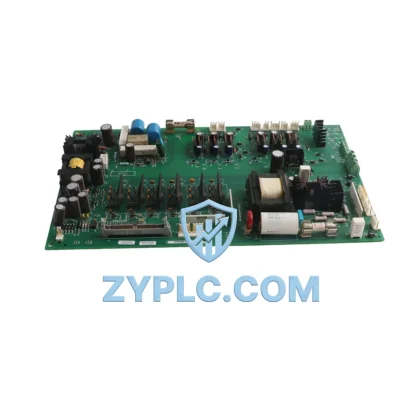
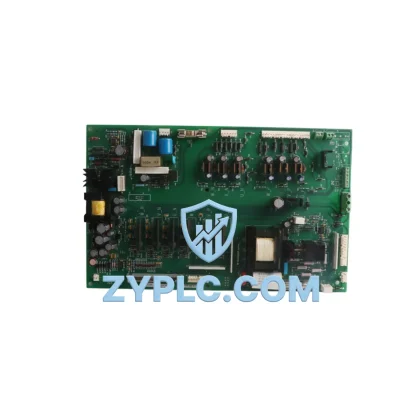
The ABB 3HAC031683-001 (DSQC679) is a drive module engineered specifically for deployment within the ABB IRC5 robot controller architecture. Rather than functioning as a standalone component, this module occupies a critical position within the layered automation hierarchy — bridging the motion control layer and the power electronics layer to deliver precise, coordinated axis movement across multi-robot and multi-axis installations. Understanding its role within the full control system architecture is essential for engineers responsible for system integration, commissioning, and long-term maintenance planning.
In modern industrial automation environments — spanning automotive body-in-white lines, foundry tending cells, palletizing systems, and precision assembly stations — the drive module is not merely a power converter. It is the execution backbone of the robot’s motion chain. The 3HAC031683-001 receives motion commands from the IRC5 main computer (DSQC639 or DSQC662 series), translates them into real-time current and torque profiles, and delivers controlled power to the servo motors on each robot axis. This tight integration between the computational layer and the electromechanical layer is what enables the IRC5 platform to achieve its characteristic path accuracy and dynamic response.
Architecture Specification Table
| Parameter |
Specification |
| Part Number |
3HAC031683-001 |
| Module Designation |
DSQC679 |
| Compatible Platform |
ABB IRC5 Robot Controller |
| System Role |
Axis Drive Module — Motion Execution Layer |
| Compatible Robot Series |
IRB 1600, IRB 2600, IRB 4600, IRB 6640, IRB 7600 |
| Electrical Interface |
Internal IRC5 cabinet backplane bus |
| Power Supply Compatibility |
IRC5 internal PSU (3HAC024488-001 / 3HAC17484-2 series) |
| Communication Protocol |
Internal ABB drive bus; compatible with DeviceNet, PROFIBUS, EtherNet/IP via IRC5 option boards |
| Installation Environment |
IRC5 single cabinet or IRC5 MultiMove panel-mounted configuration |
| Cooling Method |
Forced air — IRC5 cabinet internal fan system |
| Origin |
Sweden (ABB Robotics) |
| Warranty |
12-Month Warranty — covers manufacturing defects and functional failure under normal operating conditions |
| Contextual Integration |
Fully validated for Contextual Integration within existing IRC5 system architectures without controller reconfiguration |
Coordinated Control System Design
The 3HAC031683-001 DSQC679 drive module does not operate in isolation. Its performance is directly dependent on — and contributes to — the coherence of the entire IRC5 control system. At the computational layer, the IRC5 main computer module (DSQC639 or DSQC662) generates interpolated motion trajectories and transmits axis-level torque and velocity references to the drive module via the internal drive bus. The drive module then executes these references in real time, closing the current loop at high bandwidth to ensure servo accuracy across all programmed paths.
At the power layer, the 3HAC031683-001 draws regulated DC bus voltage from the IRC5 power supply unit — typically the 3HAC17484-2 or its successor variants — which conditions incoming three-phase AC supply into the stable DC rail required for drive operation. In multi-axis IRC5 configurations, multiple drive modules share this common DC bus, enabling regenerative energy exchange between axes during deceleration cycles and improving overall energy efficiency across the robot cell.
The I/O layer of the IRC5 system — populated by DSQC651 or DSQC652 distributed I/O modules — provides the digital and analog signals that coordinate the robot’s motion with peripheral equipment: grippers, welding controllers, vision systems, and safety PLCs. These I/O signals are managed by the IRC5 main computer and synchronized with the drive module’s motion execution to ensure that tool activation, part clamping, and process triggers occur at precisely the correct points in the robot’s trajectory.
For installations requiring network connectivity, the IRC5 fieldbus adapter modules — supporting PROFIBUS-DP, DeviceNet, EtherNet/IP, or PROFINET — allow the robot controller to participate in plant-wide automation networks alongside Siemens S7 PLCs, Allen-Bradley ControlLogix systems, or Schneider Electric Modicon platforms. The drive module’s motion data and fault status are accessible through these network interfaces, enabling supervisory SCADA systems and MES platforms to monitor robot performance in real time.
At the human-machine interface layer, the IRC5 FlexPendant (3HAC028357-001) provides operators and engineers with direct access to drive module diagnostics, axis calibration routines, and motion parameter tuning. The FlexPendant’s event log captures drive-related faults — overcurrent, encoder loss, thermal overload — and timestamps them against the robot’s operational history, simplifying root-cause analysis during maintenance interventions.
In MultiMove configurations, where a single IRC5 controller coordinates two or more robot manipulators simultaneously, the 3HAC031683-001 drive modules for each robot are installed in separate drive units within the IRC5 panel, all governed by the same main computer. This architecture enables true coordinated motion between robots — essential for cooperative assembly, tandem welding, and synchronized material handling — while maintaining a unified programming and diagnostic environment through RobotStudio and the FlexPendant.
Application in Layered Automation Systems
Automotive Manufacturing: In body-in-white welding lines, the 3HAC031683-001 supports IRB 6640 and IRB 7600 robots performing resistance spot welding and arc welding operations. The drive module’s high dynamic response enables the robot to follow complex weld paths at programmed speeds while maintaining consistent torch-to-workpiece distance, directly affecting weld quality and cycle time. Integration with the plant’s PROFINET network allows the welding controller and the robot drive system to exchange process parameters in real time.
Electronics and Precision Assembly: IRB 1600 and IRB 2600 robots equipped with the DSQC679 drive module are deployed in PCB handling, component insertion, and precision dispensing applications. The drive module’s servo accuracy — maintained through tight current loop control — ensures that the robot’s TCP follows programmed paths within the tolerances required for fine-pitch component placement and adhesive dispensing.
Foundry and Heavy Industry: In die casting extraction and forging tending applications, IRB 7600 robots operating in high-temperature, high-vibration environments rely on the 3HAC031683-001’s robust design to maintain drive performance under thermal stress. The IRC5 cabinet’s forced-air cooling system, combined with the drive module’s internal thermal protection, ensures continuous operation across extended production shifts.
Palletizing and Intralogistics: High-throughput palletizing cells using IRB 4600 robots benefit from the drive module’s ability to handle rapid acceleration and deceleration cycles across all six axes simultaneously. The common DC bus architecture of the IRC5 drive system allows regenerative braking energy from decelerating axes to be reused by accelerating axes, reducing peak power demand and lowering energy costs over the system’s operational life.
Process Industry and Hazardous Environments: In chemical processing, water treatment, and mining applications where robots are deployed for sampling, valve operation, or material handling in restricted-access areas, the IRC5 system’s EtherNet/IP or PROFIBUS connectivity allows the drive module’s status to be monitored remotely from the control room, reducing the need for personnel to enter hazardous zones for routine diagnostics.
Architecture Engineering FAQ
Q1: Is the 3HAC031683-001 DSQC679 directly interchangeable with earlier ABB IRC5 drive modules such as the 3HAC021127-005 or 3HAC021127-006?
The 3HAC031683-001 (DSQC679) is the designated replacement and functional successor to the 3HAC021127-005 and 3HAC021127-006 drive modules within the IRC5 platform. Physical mounting, backplane connector pinout, and drive bus communication protocol are compatible, allowing direct substitution in existing IRC5 cabinets without mechanical modification. However, engineers should verify the IRC5 system software version (RobotWare) to confirm that the installed version supports the DSQC679 module. In most cases, RobotWare 5.x and later versions provide full compatibility. Our technical team can assist with version verification prior to shipment.
Q2: Can the 3HAC031683-001 be used in an IRC5 MultiMove configuration, and does it require any additional configuration in RobotStudio?
Yes. The 3HAC031683-001 is fully compatible with IRC5 MultiMove architectures, where it is installed in the drive unit assigned to each coordinated robot. In RobotStudio, the MultiMove configuration defines the mechanical unit assignments and motion coordination parameters for each robot’s drive system. No hardware-level configuration of the drive module itself is required beyond correct installation in the designated drive unit slot. The IRC5 main computer automatically identifies the drive module during system startup and loads the appropriate axis configuration parameters from the system’s calibration data. Our team provides commissioning guidance documentation with each unit supplied under our 12-Month Warranty program.
Q3: What does the 12-Month Warranty cover for the 3HAC031683-001, and what is the process for warranty claims?
Our 12-Month Warranty covers manufacturing defects, component failure, and functional non-conformance under normal operating conditions as defined by ABB’s IRC5 installation and environmental specifications. The warranty period begins from the date of shipment. In the event of a warranty claim, the customer contacts our technical support team with the unit’s serial number, a description of the fault symptoms, and the IRC5 event log entries related to the failure. We evaluate the claim and, where applicable, arrange for replacement unit shipment prior to return of the faulty module to minimize production downtime. Warranty claims resulting from installation errors, operation outside specified environmental limits, or unauthorized modification are not covered. Full warranty terms are provided with each shipment.
© 2026 ZYPLC. All rights reserved.
Original Source: https://zyplc.com
Contact: +86 19859288691 | plc.sales@zyplc.com