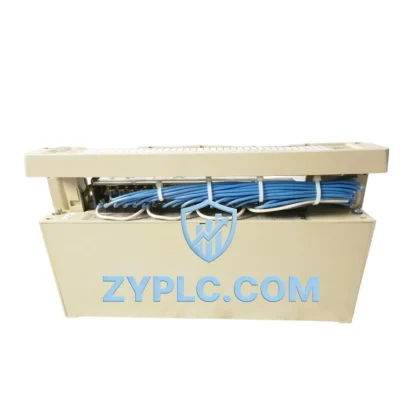
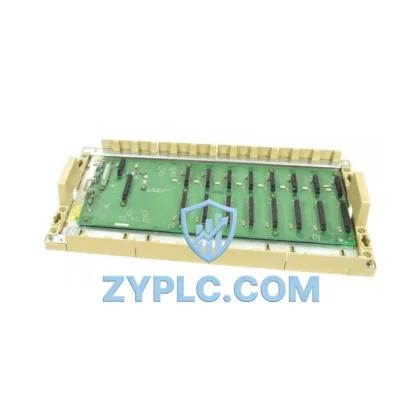
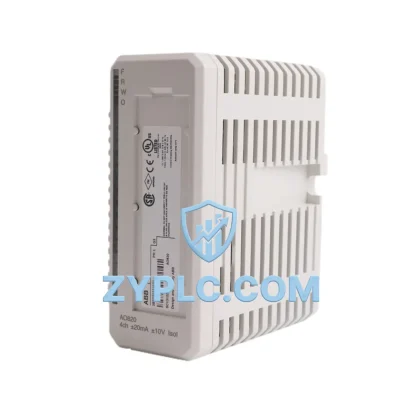
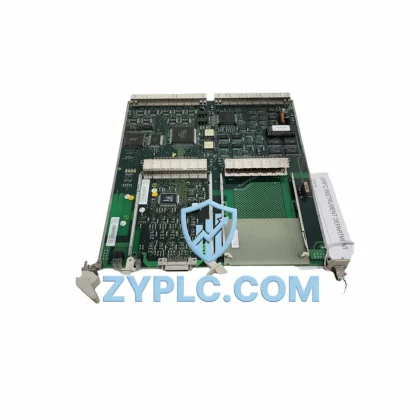
ABB 3HAC034535-002 System-Ready Balancing Device for IRB 4600 Architecture: Control System Architecture and Upstream-Downstream Coordination
The ABB 3HAC034535-002 Balancing Device Module is a precision-engineered mechanical and electromechanical component designed specifically for the IRB 4600 industrial robot series. Within a complete robotic control system architecture, this module does not operate in isolation — it is a structurally integrated element that directly influences the performance consistency, load distribution, and long-term mechanical reliability of the entire robot cell. Understanding its role requires examining how it interacts with the control layer, drive layer, mechanical execution layer, and maintenance infrastructure of a modern automated production environment.
In high-throughput manufacturing environments — including automotive body welding, machine tending, material handling, and arc welding applications — the IRB 4600 platform is deployed as a mid-to-large payload articulated robot with a working range optimized for reach-intensive tasks. The 3HAC034535-002 balancing device module counteracts gravitational torque on the robot’s primary arm axis, reducing the load demand on the axis drive motors and the associated servo drive units. This mechanical compensation directly reduces thermal stress on the drive electronics, extends the service life of the motor windings, and contributes to more stable current draw profiles across the power distribution layer.
Architecture Specification Table
| Parameter |
Specification |
| Part Number |
3HAC034535-002 |
| Compatible Platform |
ABB IRB 4600 Series |
| System Role |
Mechanical Balancing / Gravitational Torque Compensation |
| Axis Application |
Axis 2 (Primary Arm Axis) |
| Module Type |
Spring-Loaded Balancing Device Assembly |
| Controller Compatibility |
IRC5 Single Cabinet / IRC5 Compact / IRC5 Panel Mounted |
| Installation Environment |
Industrial Robot Cell, IP54 Rated Enclosure Recommended |
| Operating Temperature |
0°C to +45°C (Standard); -10°C to +55°C (Short Duration) |
| Communication Layer |
Indirect — Reduces servo drive load, stabilizes SERCOS/EtherNet/IP feedback loops |
| Redundancy Contribution |
Reduces single-point mechanical failure risk on Axis 2 drive train |
| Country of Origin |
Sweden |
| Warranty |
12-Month Warranty — Covers manufacturing defects and functional failure under normal operating conditions |
| Contextual Integration |
Fully compatible with IRB 4600 mechanical frame variants; supports Contextual Integration with existing IRC5 drive and motion control architecture |
Coordinated Control System Design
The 3HAC034535-002 functions as a foundational mechanical component within a layered automation architecture. Its contribution becomes most apparent when examined alongside the full suite of components that constitute a production-ready IRB 4600 robot cell.
At the control layer, the IRC5 robot controller manages all motion planning, path interpolation, and axis torque commands. The balancing device reduces the static torque demand communicated from the IRC5 to the Axis 2 drive module, allowing the controller to allocate servo bandwidth more efficiently across all six axes. This is particularly relevant in multi-robot cells where a single IRC5 MultiMove controller coordinates two or more IRB 4600 units simultaneously.
At the drive and power layer, the ABB DSQC 661 drive unit and associated DSQC 663 axis computer manage the servo amplification for each robot axis. With the 3HAC034535-002 installed and correctly tensioned, the Axis 2 drive unit operates within a lower continuous current envelope, reducing heat generation and extending the mean time between failures for the drive electronics. The DSQC 609 power supply unit within the IRC5 cabinet benefits from a more stable aggregate current draw, which is critical in facilities with sensitive power infrastructure.
At the I/O and signal layer, the DSQC 652 digital I/O board and DSQC 378B bus adapter manage process signals between the robot controller and peripheral equipment. While the balancing device does not directly interface with I/O modules, its role in maintaining consistent axis positioning accuracy ensures that end-of-arm tooling signals — such as gripper open/close confirmations and weld gun pressure feedback — are executed at the correct mechanical position without axis drift caused by gravitational compensation failure.
At the mechanical execution layer, the IRB 4600 wrist assembly and axis gearbox units (including the Axis 2 gearbox, referenced under part families such as 3HAC028845-001) depend on consistent torque input from the upper arm structure. A correctly functioning 3HAC034535-002 ensures that the gearbox input torque remains within design parameters, preventing premature wear on the planetary gear stages.
For human-machine interface integration, operators monitoring the robot cell via ABB FlexPendant (IRC5 teach pendant) will observe more stable axis load indicators on the Axis 2 monitoring screen when the balancing device is properly maintained. Abnormal load readings on the FlexPendant are frequently the first diagnostic indicator of balancing device degradation, making the 3HAC034535-002 a key component in predictive maintenance workflows.
Application in Layered Automation Systems
The ABB 3HAC034535-002 Balancing Device Module is deployed across a wide range of industrial automation environments where the IRB 4600 platform is the primary articulated robot.
In automotive manufacturing, IRB 4600 robots equipped with this balancing device are used in body-in-white welding lines, where continuous high-cycle operation demands maximum mechanical reliability. The balancing device reduces axis fatigue over multi-shift production schedules, contributing to overall equipment effectiveness (OEE) targets.
In general manufacturing and machine tending, the IRB 4600 handles CNC machine loading, press tending, and assembly operations. The 3HAC034535-002 ensures that the robot maintains precise approach trajectories to machine fixtures, where even minor axis compliance deviations can result in part misalignment or tooling collision.
In process industries including food and beverage packaging, the balancing device supports consistent pick-and-place cycle times by maintaining Axis 2 stiffness under variable payload conditions. Packaging lines running at high throughput rates depend on repeatable robot motion profiles, and mechanical balancing is a prerequisite for achieving sub-millimeter positional repeatability over extended production runs.
In electronics manufacturing and clean-room assembly, where the IRB 4600 may be deployed in controlled environments, the balancing device contributes to vibration reduction during high-speed moves, protecting sensitive components from mechanical shock during handling operations.
For energy and utilities infrastructure, including power generation maintenance and substation equipment handling, the IRB 4600 with a properly maintained 3HAC034535-002 provides the structural rigidity required for heavy component manipulation tasks, where gravitational loading on Axis 2 is at its maximum.
Architecture Engineering FAQ
Q1: Is the ABB 3HAC034535-002 compatible with all IRB 4600 payload and reach variants, and does it require recalibration after installation?
The 3HAC034535-002 is designed for specific IRB 4600 mechanical configurations. Compatibility depends on the robot’s payload rating (20 kg, 40 kg, or 45 kg variants) and the arm reach variant (2.05 m or 2.55 m). Prior to installation, the robot’s mechanical serial number and configuration data should be verified against ABB’s spare parts catalog. After installation, Axis 2 calibration must be performed using the IRC5 controller’s calibration routine via the FlexPendant, and the fine calibration offset values stored in the SMB (Serial Measurement Board) must be updated to reflect the new mechanical baseline. Our technical team can provide installation guidance as part of the 12-Month Warranty support package.
Q2: How does the 3HAC034535-002 affect the IRC5 controller’s load identification and collision detection parameters?
The IRC5 controller uses ABB’s LoadIdentify routine to measure the inertia and center-of-gravity of the robot’s payload and arm structure. A correctly installed and tensioned 3HAC034535-002 will produce load identification results consistent with ABB’s factory specifications for the IRB 4600. If the balancing device is worn or incorrectly tensioned, the LoadIdentify routine may return anomalous inertia values, which can cause the IRC5’s collision detection algorithm (SafeMove or standard collision detection) to generate false positive fault signals during normal operation. Replacing a degraded 3HAC034535-002 with a genuine ABB spare part restores the mechanical baseline required for accurate load identification.
Q3: What is covered under the 12-Month Warranty, and how does Contextual Integration support long-term maintenance planning?
The 12-Month Warranty covers manufacturing defects, material failures, and functional non-conformance under normal operating conditions as defined by ABB’s installation and maintenance specifications for the IRB 4600. Warranty claims are supported by our technical team with documentation review and replacement logistics. Contextual Integration refers to our commitment to supplying components that are verified for compatibility with the customer’s existing IRC5 control architecture, robot software version (RobotWare), and mechanical configuration — ensuring that the replacement part integrates without requiring additional system modifications. Long-term maintenance planning support, including recommended replacement intervals based on robot duty cycle and environmental conditions, is available as part of our post-sale technical advisory service.
—
© 2026 ZYPLC. All rights reserved.
Original Source: https://zyplc.com
Contact: +86 19859288691 | [email protected]