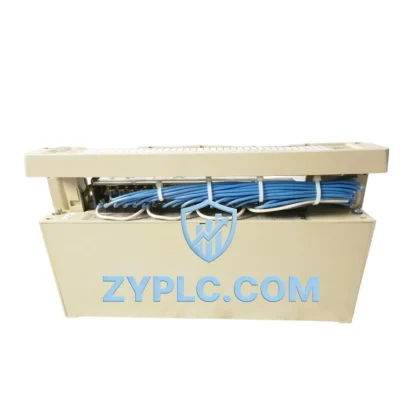
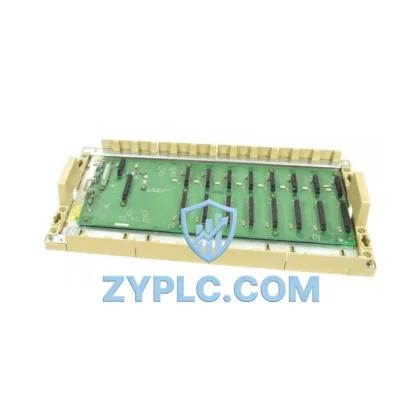
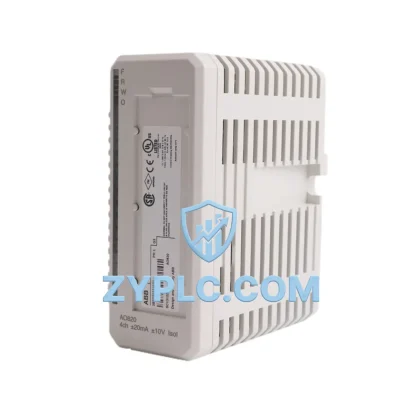
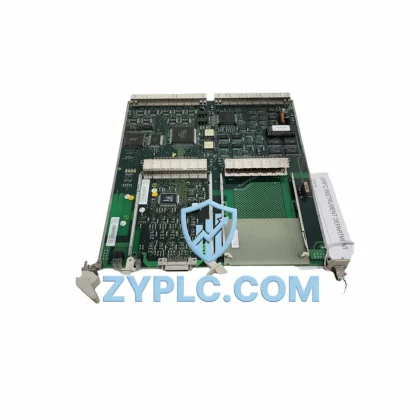
ABB 3HAC034863-005 Energy-Saving Manipulator Harness IRB6640: Precision Cable Management for Optimized Automation Efficiency
The ABB 3HAC034863-005 is a factory-grade manipulator harness engineered specifically for the ABB IRB6640 and IRB6650S six-axis industrial robot series. Far beyond a simple cable assembly, this harness is a critical energy pathway component that directly influences how efficiently your robot cell consumes power, maintains signal integrity, and sustains peak throughput across demanding production cycles. When a manipulator harness degrades — through abrasion, connector fatigue, or improper routing — the downstream effects cascade into increased motor load, erratic servo response, elevated energy draw, and unplanned downtime. Replacing it with the correct OEM-specification 3HAC034863-005 restores the electrical and mechanical baseline that ABB’s motion control algorithms depend on.
In high-utilization environments such as automotive body-in-white welding, heavy-payload palletizing, and precision foundry handling, the IRB6640 platform is expected to operate at 80–100% duty cycles for extended shifts. Under these conditions, the manipulator harness must deliver consistent impedance across all power, signal, and fieldbus conductors — from the controller cabinet through each robot axis to the end-of-arm tooling. Any resistance increase caused by a worn harness forces the ABB IRC5 controller to compensate with higher drive current, directly increasing energy consumption per cycle. Installing the 3HAC034863-005 eliminates this hidden energy penalty and restores the motion profile accuracy that underpins cycle time optimization.
Efficiency Performance Table
| Parameter |
Specification / Value |
| Part Number |
3HAC034863-005 |
| Compatible Robot Models |
ABB IRB6640, IRB6650S |
| Component Type |
Manipulator Harness (Full Cable Assembly) |
| Controller Compatibility |
ABB IRC5 (Single & MultiMove) |
| Operating Environment |
Industrial — Welding, Foundry, Palletizing, Assembly |
| Energy Efficiency Impact |
Restores OEM impedance baseline; eliminates compensatory drive overcurrent |
| Signal Integrity |
Full conductor continuity across power, encoder, and fieldbus channels |
| Inventory Status |
In Stock — Ready to Ship |
| Pre-Shipment Testing |
Full electrical continuity and insulation resistance test performed |
| Warranty |
12-Month Warranty |
| Origin |
Sweden (ABB OEM) |
Energy-Aware Automation Architecture
The ABB 3HAC034863-005 harness sits at the intersection of power delivery and motion control within the IRB6640’s automation architecture. Understanding how it interacts with surrounding system components reveals why harness condition is a direct lever for energy optimization.
At the drive level, the ABB DSQC662 drive unit within the IRC5 cabinet converts DC bus power into precisely modulated AC current for each axis motor. The harness carries this current from the drive unit through the robot’s mechanical structure to the axis motors. A degraded harness with increased contact resistance forces the DSQC662 to output higher voltage to maintain torque — a measurable increase in energy draw that accumulates across thousands of cycles per shift. The 3HAC034863-005 maintains the low-resistance pathway that allows the drive to operate within its designed efficiency band.
Encoder and resolver signals for each axis travel through dedicated conductors in the same harness bundle. These signals feed directly into the ABB DSQC400 measurement board, which provides the IRC5 controller with real-time position and velocity feedback. Signal degradation from a worn harness introduces noise into this feedback loop, causing the controller’s motion planner to issue corrective micro-adjustments — each of which consumes additional servo energy and extends cycle time. Clean signal transmission through the 3HAC034863-005 keeps the feedback loop tight and the motion profile smooth.
For facilities running ABB RobotWare with energy monitoring extensions, harness condition is a trackable variable. The IRC5 controller logs axis current draw per cycle; a sudden increase in axis 1 or axis 2 current — without a corresponding change in payload — is a reliable early indicator of harness degradation. Pairing the 3HAC034863-005 replacement with a baseline current audit through the ABB FlexPendant TP3500 allows maintenance teams to confirm the energy recovery achieved after installation.
In multi-robot cells coordinated via ABB MultiMove, harness-induced motion irregularities in one IRB6640 can desynchronize the entire cell, forcing all robots to wait at synchronization points and reducing overall equipment effectiveness (OEE). Restoring harness integrity eliminates this bottleneck. Similarly, in cells where the IRB6640 communicates with a Siemens S7-1500 PLC or Allen-Bradley ControlLogix via PROFINET or EtherNet/IP, fieldbus signal conductors within the harness must maintain consistent impedance to prevent packet loss and communication faults that trigger safety stops.
For end-of-arm tooling that draws power through the harness — such as servo grippers, electric welding guns, or vision system illuminators — the 3HAC034863-005 provides the stable power rail that prevents voltage sag during high-current tool activation. This is particularly relevant in spot welding applications where the ABB PSF 3000 servo weld gun demands precise, repeatable current delivery for consistent weld nugget quality and energy-per-weld optimization.
Power Optimization in Real Production Lines
In a typical automotive stamping and assembly plant running two shifts, an IRB6640 cell may execute 1,200–1,800 pick-and-place or welding cycles per shift. A harness operating at degraded impedance — even marginally — adds measurable energy overhead per cycle. Across a full production year, this translates into thousands of kilowatt-hours of avoidable energy consumption, in addition to the accelerated wear on drive components caused by sustained overcurrent operation.
Maintenance teams that adopt a proactive harness replacement strategy — replacing the 3HAC034863-005 at defined service intervals rather than waiting for failure — report three compounding benefits: first, elimination of unplanned downtime caused by harness-related faults (which typically occur mid-shift and require 2–4 hours of robot downtime for diagnosis and repair); second, measurable reduction in axis drive energy consumption as the OEM impedance baseline is restored; and third, extended service life of downstream components including axis motors, brake assemblies, and the IRC5 drive units themselves, which no longer operate under compensatory overcurrent stress.
In foundry and die-casting environments where the IRB6650S variant is deployed, the harness is additionally exposed to thermal cycling, metal splash, and vibration loads that accelerate degradation. Stocking the 3HAC034863-005 as a critical spare — with immediate availability confirmed through pre-shipment inventory verification — ensures that when a harness replacement is required, production can resume within the same shift rather than waiting days for parts procurement.
From a production line rhythm (takt time) perspective, a robot operating with a degraded harness may exhibit subtle velocity derating as the IRC5 controller’s protective algorithms reduce axis speed to manage thermal load on the drives. This velocity reduction, even at 5–10%, directly extends cycle time and reduces line throughput. Restoring the harness to OEM specification removes this constraint and allows the robot to execute its programmed motion profile at full speed, recovering the lost takt time margin.
Energy Optimization FAQ
Q1: How does replacing the 3HAC034863-005 harness reduce energy consumption in my IRB6640 cell?
A degraded harness increases electrical resistance across power and signal conductors, forcing the IRC5 drive units to output higher current to maintain axis torque and position accuracy. This overcurrent condition increases energy consumption per cycle. Replacing the harness with the OEM-specification 3HAC034863-005 restores the designed low-resistance pathway, allowing the drives to operate within their rated efficiency band and eliminating the energy penalty associated with compensatory overcurrent.
Q2: Is the 3HAC034863-005 compatible with both the IRB6640 and IRB6650S, and does it work with all IRC5 controller variants?
Yes. The 3HAC034863-005 is the OEM-specified harness for both the IRB6640 and IRB6650S manipulator platforms. It is fully compatible with the ABB IRC5 controller in both single-cabinet and MultiMove configurations. No firmware or parameter changes are required following installation — the IRC5 recognizes the restored electrical characteristics automatically during the next power-on self-test.
Q3: What pre-shipment testing is performed, and what does the 12-month warranty cover?
Every 3HAC034863-005 unit undergoes full electrical continuity testing across all conductors and insulation resistance verification before shipment. The 12-month warranty covers manufacturing defects and electrical failures under normal operating conditions. Units are shipped from verified in-stock inventory, ensuring immediate availability without lead-time delays that could extend production downtime.
Q4: When should I replace the harness rather than attempting repair, and how do I identify harness-related energy anomalies?
ABB recommends replacement over repair for manipulator harnesses due to the difficulty of restoring OEM-grade conductor integrity and shielding continuity in field conditions. Harness-related energy anomalies typically manifest as unexplained increases in axis current draw (visible in IRC5 event logs), intermittent encoder faults, or subtle cycle time extensions without payload changes. If your ABB FlexPendant or energy monitoring software shows elevated drive current on axes 1–3 without a mechanical cause, harness inspection and replacement with the 3HAC034863-005 should be the first corrective action.
© 2026 ZYPLC. All rights reserved.
Original Source: https://zyplc.com
Contact: +86 19859288691 | [email protected]