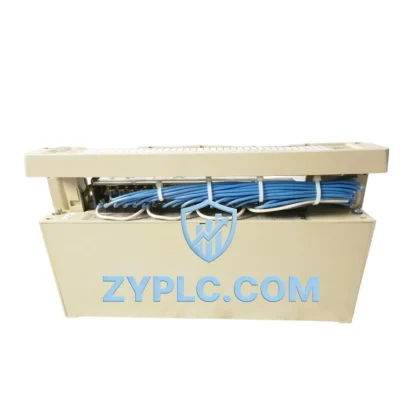
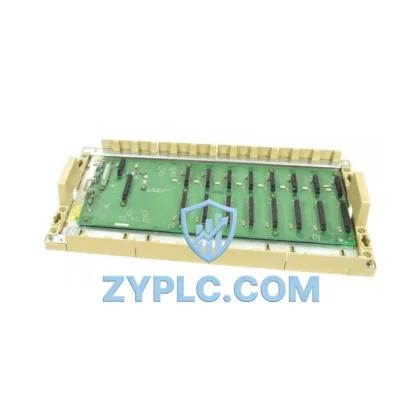
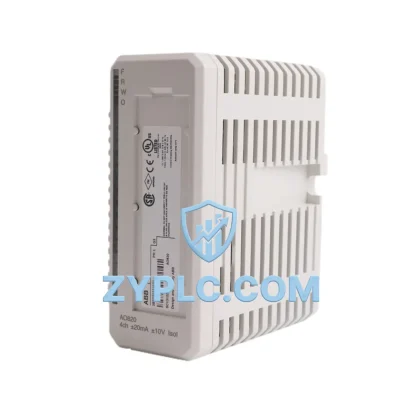
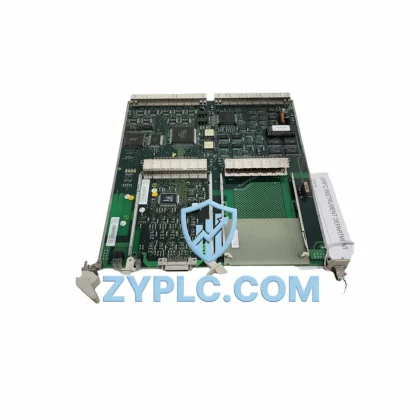
ABB 3HAC037163-003 Energy-Saving Robot Balancing Device IRB: Precision Energy Control for Optimized Automation Lines
The ABB 3HAC037163-003 is a high-performance robot balancing device engineered for the IRB series — including the IRB460 palletizing robot and the IRB6700 heavy-duty industrial robot. Designed to counterbalance gravitational loads on robot arm axes, this component directly reduces the torque demand on servo motors, lowering drive current draw and cutting unnecessary energy consumption at the axis level. In high-cycle production environments, the cumulative energy savings from a properly functioning balancing device are measurable and significant.
At ZYPLC, every 3HAC037163-003 unit is sourced from verified supply channels, subjected to pre-shipment functional testing, and backed by a 12-month warranty. Stock is maintained for prompt dispatch, supporting both planned maintenance schedules and urgent line-down recovery scenarios.
Efficiency Performance Table
| Parameter |
Specification / Value |
| Part Number |
3HAC037163-003 |
| Compatible Robots |
ABB IRB460, IRB6700 Series |
| Function |
Gravitational Load Counterbalancing on Robot Axes |
| Energy Efficiency Impact |
Reduces servo motor torque demand, lowers drive current and energy draw |
| Drive System Compatibility |
ABB IRC5 Controller, DSQC series drive units |
| Application Environment |
Palletizing, heavy-duty material handling, automotive assembly, logistics automation |
| Operating Cycle Optimization |
Supports high-frequency cycle operations with reduced mechanical stress |
| Origin |
Sweden (ABB Robotics) |
| Warranty |
12-Month Warranty |
| Testing |
Pre-shipment functional test included |
| Availability |
In Stock — Ready to Ship |
Energy-Aware Automation Architecture
The ABB 3HAC037163-003 balancing device does not operate in isolation — it is a critical mechanical node within a broader energy-aware automation architecture. Understanding how it interacts with surrounding components helps engineers and maintenance teams make smarter decisions about system efficiency.
In a typical IRB6700 cell, the robot’s motion is governed by the ABB IRC5 controller, which coordinates all six axes through the DSQC661 or DSQC662 drive units. These drives regulate servo motor current based on real-time torque demand. When the 3HAC037163-003 balancing device is functioning correctly, it offloads gravitational torque from the axis 2 and axis 3 servo motors, allowing the drives to operate at lower current levels — directly reducing heat generation and energy consumption per cycle.
The ABB DSQC1000 main computer and DSQC609 power supply unit manage system-level power distribution. A degraded or failed balancing device forces the drive system to compensate with higher current, increasing load on the DSQC609 and shortening the service life of connected servo motors such as the 3HAC17484-1 axis motor commonly used in IRB6700 configurations.
For facilities running energy monitoring programs, integrating the robot cell with an ABB B23 energy meter or compatible power monitoring module allows engineers to baseline energy consumption per production cycle. A measurable increase in per-cycle energy draw — without changes in payload or speed — is often an early indicator of balancing device wear, servo degradation, or mechanical misalignment. This data-driven approach to predictive maintenance prevents unplanned downtime and avoids the cascading costs of secondary component failure.
On palletizing lines using the IRB460, the balancing device works in concert with the 3HAC14550-2 axis computer board and the robot’s I/O system — typically managed through DSQC652 digital I/O units — to maintain precise, repeatable motion profiles. Any deviation in balancing performance introduces micro-variations in cycle time that compound across thousands of daily cycles, reducing overall line throughput and increasing energy cost per unit produced.
For facilities using ABB SafeMove2 safety supervision or connected to a PROFINET or EtherNet/IP plant network, the IRC5 controller continuously logs axis load data. Maintenance teams can extract this data via the RobotStudio software platform to trend axis torque over time — providing a non-invasive method to monitor balancing device health without manual inspection.
Power Optimization in Real Production Lines
In real-world production environments, the energy impact of a robot balancing device is most visible in high-duty-cycle applications — palletizing operations running 20+ hours per day, automotive body welding cells with sub-10-second cycle times, and logistics sortation lines where robots execute thousands of pick-and-place cycles per shift.
When the 3HAC037163-003 is in optimal condition, axis 2 and axis 3 of the IRB6700 or IRB460 operate with balanced gravitational compensation. The servo drives maintain smooth, efficient current profiles. Cycle times are consistent, and the robot’s motion controller does not need to apply corrective torque to compensate for mechanical imbalance. The result is lower average power draw, reduced thermal load on drive components, and longer mean time between failures (MTBF) for the entire robot cell.
Conversely, a worn or failed balancing device creates a cascade of inefficiencies: servo drives draw higher peak currents, the IRC5 controller’s thermal management system works harder, and cycle time variability increases as the motion planner compensates for inconsistent axis resistance. In multi-robot lines, this variability can disrupt line synchronization, creating idle time at downstream stations and reducing overall equipment effectiveness (OEE).
Proactive replacement of the 3HAC037163-003 — based on operating hours, torque trend data, or scheduled maintenance intervals — is one of the most cost-effective energy optimization actions available to robot cell operators. The component cost is modest relative to the energy savings, reduced servo wear, and avoided downtime achieved over a full maintenance cycle.
ZYPLC maintains ready stock of the 3HAC037163-003 alongside complementary components including 3HAC058121-005 and related IRB series spare parts, enabling customers to execute planned maintenance without extended lead times. All units ship with documentation supporting traceability and quality assurance requirements.
Energy Optimization FAQ
Q1: How does the 3HAC037163-003 contribute to energy savings in an IRB6700 robot cell?
The balancing device counteracts gravitational load on the robot’s primary axes, reducing the torque — and therefore the current — that the servo drives must supply during each motion cycle. Lower drive current means lower energy consumption per cycle. In high-duty-cycle applications, this translates to measurable reductions in electricity cost and reduced thermal stress on drive components.
Q2: Is the 3HAC037163-003 compatible with both the IRB460 and IRB6700 robot models?
Yes. The 3HAC037163-003 is designed for use across the IRB series, with confirmed compatibility for IRB460 palletizing robots and IRB6700 heavy-duty robots operating under the ABB IRC5 control platform. If you are unsure about compatibility with a specific robot configuration or payload variant, contact ZYPLC with your robot serial number for verification.
Q3: What is the recommended replacement interval, and how can I assess balancing device condition without disassembly?
ABB recommends replacement based on operating hours as specified in the robot’s maintenance manual — typically aligned with major service intervals. Non-invasive condition assessment can be performed by trending axis torque data logged by the IRC5 controller via RobotStudio. A sustained increase in axis 2 or axis 3 torque demand, without changes in payload or program, is a reliable indicator of balancing device degradation.
Q4: What warranty and testing does ZYPLC provide with the 3HAC037163-003?
Every 3HAC037163-003 unit supplied by ZYPLC is covered by a 12-month warranty from the date of shipment. Prior to dispatch, each unit undergoes pre-shipment functional testing to verify mechanical integrity and performance. In the event of a warranty claim, ZYPLC provides direct technical support and replacement coordination to minimize production downtime.
© 2026 ZYPLC. All rights reserved.
Original Source: https://zyplc.com
Contact: +86 19859288691 | [email protected]