ABB 3HAC050216-001 System-Ready Axis Drive for IRB 7600 Architecture: Control System Architecture and Upstream–Downstream Coordination
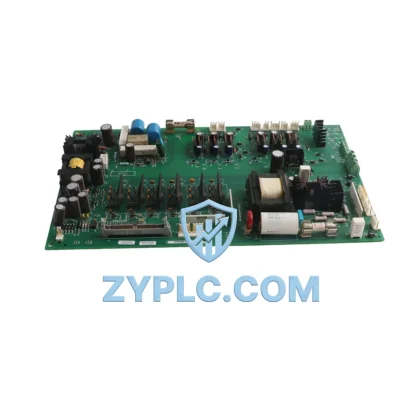
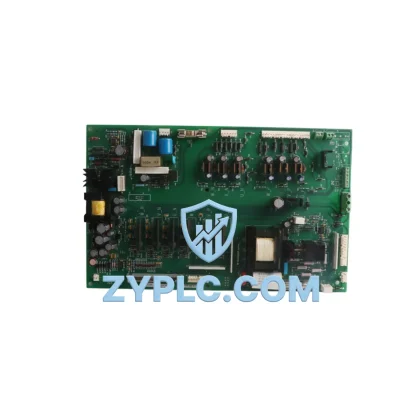
The ABB 3HAC050216-001 is a precision axis drive module engineered specifically for deployment within the IRB 7600 robotic control architecture. Rather than functioning as a standalone component, this module is designed to operate as an integral node within a layered automation system — coordinating signal flow between the IRC5 controller platform, the drive cabinet power distribution network, the servo motor feedback loop, and the supervisory RAPID programming environment. Understanding its role within the full system hierarchy is essential for engineers responsible for commissioning, maintenance, and long-term operational continuity in high-payload robotic applications.
In modern industrial automation, the reliability of a robotic cell depends not on any single component but on the coherence of the entire control stack. The 3HAC050216-001 axis drive module occupies a critical position in this stack — receiving motion commands from the IRC5 main computer unit (MCU), converting those commands into precise current and voltage outputs for the axis motor, and returning encoder feedback data to close the position and velocity control loop. Any disruption at this layer propagates immediately to path accuracy, cycle time consistency, and ultimately to production quality. This is why sourcing a verified, system-compatible replacement module — backed by a 12-Month Warranty — is a non-negotiable requirement for facilities operating IRB 7600 robots in continuous production environments.
Architecture Specification Table
| Parameter |
Specification |
| Part Number |
3HAC050216-001 |
| System Role |
Axis Drive Module — IRB 7600 Series |
| Compatible Platform |
ABB IRC5 Drive Cabinet |
| Robot Series |
IRB 7600 (500/2.55, 340/2.8, 150/3.5 variants) |
| Drive Type |
AC Servo Drive — Multi-axis capable |
| Communication Interface |
Internal ABB Drive Bus (SERCOS / proprietary IRC5 backplane) |
| Feedback Compatibility |
Resolver / Absolute Encoder (ABB standard) |
| Input Voltage |
3-phase AC, 400–480 V (cabinet-supplied) |
| Cooling Method |
Forced air (integrated cabinet fan system) |
| Installation Environment |
IRC5 Drive Cabinet — DIN rail / module slot mount |
| Operating Temperature |
0°C to +52°C (cabinet ambient) |
| Contextual Integration |
Full Contextual Integration with IRC5 MCU, DSQC boards, and RobotWare |
| Warranty |
12-Month Warranty — Tested, verified, ready for system deployment |
| Origin |
Sweden (ABB Robotics) |
Coordinated Control System Design
The 3HAC050216-001 does not operate in isolation. Its performance is inseparable from the broader IRC5 control architecture, and a thorough understanding of its upstream and downstream dependencies is essential for any system integrator or maintenance engineer working with IRB 7600 installations.
At the controller layer, the IRC5 Main Computer Unit (MCU) — typically the DSQC1000 or its predecessor DSQC639 — generates interpolated motion trajectories via the RAPID runtime environment. These trajectories are transmitted over the internal drive bus to the axis drive modules, where they are converted into real-time current references for each motor axis. The 3HAC050216-001 receives these references and executes the inner current control loop at high bandwidth, ensuring that the IRB 7600’s characteristic payload capacity and path repeatability (±0.05 mm) are maintained under full load conditions.
At the power layer, the ABB DSQC374 or DSQC608 power supply unit within the IRC5 cabinet provides the regulated DC bus voltage that feeds the axis drive modules. Proper sizing and condition of the power supply directly affects the dynamic response of the 3HAC050216-001 during high-acceleration moves. Engineers should verify that the DC bus capacitors in the power supply are within specification before replacing an axis drive module, as a degraded power supply can cause recurring drive faults that are incorrectly attributed to the drive module itself.
At the I/O and safety layer, the DSQC643 I/O board and the DSQC400 safety board interact with the drive module through the IRC5 backplane. The safety board monitors axis-level enable signals and emergency stop chains, while the I/O board manages digital and analog process signals that may be interlocked with axis motion. Correct configuration of these boards in RobotWare is a prerequisite for successful commissioning of a replacement 3HAC050216-001.
At the feedback layer, the 3HAC057539-004 resolver measurement board — which is listed as part of the associated SKU set for this product — works in conjunction with the axis drive to process motor resolver signals. This board converts analog resolver outputs into digital position data consumed by the drive module’s position controller. When replacing the 3HAC050216-001, it is best practice to inspect the 3HAC057539-004 simultaneously, as resolver board degradation can cause position drift errors that persist even after a drive module replacement.
At the network and supervisory layer, the IRC5 Panel Board (DSQC1030) and optional DSQC688 fieldbus adapter (supporting PROFIBUS-DP, DeviceNet, or EtherNet/IP) provide the communication bridge between the robot controller and the plant-level SCADA or PLC system. In integrated production lines where the IRB 7600 operates alongside Siemens S7-300 or Allen-Bradley ControlLogix PLCs, the fieldbus adapter ensures that axis status, fault codes, and program selection signals are exchanged reliably across the automation network.
At the human-machine interface layer, the ABB FlexPendant (IRC5 variant) provides the operator interface for jogging, program execution, and fault acknowledgment. During commissioning of a replacement 3HAC050216-001, the FlexPendant is used to perform axis calibration, update revolution counter values, and verify that all six axes of the IRB 7600 respond correctly to manual jog commands before returning the robot to automatic production mode.
Application in Layered Automation Systems
The IRB 7600 series, and by extension the 3HAC050216-001 axis drive module, is deployed across a wide range of heavy-industry automation applications where payload capacity (up to 500 kg), reach (up to 3.5 m), and path accuracy are simultaneously required.
In automotive body-in-white manufacturing, IRB 7600 robots equipped with spot welding guns rely on the axis drive module to maintain precise gun positioning during weld cycles. Any deviation in axis response caused by a degraded drive module directly affects weld nugget quality and dimensional accuracy of the body structure. Facilities operating multi-robot welding lines typically maintain a stock of verified replacement drive modules to minimize unplanned downtime.
In steel and metal foundry applications, IRB 7600 robots perform hot metal handling, die casting extraction, and press tending in environments with elevated ambient temperatures and significant electromagnetic interference. The 3HAC050216-001 must operate reliably under these conditions, and its thermal management within the IRC5 cabinet — supported by the cabinet’s forced-air cooling system — is a key factor in long-term reliability.
In petrochemical and process industry installations, IRB 7600 robots are used for valve manipulation, heavy component assembly, and inspection tasks in hazardous areas. In these environments, the integrity of the drive module’s communication with the safety board is critical, as any spurious fault signal can trigger an unplanned shutdown with significant process consequences.
In logistics and palletizing operations, high-cycle-rate applications place continuous thermal and electrical stress on axis drive modules. Predictive maintenance programs in these facilities typically include periodic monitoring of drive module fault logs via RobotWare’s diagnostic tools, with replacement modules sourced in advance to support planned maintenance windows.
In mining and heavy material handling, the IRB 7600’s structural rigidity and the 3HAC050216-001’s ability to deliver consistent torque output across the full speed range make this combination suitable for rock drilling assistance, ore sample handling, and underground equipment maintenance robotics — applications where reliability under mechanical shock and vibration is paramount.
Architecture Engineering FAQ
Q1: Is the 3HAC050216-001 compatible with all IRC5 cabinet variants used with the IRB 7600 series?
The 3HAC050216-001 is designed for use within the IRC5 single-cabinet and dual-cabinet configurations paired with IRB 7600 variants. Compatibility depends on the specific robot variant (payload/reach combination) and the RobotWare version installed on the MCU. Before installation, engineers should verify the drive module slot assignment in the IRC5 cabinet layout drawing and confirm that the RobotWare configuration file references the correct drive module type. If the cabinet has been upgraded from an earlier IRC5 revision, a RobotWare parameter backup and restore procedure may be required after module replacement to ensure full Contextual Integration with the updated hardware.
Q2: What commissioning steps are required after replacing the 3HAC050216-001 in a production IRB 7600?
After physical installation of the replacement module, the commissioning sequence includes: (1) verifying DC bus voltage at the module connector with the cabinet energized but drives disabled; (2) performing a controlled power-on sequence via the FlexPendant to check for drive initialization faults; (3) executing the revolution counter update procedure for all six axes using the FlexPendant calibration menu; (4) running a slow-speed jog test on each axis to verify encoder feedback and direction of motion; and (5) executing a full-speed path verification program to confirm that path repeatability meets the ±0.05 mm specification. All steps should be documented in the facility’s maintenance management system as part of the 12-Month Warranty validation record.
Q3: What does the 12-Month Warranty cover, and how does it support long-term maintenance planning?
The 12-Month Warranty covers the 3HAC050216-001 against manufacturing defects and functional failures under normal operating conditions within a correctly configured IRC5 cabinet. The warranty period begins from the date of shipment and is supported by pre-shipment functional testing of each module. For maintenance planners, the 12-Month Warranty provides a defined reliability baseline that can be incorporated into the facility’s preventive maintenance schedule and spare parts budget. Facilities operating multiple IRB 7600 robots are encouraged to maintain at least one verified replacement 3HAC050216-001 in local stock, with the warranty period tracked against the installation date to ensure that any latent defects are identified and addressed within the coverage window.
© 2026 ZYPLC. All rights reserved.
Original Source: https://zyplc.com
Contact: +86 19859288691 | [email protected]