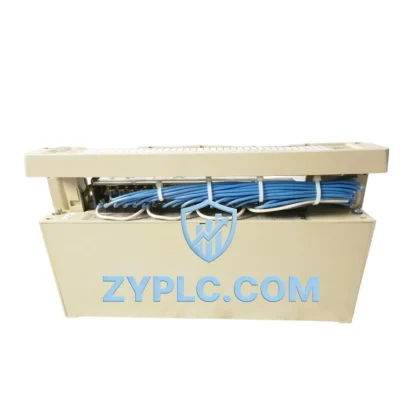
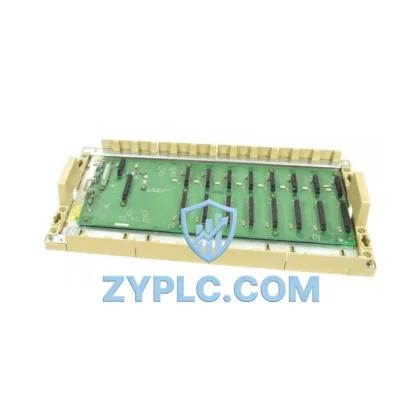
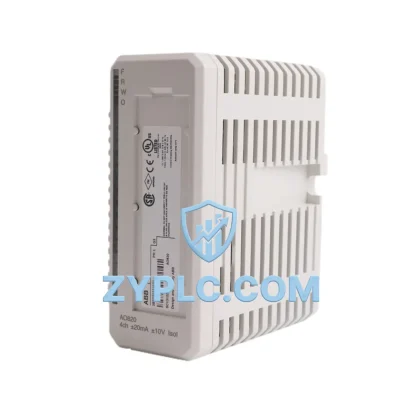
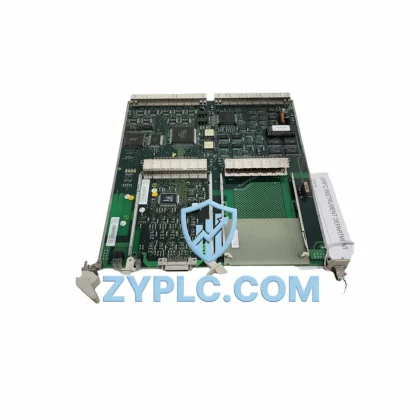
ABB 3HAC059654-001 System-Ready Wrist Module for IRB6700 Control Architecture
The ABB 3HAC059654-001 is a precision-engineered wrist module designed specifically for the IRB6700 series of industrial robots, one of ABB’s most widely deployed heavy-payload robot platforms in global manufacturing environments. Within a complete robotic control system architecture, the wrist module occupies a critical position at the mechanical execution layer — the final articulation point through which all upstream control signals, motion trajectories, and torque commands are physically realized. Understanding its role within the broader system hierarchy is essential for engineers responsible for system integration, preventive maintenance, and long-term operational continuity.
In a fully layered automation architecture, the IRB6700 robot operates under the direction of the IRC5 robot controller, which serves as the central control unit managing motion planning, axis coordination, and real-time process execution. The IRC5 controller communicates with the robot’s drive system through a dedicated internal bus, coordinating the DSQC633 drive unit and DSQC668 axis computer to deliver precise torque and velocity commands to each joint. The 3HAC059654-001 wrist module receives these commands at the wrist axes — typically axes 4, 5, and 6 — translating electrical signals into controlled mechanical motion with the repeatability and load capacity that IRB6700 applications demand.
At the I/O and signal layer, the wrist module interfaces with the robot’s internal cabling harness, including the 3HAC044229-003 and 3HAC044229-004 cable assemblies that route power and encoder feedback signals between the forearm and wrist. These cables are integral to maintaining signal integrity across the full range of wrist motion, and their compatibility with the 3HAC059654-001 is a prerequisite for correct installation. Encoder feedback from the wrist axes is processed by the SMB (Serial Measurement Board), typically the 3HAC031670-001, which transmits position data back to the IRC5 controller to close the motion control loop. Any degradation in this feedback path — whether from cable wear, connector contamination, or module misalignment — will directly affect axis accuracy and may trigger fault codes at the controller level.
From a system redundancy and reliability perspective, maintaining a verified spare of the 3HAC059654-001 in the facility’s critical spare inventory is a recognized best practice in high-utilization robotic installations. Unplanned wrist module failures in continuous production environments — such as automotive body welding lines, heavy material handling cells, or foundry automation — can result in extended downtime that far exceeds the cost of the module itself. Facilities operating multiple IRB6700 units benefit from standardizing on a common wrist module specification, enabling cross-robot spare sharing and reducing the total number of unique part numbers that maintenance teams must manage.
At the network and communication layer, the IRC5 controller supporting the IRB6700 may be integrated into plant-level SCADA or MES systems via DeviceNet, Profibus, or EtherNet/IP fieldbus options, depending on the facility’s automation architecture. The DSQC378B or DSQC652 I/O boards within the IRC5 cabinet handle digital and analog signal exchange with external PLCs, safety systems, and process equipment. The wrist module’s mechanical performance directly influences the quality of end-effector positioning, which in turn affects the reliability of process signals — such as weld completion confirmations, part presence detections, or torque verification outputs — that are reported back through these communication layers to the supervisory system.
For human-machine interface and engineering access, the IRC5 FlexPendant (3HAC028357-001) provides the primary interface for axis jogging, program execution, and fault diagnostics during commissioning and maintenance of the wrist module. Engineers performing wrist module replacement should follow the calibration procedure using the CalibWare software and the robot’s calibration pendulum to restore axis 4, 5, and 6 zero positions after installation. Failure to recalibrate after wrist module replacement is a common source of positional error that can compromise process quality and trigger repeated fault conditions.
The 3HAC059654-001 is supplied with a 12-Month Warranty covering manufacturing defects and functional performance under normal operating conditions. Each unit undergoes functional verification prior to dispatch, ensuring that it meets ABB’s original specification for torque capacity, backlash tolerance, and encoder interface compatibility. This warranty coverage, combined with documented traceability, supports facilities operating under ISO 9001 quality management requirements or industry-specific compliance frameworks.
Architecture Specification Table
| Parameter |
Specification |
| Part Number |
3HAC059654-001 |
| System Role |
Wrist Module — Axes 4/5/6 Execution Layer |
| Compatible Robot |
ABB IRB6700 Series (all variants) |
| Controller Compatibility |
IRC5 Single / IRC5 Dual Cabinet |
| Cable Interface |
3HAC044229-003 / 3HAC044229-004 |
| Feedback System |
Resolver/Encoder via SMB (3HAC031670-001) |
| Payload Capacity |
Up to 235 kg (robot-level, wrist-dependent) |
| Installation Environment |
Industrial — IP67 rated wrist, suitable for foundry/wash-down |
| Communication Path |
Internal ABB robot bus via IRC5 axis computer |
| Origin |
Sweden (ABB Robotics) |
| Warranty |
12-Month Warranty — functional and manufacturing defect coverage |
Coordinated Control System Design
The 3HAC059654-001 wrist module functions as the terminal mechanical node in a coordinated control chain that begins at the IRC5 controller cabinet. Within this chain, the DSQC633 drive unit manages axis power delivery, while the DSQC668 axis computer coordinates motion sequencing across all six robot axes. The SMB unit (3HAC031670-001) collects encoder data from the wrist and forearm axes and relays position feedback to the controller, enabling closed-loop motion control with the repeatability tolerances that IRB6700 applications require.
The internal cabling system — specifically the 3HAC044229-003 and 3HAC044229-004 harness assemblies — forms the electrical backbone connecting the forearm to the wrist module. These cables carry both power and signal conductors, and their routing through the robot’s hollow wrist design is engineered to minimize flex fatigue over the robot’s operational life. When replacing the 3HAC059654-001, engineers should inspect these cable assemblies for wear at the flex points and replace them concurrently if signs of insulation degradation are present, to avoid a secondary failure shortly after wrist module installation.
At the cabinet level, the IRC5 controller’s DSQC652 I/O board manages the digital handshake signals between the robot and external process equipment — including weld controllers, gripper solenoids, and safety PLCs. The FlexPendant (3HAC028357-001) provides real-time axis monitoring and manual jog capability during wrist module commissioning, allowing engineers to verify axis 4, 5, and 6 motion ranges and confirm calibration accuracy before returning the robot to automatic production mode.
Application in Layered Automation Systems
The ABB IRB6700 equipped with the 3HAC059654-001 wrist module is deployed across a wide range of heavy-industry automation applications. In automotive manufacturing, the robot is commonly used for spot welding, arc welding, and body panel handling, where wrist axis precision directly affects weld placement accuracy and cycle time consistency. In steel and metal processing facilities, the IRB6700 handles billets, castings, and press-formed components in high-temperature environments where the wrist module’s IP67 protection rating is a critical operational requirement.
In power generation and energy infrastructure projects, the IRB6700 is used for turbine component assembly and heavy substation equipment handling, where the robot’s payload capacity and wrist rigidity are essential for maintaining positional accuracy under load. In mining and mineral processing automation, the robot performs ore sample handling, conveyor loading, and equipment maintenance tasks in environments characterized by dust, vibration, and temperature extremes — conditions that place sustained mechanical stress on the wrist module and make verified spare availability a priority for maintenance planners.
In packaging and palletizing lines for food, beverage, and consumer goods manufacturers, the IRB6700 handles end-of-line palletizing tasks where wrist module reliability directly affects line throughput and OEE metrics. Facilities in these sectors typically operate on tight maintenance windows, making the availability of a pre-tested, warranty-backed 3HAC059654-001 replacement unit a key factor in minimizing planned downtime duration.
Architecture Engineering FAQ
Q1: Is the 3HAC059654-001 compatible with all IRB6700 variants, and does it require any controller configuration changes after installation?
The 3HAC059654-001 is designed for use across the IRB6700 series, which includes payload variants from 150 kg to 235 kg. After installation, axis calibration must be performed using ABB’s CalibWare software and the robot’s calibration pendulum to restore the zero-position reference for axes 4, 5, and 6. No controller firmware changes are required, but the SMB memory unit should be checked to confirm that calibration data is correctly stored before returning the robot to automatic operation. The IRC5 controller’s event log should be reviewed post-installation to confirm that no axis fault codes are active.
Q2: What is the recommended approach for integrating a replacement 3HAC059654-001 into a multi-robot cell without disrupting production continuity?
For multi-robot cells where continuous production is required, the recommended approach is to maintain a pre-tested spare 3HAC059654-001 in the facility’s critical spare inventory, allowing hot-swap replacement during a planned maintenance window rather than an unplanned breakdown. The replacement robot should be isolated from the cell’s safety PLC and SCADA system before work begins, and the IRC5 controller should be placed in manual mode via the FlexPendant. After installation and calibration, a dry-run cycle should be performed to verify path accuracy before the robot is reintegrated into the production cell’s coordinated motion sequence.
Q3: What does the 12-Month Warranty cover, and how does it support long-term maintenance planning for facilities with multiple IRB6700 units?
The 12-Month Warranty covers manufacturing defects and functional performance failures under normal operating conditions, including encoder interface integrity, mechanical backlash within specification, and structural integrity of the wrist housing. For facilities operating multiple IRB6700 robots, the warranty provides a documented quality assurance baseline that supports ISO 9001 maintenance records and spare parts traceability requirements. Warranty claims are processed through our technical support team, and replacement units are dispatched with full functional verification documentation. Facilities are encouraged to register their spare parts inventory at the time of purchase to ensure warranty coverage is tracked from the delivery date.
© 2026 ZYPLC. All rights reserved.
Original Source: https://zyplc.com
Contact: +86 19859288691 | [email protected]