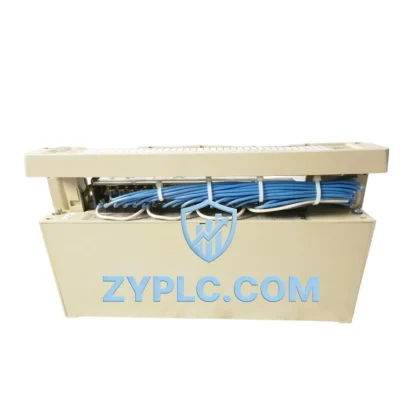
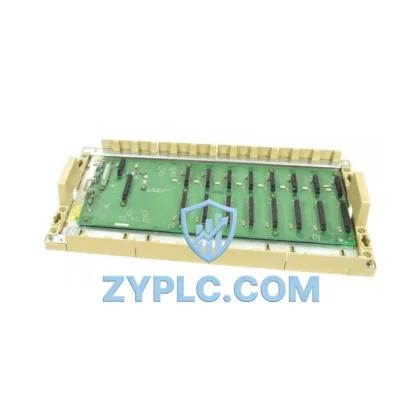
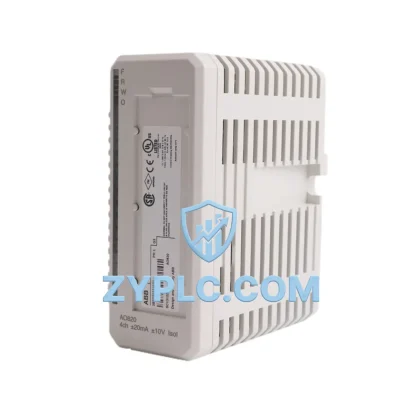
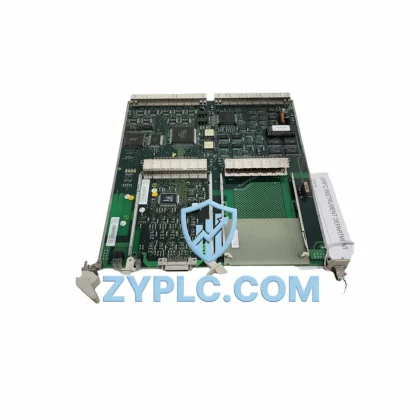
ABB 3HAC062339-006 Energy-Saving Balance Unit IRB7600: Precision Efficiency Control for Optimized Production Lines
The ABB 3HAC062339-006 is a factory-tested Balance Unit engineered specifically for the ABB IRB7600 series heavy-duty industrial robot. In high-throughput manufacturing environments — automotive body welding, heavy material handling, foundry operations, and large-scale assembly — the balance unit plays a critical but often overlooked role in the robot’s overall energy consumption profile. By maintaining precise gravitational compensation on the robot’s primary axis, the 3HAC062339-006 directly reduces the torque demand placed on the servo drive system, allowing the ABB DSQC series servo drives and associated motor controllers to operate within their optimal efficiency bands rather than compensating for mechanical imbalance through excess current draw.
When a balance unit degrades or fails, the downstream effects cascade through the entire drive chain. The robot’s axis motors — typically paired with ABB 3HAC Motor Units and managed through the IRC5 controller cabinet — must work harder to maintain programmed trajectories, increasing both cycle energy consumption and thermal stress on drive components. Replacing a worn balance unit with a genuine ABB 3HAC062339-006 restores the mechanical equilibrium that the original system was calibrated for, immediately reducing unnecessary energy draw and extending the service life of connected drive hardware.
Efficiency Performance Table
| Parameter |
Specification / Value |
| Part Number |
3HAC062339-006 |
| Compatible Robot Series |
ABB IRB7600 (all variants) |
| Function |
Gravitational Balance Compensation — Axis 2/3 |
| Drive Efficiency Impact |
Reduces servo torque demand, lowers motor current draw by restoring mechanical balance |
| Compatible Controller |
ABB IRC5 Single / Dual Cabinet |
| Compatible Drive System |
ABB DSQC Series Servo Drives |
| Application Environment |
Automotive, Heavy Fabrication, Foundry, Large-Part Assembly |
| Energy Optimization Value |
Eliminates excess motor compensation current; reduces idle-state energy waste |
| Origin |
Sweden (ABB OEM) |
| Condition |
New / Tested Surplus |
| Warranty |
12-Month Warranty |
| Availability |
In Stock — Ships Globally |
Energy-Aware Automation Architecture
The ABB 3HAC062339-006 does not operate in isolation — it is one component within a tightly integrated energy management architecture. In a fully optimized IRB7600 cell, the balance unit works in concert with the ABB IRC5 controller, which coordinates motion planning and power distribution across all six axes. The IRC5’s QuickMove and TrueMove motion optimization algorithms are most effective when the mechanical system — including the balance unit — is operating within specification. A degraded balance unit forces the IRC5 to issue corrective torque commands that consume additional energy and reduce path accuracy.
At the drive level, the ABB DSQC663 drive unit and DSQC668 axis computer manage real-time current delivery to each motor. When the balance unit is functioning correctly, these drives operate with lower peak current demands, reducing heat generation and extending the operational lifespan of the drive modules themselves. In energy-monitored facilities, this reduction in peak draw is measurable through power quality analyzers connected to the robot cell’s incoming supply — a properly balanced IRB7600 shows a noticeably flatter current waveform during axis movement cycles.
For facilities running multiple IRB7600 units on a shared power bus, the cumulative effect of balance unit degradation across several robots can create significant reactive power issues. Integrating the ABB 3HAC062339-006 replacement into a planned maintenance cycle — alongside inspection of the 3HAC024779-001 balance cylinder (a commonly associated component) — ensures that the entire gravitational compensation system is restored to OEM specification. This is particularly relevant in cells where the ABB FlexPendant TP unit is used to monitor axis load data, as the IRC5 will log elevated axis torque values that directly indicate balance unit wear before mechanical failure occurs.
From a system-level perspective, the balance unit’s condition also affects the performance of the ABB SafeMove2 safety module, which monitors axis speed and position limits. A mechanically imbalanced robot may trigger SafeMove2 protective stops more frequently during high-speed moves, interrupting production cycles and creating unnecessary downtime. Restoring balance unit integrity reduces these nuisance trips and keeps the production line running at its programmed cycle rate. In facilities using ABB Ability™ Connected Services for remote condition monitoring, balance unit health can be tracked as part of the robot’s overall mechanical condition index, enabling predictive replacement scheduling rather than reactive emergency repairs.
Power Optimization in Real Production Lines
In automotive stamping and body-in-white welding lines, the IRB7600 is typically deployed in high-duty-cycle applications where it may complete thousands of pick-and-place or welding cycles per shift. In these environments, even small inefficiencies in the mechanical drive chain compound over time into significant energy costs. A balance unit operating outside its design parameters forces the robot’s servo system to continuously compensate, effectively burning energy to fight gravity rather than performing productive work. Replacing the ABB 3HAC062339-006 restores the robot’s ability to use gravitational potential energy constructively during downward axis movements, which the IRC5 controller can partially recover through regenerative braking back into the drive bus.
Beyond direct energy savings, the restored mechanical balance reduces vibration and settling time at the end of each move. This directly improves production line takt time — the robot reaches its programmed position more quickly and with less overshoot, allowing the next operation to begin sooner. In a cell running 20 cycles per minute, even a 0.1-second improvement in settling time per cycle translates to measurable throughput gains over a full production shift. Maintenance teams using the IRC5’s built-in service logging can track axis load trends before and after balance unit replacement to quantify the improvement in operational efficiency.
From a predictive maintenance perspective, the ABB 3HAC062339-006 should be treated as a scheduled replacement item rather than a run-to-failure component. Proactive replacement during planned maintenance windows — rather than emergency replacement after a balance unit failure causes unplanned downtime — eliminates the far greater cost of lost production, emergency logistics, and potential secondary damage to axis motors and gearboxes. All units supplied by ZYPLC are tested prior to shipment and covered by a 12-month warranty, ensuring that replacement parts perform to specification from the moment they are installed.
Energy Optimization FAQ
Q: How does replacing the 3HAC062339-006 balance unit reduce energy consumption in an IRB7600 robot?
A: The balance unit provides gravitational compensation on the robot’s primary load-bearing axes. When it degrades, the servo drive system must supply additional torque to compensate for the mechanical imbalance, increasing motor current draw during every movement cycle. Replacing the balance unit restores the original mechanical equilibrium, allowing the DSQC series drives to operate at lower current levels and reducing overall cell energy consumption.
Q: Is the ABB 3HAC062339-006 compatible with all IRB7600 variants and the IRC5 controller?
A: Yes. The 3HAC062339-006 is an OEM ABB part designed for the IRB7600 series across its standard payload variants. It is fully compatible with the IRC5 Single Cabinet and Dual Cabinet controller configurations. If you are unsure about compatibility with a specific robot serial number or configuration, contact ZYPLC with your robot’s nameplate data for confirmation before ordering.
Q: What is the recommended replacement interval, and how can I identify balance unit wear before failure?
A: ABB recommends balance unit inspection as part of the robot’s scheduled maintenance program, typically aligned with gearbox oil change intervals. Early indicators of balance unit wear include elevated axis torque values logged by the IRC5 controller, increased settling time at end-of-move positions, and unusual noise during axis 2 or axis 3 movement. The ABB FlexPendant can be used to review axis load history, and ABB Ability™ Connected Services can flag anomalies automatically if the robot is connected to remote monitoring.
Q: What does the 12-month warranty cover, and what is the testing process before shipment?
A: Every ABB 3HAC062339-006 unit supplied by ZYPLC undergoes functional testing prior to shipment to verify mechanical integrity and confirm the unit meets OEM performance specifications. The 12-month warranty covers defects in materials and workmanship under normal operating conditions. In the event of a warranty claim, ZYPLC provides direct support through our technical team — contact us at [email protected] or +86 19859288691 to initiate a claim or request pre-shipment test documentation.
© 2026 ZYPLC. All rights reserved.
Original Source: https://zyplc.com
Contact: +86 19859288691 | [email protected]