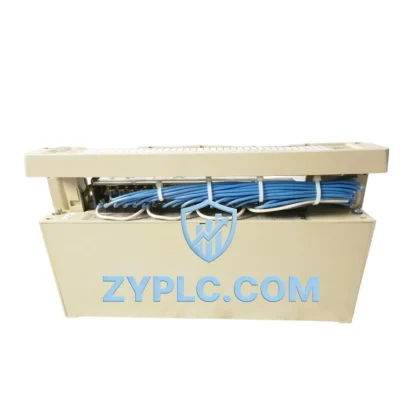
ABB 3HAC069651-001 Energy-Saving Cable Harness for Optimized IRB 4600 Automation
In modern robotic manufacturing environments, every watt of energy and every millisecond of cycle time matters. The ABB 3HAC069651-001 cable harness is a precision-engineered internal wiring assembly designed specifically for the ABB IRB 4600 articulated robot series — one of ABB’s most widely deployed platforms for arc welding, material handling, machine tending, and assembly automation. Far from being a passive component, this cable harness plays a direct role in the energy efficiency, signal integrity, and operational continuity of the entire robotic drive system.
The IRB 4600 robot is built around a tightly integrated motion control architecture. Its six-axis servo drive system relies on clean, low-resistance signal and power routing between the controller cabinet and each joint actuator. The 3HAC069651-001 harness serves as the primary internal conduit for this routing — carrying encoder feedback signals, motor power lines, brake control circuits, and safety interlock wiring through the robot’s mechanical structure. When this harness degrades or fails, the consequences extend far beyond a simple wiring fault: servo tuning becomes unstable, axis positioning errors increase, and the IRC5 controller begins logging fault codes that trigger unplanned downtime.
Efficiency Performance Table
| Parameter |
Specification / Value |
| Part Number |
3HAC069651-001 |
| Compatible SKUs |
IRB46001-63HAC069651-001 / 3HAC043964-001 |
| Compatible Robot |
ABB IRB 4600 Series (all variants) |
| Component Type |
Internal Cable Harness Assembly |
| Signal Integrity |
Shielded encoder & power lines, EMI-resistant |
| Power Routing Efficiency |
Low-resistance conductors, minimized voltage drop |
| Application Environment |
Industrial robotic cells, welding, assembly, handling |
| Compatible Controller |
ABB IRC5 Single / Dual Cabinet |
| Energy Optimization Value |
Reduces servo fault-driven idle cycles and restart energy spikes |
| Warranty |
12-Month Warranty |
| Availability |
In Stock — Ships after outgoing inspection & functional test |
| Origin |
Sweden (ABB Robotics) |
Energy-Aware Automation Architecture
The ABB 3HAC069651-001 cable harness does not operate in isolation — it is a foundational element within a layered automation architecture that spans motion control, power management, and real-time feedback. Understanding how it interacts with surrounding system components reveals its true contribution to energy-aware production.
At the controller level, the ABB IRC5 robot controller manages all six servo axes of the IRB 4600 through its integrated drive modules. The IRC5’s DSQC 662 drive unit delivers precisely regulated power to each joint motor, and the quality of that power delivery depends entirely on the integrity of the cable harness connecting the drive outputs to the motor windings and encoder interfaces. A degraded harness introduces resistance and signal noise that forces the drive unit to compensate — increasing current draw and reducing overall drive efficiency.
Encoder feedback is routed through the harness back to the ABB DSQC 633 measurement board, which processes position and velocity data for real-time servo loop closure. Any intermittent signal loss in the harness causes the measurement board to request re-synchronization cycles, adding latency to the motion profile and disrupting production line takt time. Replacing a worn 3HAC069651-001 harness restores clean feedback paths and allows the servo system to maintain its programmed velocity and torque curves without correction overhead.
On the safety and I/O side, the harness carries brake release signals to each axis brake solenoid. These signals are monitored by the IRC5’s DSQC 400 I/O board, which interfaces with the plant’s safety PLC — often an ABB AC500 Safety PLC or a third-party safety controller via DeviceNet or EtherNet/IP protocol. A faulty brake signal line in the harness can trigger SafeMove safety stops, causing the robot to enter a controlled halt state that consumes energy without producing output — a hidden efficiency drain that accumulates over shift cycles.
For facilities running energy monitoring at the cell level, the IRB 4600’s power consumption profile is typically tracked through a power monitoring module integrated into the main distribution panel — such as an ABB B23 energy meter or equivalent DIN-rail power analyzer. When the cable harness is in good condition, the robot’s current draw follows predictable motion-correlated patterns. Anomalous baseline current — visible on the energy meter during idle or low-load phases — is a reliable early indicator of harness insulation breakdown or connector oxidation.
The IRB 4600 is frequently deployed alongside ABB FlexArc welding cells, where it works in coordination with ABB OmniCore C30 welding controllers and wire feeder drive units. In these environments, the cable harness must maintain signal integrity under continuous thermal cycling and mechanical flexion. The 3HAC069651-001 is rated for the IRB 4600’s full range of motion and duty cycle, ensuring that welding cell throughput is not compromised by harness-induced servo faults.
Power Optimization in Real Production Lines
In high-volume manufacturing environments — automotive body shops, electronics assembly lines, logistics sortation cells — the ABB IRB 4600 is often scheduled for 20-hour daily operation with minimal planned downtime. Under these conditions, the cable harness is subjected to continuous mechanical stress from axis rotation, thermal expansion, and vibration. Gradual insulation wear or connector fretting corrosion leads to intermittent faults that are difficult to diagnose and disproportionately expensive in terms of lost production time.
A proactive harness replacement strategy, centered on the 3HAC069651-001, delivers measurable energy and productivity benefits. First, it eliminates the energy cost of fault-recovery cycles: each unplanned IRC5 fault stop requires a full system restart sequence — brake engagement, controller re-initialization, and program restart — consuming an estimated 3–8 minutes of non-productive energy draw per event. In a cell running 1,200 cycles per shift, even a 0.5% fault rate translates to 6 fault stops per shift, or roughly 30–48 minutes of wasted energy and lost takt time daily.
Second, a new harness restores optimal servo loop performance. The IRC5 drive system is calibrated to operate within tight current and voltage tolerances. When harness resistance increases due to wear, the drive compensates by increasing output current — raising motor temperature, accelerating bearing wear, and increasing energy consumption per cycle. Restoring low-resistance signal and power paths allows the drive to operate at its designed efficiency point, reducing per-cycle energy consumption and extending motor service life.
Third, predictive maintenance programs benefit directly from harness integrity. Facilities using ABB Ability™ Condition Monitoring or third-party OPC-UA data collection platforms can correlate harness condition with servo current signatures. A trending increase in axis current at constant load is a reliable harness degradation indicator — allowing maintenance teams to schedule replacement during planned downtime rather than responding to unplanned failures. This shift from reactive to predictive maintenance is one of the highest-ROI energy optimization strategies available to robotic cell operators.
Every unit of the ABB 3HAC069651-001 supplied by ZYPLC undergoes a full outgoing inspection and functional verification test prior to shipment. This includes continuity testing of all signal and power conductors, insulation resistance measurement, and connector integrity verification. Stock is maintained in climate-controlled storage to prevent pre-installation degradation, and all units are shipped with documentation supporting traceability and warranty registration.
Energy Optimization FAQ
Q1: How does replacing the 3HAC069651-001 cable harness reduce energy consumption in an IRB 4600 cell?
A degraded cable harness increases conductor resistance and introduces signal noise into the servo feedback loop. This forces the IRC5 drive system to draw higher current to maintain target torque and velocity, increasing per-cycle energy consumption. A new 3HAC069651-001 restores designed conductor resistance and signal integrity, allowing the drive to operate at its rated efficiency point and reducing unnecessary current draw across all six axes.
Q2: Is the 3HAC069651-001 compatible with all IRB 4600 variants and IRC5 controller configurations?
The 3HAC069651-001 is designed for the ABB IRB 4600 series and is compatible with IRC5 Single Cabinet and Dual Cabinet controller configurations. Cross-reference SKUs 3HAC043964-001 and IRB46001-63HAC069651-001 confirm fitment for standard IRB 4600 payload and reach variants. If you are unsure of your specific robot configuration, contact ZYPLC with your robot serial number for confirmation before ordering.
Q3: What is the recommended replacement interval, and how can I identify harness degradation before failure?
ABB recommends periodic inspection of internal cable harnesses as part of the IRB 4600’s planned maintenance schedule, typically at 20,000–40,000 operating hours depending on duty cycle and environment. Early degradation indicators include intermittent axis fault codes (e.g., 50024, 50025 series in IRC5), trending increases in axis motor current at constant load, and visible insulation cracking or connector discoloration during physical inspection. Proactive replacement based on these indicators prevents unplanned downtime and avoids the energy cost of fault-recovery cycles.
Q4: What warranty and testing does ZYPLC provide with the 3HAC069651-001?
All ABB 3HAC069651-001 cable harness units supplied by ZYPLC are covered by a 12-month warranty from the date of shipment. Prior to dispatch, each unit undergoes full outgoing inspection including conductor continuity testing, insulation resistance measurement, and connector integrity verification. Units are stored in climate-controlled conditions to maintain pre-installation integrity. Warranty claims are supported with full traceability documentation.
© 2026 ZYPLC. All rights reserved.
Original Source: https://zyplc.com
Contact: +86 19859288691 | [email protected]