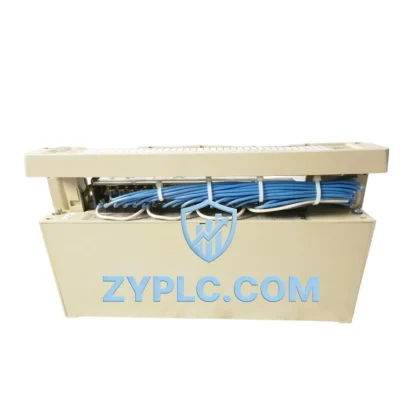
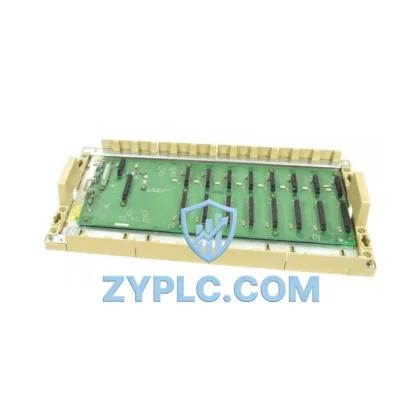
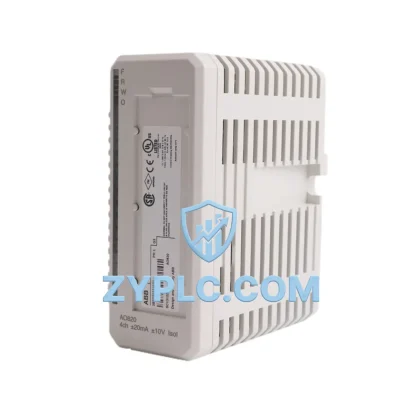
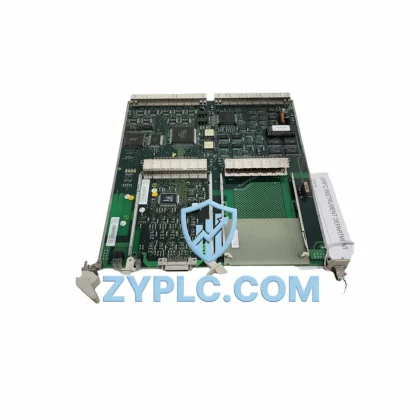
ABB 3HAC14678-1 Energy-Saving Balancing Device for Optimized IRB Series Automation
The ABB 3HAC14678-1 is a precision-engineered balancing device module designed for ABB IRB series industrial robots. By counterbalancing the gravitational load on the robot arm, this module directly reduces the torque demand on the servo drive system — translating into measurable reductions in motor energy consumption, lower thermal stress on drive components, and improved cycle consistency across production lines. Whether deployed in automotive body welding, heavy-payload palletizing, or precision assembly, the 3HAC14678-1 plays a foundational role in energy-aware automation architecture.
In high-throughput manufacturing environments, unbalanced robot arms force servo motors to continuously compensate for gravitational pull, consuming excess current and generating unnecessary heat. The 3HAC14678-1 eliminates this inefficiency by maintaining mechanical equilibrium throughout the robot’s range of motion. This allows the ABB servo drive — such as units in the DSQC series — to operate closer to its optimal efficiency curve, reducing reactive power draw and extending drive service intervals.
Efficiency Performance Table
| Parameter |
Specification |
| SKU / Part Number |
3HAC14678-1 (Alt: 3HAC16198-1, 3HAC17117-2) |
| Brand |
ABB |
| Series Compatibility |
ABB IRB Series Industrial Robots |
| Product Category |
Robot Balancing Device Module |
| Energy Optimization Role |
Gravitational load counterbalancing — reduces servo torque demand |
| Drive Efficiency Impact |
Reduces motor current draw during static and low-speed holds |
| Compatible Control Systems |
ABB IRC5, S4C+ Robot Controllers |
| Application Environment |
Industrial automation, welding, palletizing, assembly |
| Origin |
Sweden (ABB) |
| Warranty |
12-Month Warranty |
| Testing |
Pre-shipment functional test included |
| Availability |
In stock — ready to ship |
Energy-Aware Automation Architecture
The 3HAC14678-1 does not operate in isolation — its energy efficiency contribution is amplified when integrated within a well-designed automation architecture. In a typical IRB robot cell, the balancing device works in concert with the ABB IRC5 robot controller, which manages motion profiles and power distribution across all robot axes. The IRC5’s integrated power management module monitors axis load in real time, and with the 3HAC14678-1 reducing gravitational compensation demands, the controller can allocate drive power more efficiently across the remaining axes.
On the drive side, the ABB DSQC series drive units — including the DSQC661 and DSQC662 axis computer boards — benefit directly from reduced torque commands. Lower torque demand means the drive operates at a lower duty cycle, reducing heat generation and extending the mean time between failures. This is particularly significant in multi-shift operations where thermal fatigue is a primary driver of unplanned downtime.
For energy monitoring, facilities integrating the 3HAC14678-1 often pair it with ABB’s power monitoring modules or third-party energy meters connected via PROFIBUS DP or EtherNet/IP communication interfaces — both of which are natively supported by the IRC5 controller. This allows plant engineers to log per-axis energy consumption data, validate the efficiency gains from the balancing device, and feed that data into predictive maintenance platforms.
On the I/O side, the ABB DSQC651 I/O module handles digital and analog signal routing within the robot cell. When the balancing device is functioning correctly, the I/O module registers stable load feedback from the axis sensors — an indirect indicator of mechanical balance. Deviations in these signals can serve as early warning indicators for balancing device wear, enabling condition-based maintenance scheduling rather than reactive repair.
For human-machine interaction and energy dashboard visualization, the ABB FlexPendant (IRC5 teach pendant) provides operators with real-time axis load data and motion program status. Facilities using the 3HAC14678-1 as part of an energy optimization initiative can configure custom FlexPendant screens to display energy consumption KPIs alongside production throughput metrics.
In servo-intensive applications, the ABB MU (Measurement Unit, e.g., DSQC633) provides resolver feedback from each robot axis. With the balancing device maintaining mechanical equilibrium, resolver feedback remains stable and consistent — reducing the frequency of axis calibration events and improving overall positional accuracy over the robot’s service life.
Power Optimization in Real Production Lines
In automotive manufacturing lines where IRB 6600 or IRB 7600 robots handle heavy payloads, the gravitational load on the lower arm axis is substantial. Without a functioning balancing device, the servo motor on Axis 2 must continuously generate holding torque — even when the robot is stationary between cycles. This idle energy consumption, multiplied across dozens of robots in a production hall, represents a significant and often overlooked energy cost.
With the ABB 3HAC14678-1 properly installed and calibrated, the mechanical spring or gas cylinder mechanism within the balancing device absorbs the gravitational moment, allowing the Axis 2 servo to reduce its holding current to near zero during stationary phases. In facilities running two or three shifts, this can translate to meaningful reductions in per-robot energy consumption over an annual cycle.
Beyond energy savings, the reduced servo load extends the service life of the Axis 2 drive module and motor. Fewer thermal cycles mean less insulation degradation in the motor windings, and lower average current draw reduces electrolytic capacitor aging in the drive’s DC bus. Both effects contribute to longer mean time between maintenance interventions — directly reducing maintenance labor costs and unplanned downtime.
From a production line rhythm perspective, a well-balanced robot arm accelerates and decelerates more predictably. The motion controller can execute programmed trajectories with less torque reserve overhead, allowing tighter cycle time optimization without risking servo overload faults. In high-cadence assembly lines, this translates to improved line takt consistency and reduced cycle time variance.
All units are pre-shipment tested to verify mechanical integrity and spring/gas pressure within specification. Stock is maintained for immediate dispatch, supporting urgent replacement scenarios where production continuity is at risk. A 12-month warranty covers all shipped units against manufacturing defects and premature failure under normal operating conditions.
Energy Optimization FAQ
Q1: How does the 3HAC14678-1 contribute to energy savings in an IRB robot cell?
The balancing device counteracts the gravitational load on the robot’s lower arm, reducing the torque that the Axis 2 servo motor must generate during both motion and stationary phases. This lowers average motor current draw, reduces drive thermal load, and decreases overall cell energy consumption — particularly during idle and low-speed hold periods.
Q2: Is the 3HAC14678-1 compatible with both IRC5 and S4C+ controller platforms?
Yes. The 3HAC14678-1 is a mechanical component and is compatible with IRB series robots regardless of whether they are controlled by the IRC5 or the older S4C+ platform. Controller compatibility is determined by the robot model, not the balancing device itself. Always verify the specific IRB model number against ABB’s compatibility documentation before ordering.
Q3: What is the recommended replacement interval, and how can I detect wear before failure?
ABB recommends inspection of the balancing device as part of the robot’s scheduled maintenance cycle — typically every 10,000 operating hours or as specified in the robot’s maintenance manual. Early wear indicators include increased Axis 2 servo current (visible in the IRC5 controller’s axis monitoring), unusual noise during arm movement, and deviations in resolver feedback logged by the DSQC633 measurement unit. Proactive replacement based on these indicators prevents unplanned downtime.
Q4: What does the 12-month warranty cover, and what is the testing process before shipment?
All 3HAC14678-1 units undergo pre-shipment functional inspection to verify mechanical integrity, spring or gas pressure specification compliance, and dimensional accuracy. The 12-month warranty covers defects in materials and workmanship under normal industrial operating conditions. Warranty claims are processed with documented evidence of installation and operating conditions. Contact our technical team for RMA procedures if a warranty issue arises during the coverage period.
© 2026 ZYPLC. All rights reserved.
Original Source: https://zyplc.com
Contact: +86 19859288691 | [email protected]