ABB 3HAC17342-1/01 Energy-Saving AC Servo Motor for Optimized IRB Automation
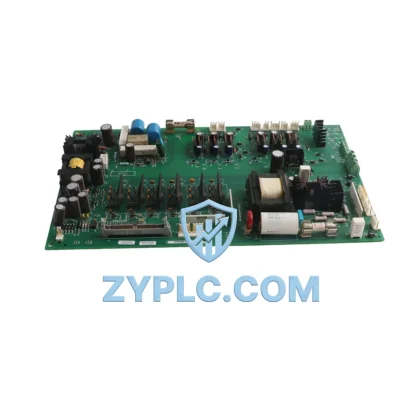
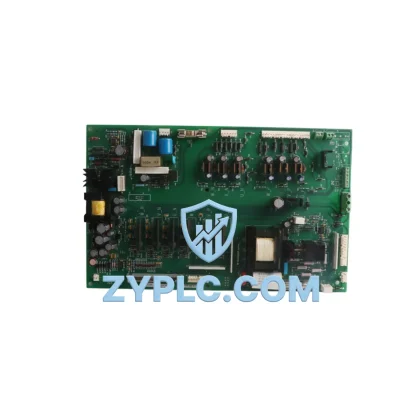
The ABB 3HAC17342-1/01 (cross-reference: 3HNA012841-001/09, 3HAC021457-001/04) is a high-performance AC servo motor module engineered for ABB’s IRB industrial robot series. Designed with energy efficiency at its core, this servo motor delivers precise torque control, reduced idle-state power draw, and optimized motion profiles that directly translate into lower energy consumption per production cycle. For factories running multi-axis robotic cells, replacing a degraded or inefficient servo unit with a genuine ABB 3HAC17342-1/01 can measurably reduce peak current demand and smooth out the energy load across the production line.
In modern industrial automation, energy waste rarely comes from a single source — it accumulates across every axis of motion, every unnecessary deceleration, and every millisecond of uncoordinated drive response. The 3HAC17342-1/01 addresses this at the motor level by maintaining tight closed-loop feedback with the ABB IRC5 robot controller, ensuring that each movement command is executed with minimal overshoot and maximum mechanical efficiency.
Efficiency Performance Table
| Parameter |
Specification |
| Part Number |
3HAC17342-1/01 |
| Cross Reference |
3HNA012841-001/09 / 3HAC021457-001/04 |
| Motor Type |
AC Servo Motor Module |
| Compatible Series |
ABB IRB Robot Series (IRC5 Controller Platform) |
| Drive Efficiency Class |
High-Efficiency Closed-Loop Servo |
| Application Environment |
Industrial Robotic Arms, Automated Assembly, Welding Cells, Material Handling |
| Energy Optimization Value |
Reduced peak current draw, minimized idle-state losses, optimized motion profiling |
| Origin |
Sweden (ABB Group) |
| Warranty |
12-Month Warranty |
| Stock Status |
In Stock — Tested & Verified |
Energy-Aware Automation Architecture
The 3HAC17342-1/01 does not operate in isolation — its efficiency gains are amplified when integrated into a well-designed automation architecture. In a typical IRB robotic cell, the servo motor works in close coordination with the ABB IRC5 robot controller, which manages motion planning and axis synchronization. The IRC5’s drive units, such as the ABB DSQC661 main computer board and the DSQC679 teach pendant interface, provide the command layer that determines how efficiently each servo axis responds to production demands.
On the drive side, the 3HAC17342-1/01 interfaces with ABB’s internal servo drive modules — including units like the 3HAC024144-001 drive unit — which regulate the power delivered to the motor windings. Proper drive-motor matching is critical: an undersized or mismatched drive forces the motor to operate outside its optimal efficiency band, increasing heat generation and energy waste. Using the correct ABB-matched drive ensures the motor runs within its rated efficiency envelope throughout the full duty cycle.
For energy monitoring at the system level, integrating a power measurement module such as the ABB B23 energy meter or compatible third-party DIN-rail power analyzers into the control cabinet allows plant engineers to track real-time consumption per robot cell. When combined with the ABB Ability™ condition monitoring platform, data from the servo motor’s operating cycles can be trended over time to identify efficiency degradation before it becomes a failure event.
Communication between the robot controller and the plant’s energy management system is typically handled via PROFINET or EtherNet/IP industrial protocols, enabling the servo motor’s operational data — torque load, cycle time, thermal status — to feed into broader MES or SCADA platforms. I/O modules such as the ABB DSQC652 digital I/O board facilitate signal exchange between the robot cell and peripheral equipment, ensuring coordinated start/stop sequences that eliminate unnecessary motor energization during line pauses.
For applications requiring coordinated multi-axis motion, the 3HAC17342-1/01 is often deployed alongside other IRB-series servo motors on axes 1 through 6, with each axis motor contributing to the overall energy profile of the robot. Balancing the load distribution across axes — managed through the IRC5’s motion optimization algorithms — reduces peak power demand and extends the service life of each servo unit.
Power Optimization in Real Production Lines
In automotive welding lines, where ABB IRB 6700 and IRB 2600 robots operate in high-duty-cycle environments, the condition of each servo motor directly impacts both energy consumption and cycle time consistency. A worn or out-of-spec servo motor introduces micro-delays in axis response, forcing the controller to compensate with higher torque commands — which translates directly into increased energy draw per weld cycle. Replacing a degraded unit with a tested ABB 3HAC17342-1/01 restores the motor’s rated response characteristics, bringing cycle times back to baseline and eliminating the energy penalty of compensatory over-torquing.
In electronics assembly and semiconductor handling applications, where IRB 1200 and IRB 360 FlexPicker robots operate at high speeds with frequent direction changes, servo motor efficiency is closely tied to deceleration energy recovery. The 3HAC17342-1/01’s design supports the IRC5 drive system’s regenerative braking capability, allowing kinetic energy from deceleration phases to be fed back into the DC bus rather than dissipated as heat. Over thousands of pick-and-place cycles per shift, this regenerative contribution meaningfully reduces net energy consumption.
Predictive maintenance is another dimension of energy optimization. A servo motor operating with bearing wear or winding degradation draws more current to maintain the same output torque — a pattern that is detectable through current signature analysis or vibration monitoring. By proactively replacing the 3HAC17342-1/01 at the first signs of efficiency loss rather than waiting for failure, maintenance teams avoid both the energy waste of a degraded motor and the production losses of an unplanned downtime event. Our 12-month warranty and pre-shipment functional testing ensure that every unit shipped performs to ABB’s original specification from day one.
For facilities managing spare parts inventory across multiple robot models, stocking the 3HAC17342-1/01 as a critical spare reduces mean time to repair (MTTR) for IRB-series robots. A fast swap of a verified servo module — rather than waiting for emergency procurement — keeps the production line running and avoids the compounding energy and throughput costs of extended downtime.
Energy Optimization FAQ
Q1: How does replacing the 3HAC17342-1/01 improve energy efficiency in my robot cell?
A degraded servo motor draws excess current to maintain output torque, increasing energy consumption per cycle. A new or tested-good 3HAC17342-1/01 restores rated efficiency, reduces heat generation, and allows the IRC5 controller’s motion optimization to function as designed — resulting in lower energy draw per production cycle.
Q2: Is the 3HAC17342-1/01 compatible with all IRC5-based ABB robots?
The 3HAC17342-1/01 is designed for specific axes within the ABB IRB robot series using the IRC5 controller platform. Compatibility depends on the robot model and axis assignment. Cross-reference with part numbers 3HNA012841-001/09 and 3HAC021457-001/04 to confirm fitment for your specific robot configuration before ordering.
Q3: What testing process does each unit go through before shipment?
Every 3HAC17342-1/01 unit in our inventory undergoes functional verification testing prior to shipment, including electrical continuity checks and operational parameter validation. Units are confirmed to meet ABB’s original performance specifications. All sales are backed by a 12-month warranty covering defects in materials and workmanship.
Q4: Can I use this servo motor as a direct replacement without recalibrating the robot?
In most cases, replacing a like-for-like servo motor module requires a motor calibration procedure using the IRC5 teach pendant and ABB’s calibration routines (fine calibration or revolution counter update). This is standard ABB maintenance procedure and does not require specialized tooling beyond what is included with the IRC5 system. Consult your ABB robot documentation or a qualified ABB service technician for your specific model.
© 2026 ZYPLC. All rights reserved.
Original Source: https://zyplc.com
Contact: +86 19859288691 | plc.sales@zyplc.com