ABB 3HAC17484-10 Energy-Saving Servo Motor for IRB6640: Precision Motor Control for Optimized Production Lines
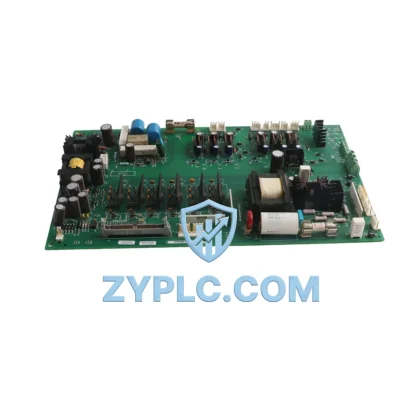
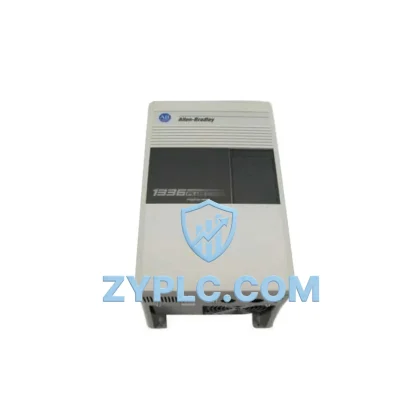
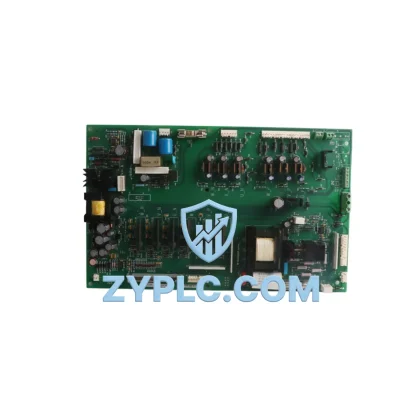
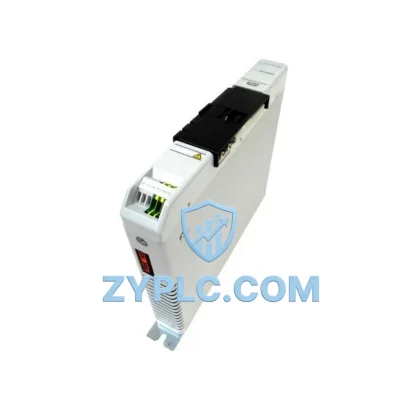
The ABB 3HAC17484-10 is a high-efficiency servo motor axis module engineered specifically for the ABB IRB6640 and IRB6600 robot series. In modern industrial environments where energy costs and equipment uptime directly impact profitability, this axis module plays a critical role in reducing unnecessary power draw, improving motion accuracy, and extending the operational lifespan of robotic cells. Whether deployed in automotive body welding, heavy-duty material handling, or precision assembly lines, the 3HAC17484-10 delivers consistent torque output with minimal energy waste across the full duty cycle.
Sourced directly from ABB’s manufacturing infrastructure in Sweden and fully tested prior to shipment, each unit is backed by a 12-month warranty and verified against OEM performance specifications. In-stock availability ensures minimal lead time for maintenance teams managing unplanned downtime events.
Efficiency Performance Table
| Parameter |
Specification |
| SKU / Part Number |
3HAC17484-10 |
| Compatible Robot Series |
ABB IRB6640 / IRB6600 |
| Module Type |
Servo Motor Axis Module |
| Origin |
Sweden (ABB OEM) |
| Operating Efficiency Class |
High-Efficiency Servo Drive |
| Power Consumption Mode |
Demand-responsive torque control |
| Compatible Drive System |
ABB IRC5 Robot Controller |
| Compatible Communication |
DeviceNet / EtherNet/IP (via IRC5) |
| Application Environment |
Automotive, Heavy Manufacturing, Logistics Automation |
| Energy Optimization Value |
Reduces idle-state power draw; supports regenerative braking cycles |
| Pre-shipment Testing |
Full functional and load test performed |
| Warranty |
12 Months |
Energy-Aware Automation Architecture
The ABB 3HAC17484-10 does not operate in isolation — its energy efficiency is fully realized when integrated within a well-designed automation architecture. In a typical IRB6640 robotic cell, the axis module interfaces directly with the ABB IRC5 robot controller, which manages motion profiles, acceleration curves, and torque demand in real time. By precisely matching motor output to actual load requirements, the IRC5 eliminates the energy waste associated with fixed-speed or over-powered drive configurations.
On the drive side, the ABB DSQC661 axis computer board coordinates position feedback and current regulation, ensuring that the 3HAC17484-10 operates within its optimal efficiency band at all times. When paired with the ABB DSQC662 drive module, the system achieves smooth velocity transitions that reduce mechanical stress and lower peak current draw during acceleration phases — a key factor in reducing energy consumption per production cycle.
For facilities running mixed automation environments, the 3HAC17484-10 integrates seamlessly alongside ABB ACS880 variable frequency drives used on conveyor and peripheral motor systems. The ACS880’s direct torque control (DTC) technology complements the servo axis module’s precision by ensuring that upstream material flow is synchronized with robot cycle times, eliminating idle wait states that waste both time and energy.
Power quality monitoring is handled upstream by ABB M2M energy meters or compatible Schneider Electric PowerLogic PM5000 series power monitors, which provide real-time visibility into per-cell energy consumption. This data feeds into the plant’s energy management system, allowing engineers to benchmark the 3HAC17484-10’s contribution to overall line efficiency and identify further optimization opportunities.
On the I/O and communication layer, the ABB DSQC652 I/O module manages digital signal exchange between the robot controller and peripheral safety systems, while ABB DSQC643 fieldbus adapters enable EtherNet/IP or DeviceNet connectivity to the plant-wide SCADA or DCS platform. This communication backbone is essential for implementing predictive maintenance strategies — sensor data from the servo axis is continuously streamed to the monitoring system, enabling condition-based maintenance scheduling rather than fixed-interval overhauls.
For HMI-level oversight, operators interact with the robotic cell through the ABB FlexPendant (IRC5 teach pendant), which provides real-time axis status, energy consumption indicators, and fault diagnostics. When anomalies in the 3HAC17484-10’s torque or temperature profile are detected, the FlexPendant alerts maintenance personnel before a failure event occurs, supporting a proactive maintenance culture that minimizes unplanned downtime.
Power Optimization in Real Production Lines
In high-throughput automotive manufacturing environments, the ABB 3HAC17484-10 contributes to energy optimization at multiple levels of the production process. At the equipment level, the servo motor’s demand-responsive torque control means that energy is only consumed in proportion to the actual mechanical load — during light-duty positioning moves, current draw drops significantly compared to fixed-output motor configurations. This characteristic is particularly valuable in multi-shift operations where robots spend a portion of their cycle time in low-load transit or standby positioning.
At the production line level, the 3HAC17484-10 supports takt time optimization by enabling faster, more precise axis movements that reduce cycle time without increasing energy consumption. When the IRC5 controller’s motion optimizer is configured correctly, the robot can complete the same work envelope in fewer seconds, increasing throughput per kilowatt-hour — a direct improvement in energy productivity.
Predictive maintenance integration further reduces energy waste by preventing the gradual efficiency degradation that occurs when servo components operate beyond their service life. A worn axis module draws more current to achieve the same torque output, silently increasing energy costs over time. By replacing the 3HAC17484-10 proactively — guided by condition monitoring data — maintenance teams avoid both the energy penalty of degraded performance and the catastrophic downtime cost of unexpected failure.
From a supply chain perspective, ZYPLC maintains ready stock of the 3HAC17484-10 to support rapid deployment in emergency maintenance scenarios. Each unit undergoes a comprehensive pre-shipment functional test under load conditions, ensuring that the replacement module performs to OEM specification from the first production cycle. Combined with the 12-month warranty coverage, this gives maintenance managers the confidence to plan replacements without extended qualification periods.
Energy Optimization FAQ
Q1: How does the ABB 3HAC17484-10 contribute to reducing energy consumption in an IRB6640 robotic cell?
The 3HAC17484-10 uses demand-responsive torque control managed by the ABB IRC5 controller, which matches motor output precisely to the actual load at each point in the motion profile. This eliminates the constant high-current draw of fixed-output motors and reduces energy consumption during low-load phases such as return strokes and standby positioning. When integrated with the ACS880 drive system on peripheral equipment, the entire cell operates in a coordinated energy-efficient mode.
Q2: Is the 3HAC17484-10 compatible with both the IRB6640 and IRB6600 robot platforms?
Yes. The 3HAC17484-10 is designed for use across the ABB IRB6640 and IRB6600 series, both of which share the IRC5 controller architecture. Compatibility should always be verified against the specific robot variant and axis configuration using the ABB spare parts catalog or by consulting with a qualified ABB system integrator before installation.
Q3: What is the recommended replacement and testing process for the 3HAC17484-10?
Each ZYPLC-supplied 3HAC17484-10 is pre-tested under load conditions prior to shipment to verify torque output, encoder feedback accuracy, and thermal performance. Upon installation, the IRC5 controller’s calibration routine should be executed to synchronize the new axis module with the robot’s motion parameters. Full functional testing under production load conditions is recommended before returning the cell to normal operation.
Q4: What warranty coverage is provided, and what does it include?
All 3HAC17484-10 units supplied by ZYPLC are covered by a 12-month warranty from the date of shipment. The warranty covers manufacturing defects and functional failures under normal operating conditions. Units that fail within the warranty period are eligible for replacement or repair. The warranty does not cover damage resulting from improper installation, operation outside specified parameters, or physical damage during handling.
© 2026 ZYPLC. All rights reserved.
Original Source: https://zyplc.com
Contact: +86 19859288691 | [email protected]