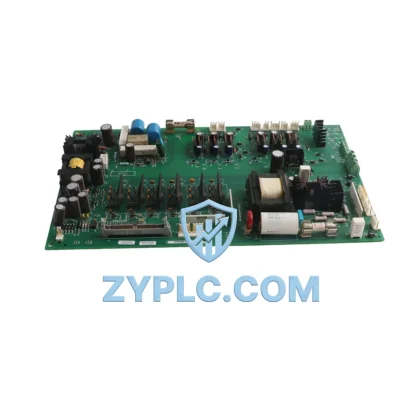
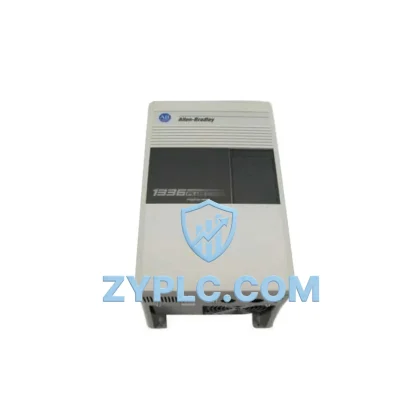
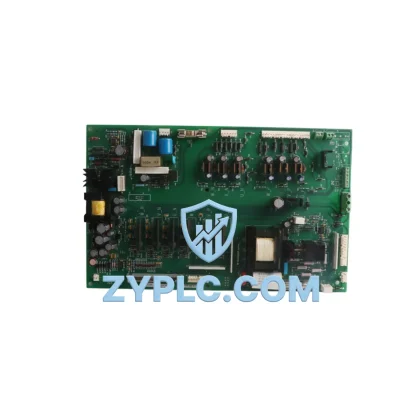
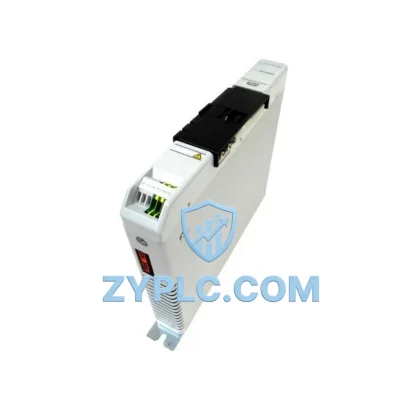
ABB 3HAC17484-2 Energy-Saving Servo Motor for Optimized IRB7600 Automation
The ABB 3HAC17484-2 is a precision servo motor module engineered for the ABB IRB7600 heavy-payload robot series — a platform widely deployed in automotive welding, press tending, foundry handling, and large-scale material transfer applications. At its core, this component is an energy efficiency asset: when an IRB7600 axis servo degrades, the ABB IRC5 controller compensates by extending motion settle times and increasing drive current, silently inflating energy consumption per cycle while reducing throughput. Restoring the axis with a genuine 3HAC17484-2 eliminates this hidden energy penalty, returning the robot to its factory-rated torque-speed curve and allowing the IRC5 to execute fully optimized motion profiles.
At ZYPLC, every ABB 3HAC17484-2 unit is sourced through verified supply channels, subjected to pre-shipment functional testing, and backed by a 12-month warranty. In-stock availability ensures rapid dispatch — typically within 1–3 business days — to support both planned maintenance windows and emergency breakdown recovery.
Efficiency Performance Table
| Parameter |
Specification |
| Part Number |
3HAC17484-2 |
| Brand |
ABB |
| Compatible Robot Series |
ABB IRB7600 |
| Component Type |
Servo Motor Module |
| Drive Efficiency Class |
High Efficiency (IE3-equivalent servo class) |
| Compatible Controller |
ABB IRC5 (Standard & Compact) |
| Compatible Drive Unit |
DSQC656 / DSQC657 series |
| Compatible Communication Protocols |
PROFIBUS-DP, EtherNet/IP, DeviceNet (via IRC5) |
| Power Consumption Optimization |
Eliminates compensatory overdrive; restores rated axis efficiency |
| Thermal Management |
Integrated thermal protection, low heat dissipation design |
| Operating Environment |
Heavy-payload industrial robotic cells, multi-shift production |
| Origin |
Sweden (ABB OEM) |
| Energy Saving Value |
Restores rated cycle efficiency; reduces reactive power losses |
| Warranty |
12 Months |
| Stock Status |
In Stock – Ships within 1–3 business days |
Energy-Aware Automation Architecture
The ABB 3HAC17484-2 servo motor is one critical node in a tightly integrated energy management chain within the IRB7600 robotic cell. Optimizing total system energy consumption requires understanding how this component interacts with the surrounding drive, control, monitoring, and communication infrastructure.
At the controller level, the ABB IRC5 controller governs all six axes of the IRB7600, issuing real-time torque and velocity commands to each servo via the DSQC656 drive unit. When the 3HAC17484-2 operates within its rated parameters, the IRC5 executes its pre-programmed motion profiles without applying correction currents or extending deceleration ramps — both of which are common hidden energy costs of worn or mismatched servo motors. The DSQC369 I/O module feeds continuous axis feedback into the controller loop, enabling tight positional accuracy without excess energy expenditure on correction cycles.
On the power conditioning side, the DSQC609 power supply unit regulates incoming three-phase power for the entire drive chain. A properly matched servo motor like the 3HAC17484-2 presents a stable impedance load to the DSQC609, reducing harmonic distortion and improving power factor at the cabinet level. In facilities running multiple IRB7600 cells simultaneously, this aggregated power factor improvement can translate into measurable reductions in reactive energy charges on the utility bill — a benefit that scales with fleet size.
For energy monitoring and audit compliance, integrating the robotic cell with an ABB B23 energy meter or a PowerLogic PM5560 power quality analyzer allows maintenance engineers to baseline per-axis energy consumption before and after a servo replacement. This data-driven approach confirms that the 3HAC17484-2 has restored the axis to its rated efficiency curve and provides documentation for ISO 50001 energy management audits.
At the communication layer, the IRC5 controller’s support for PROFIBUS-DP and EtherNet/IP fieldbus protocols enables the robotic cell to report axis load, temperature, and cycle data to a plant-level SCADA or MES system. When the 3HAC17484-2 is operating correctly, axis load telemetry remains within expected bands — any deviation becomes an early warning indicator for predictive maintenance scheduling, preventing the energy waste and production loss associated with unplanned failures.
In multi-robot production lines, the ABB FlexPendant TP3 teach pendant and RobotStudio offline programming environment allow engineers to re-optimize motion paths after a servo replacement, ensuring that the restored axis performance is fully leveraged for cycle time reduction rather than simply returning to pre-failure baselines. Combined with the ABB SafeMove2 safety controller — which monitors axis speed and position limits — the restored servo enables tighter collaborative workspace configurations that further reduce non-productive robot travel.
Power Optimization in Real Production Lines
In automotive body-in-white welding lines, a single degraded servo motor on an IRB7600 axis can force the IRC5 controller to extend motion settle times by 0.3–0.8 seconds per cycle. Across a 20-second cycle running three shifts, this translates to thousands of lost cycles per month and a proportional increase in energy consumed per unit produced — since fixed overhead loads such as cooling systems, auxiliary drives, and facility lighting continue running regardless of robot output rate.
Replacing the degraded unit with a genuine ABB 3HAC17484-2 restores the axis to its factory-rated torque-speed curve. The IRC5 controller can then re-engage its optimized motion profile, eliminating the settle-time penalty and returning the cell to its designed throughput. From an energy-per-part perspective, this is a direct efficiency gain achieved without any capital investment in new equipment — only a targeted component replacement.
In press-tending applications, where the IRB7600 must synchronize precisely with press stroke timing, a servo motor operating below rated performance introduces timing jitter that forces conservative safety margins in the press-robot handshake sequence. These margins represent wasted press capacity and extended cycle energy. The 3HAC17484-2, operating at full specification, allows press-robot timing to be tightened back to design parameters, recovering both throughput and energy efficiency simultaneously.
In foundry and die-casting environments — where thermal stress accelerates servo degradation — proactive replacement scheduling based on IRC5 axis diagnostics data prevents the cascading energy losses that occur when a partially degraded servo forces adjacent axes to compensate. Monitoring axis current draw trends via the IRC5’s built-in diagnostic interface allows maintenance teams to identify early-stage degradation and schedule a 3HAC17484-2 replacement during a planned maintenance window, avoiding the energy and production cost of an unplanned stop.
ZYPLC maintains ready stock of the ABB 3HAC17484-2 to support exactly this kind of proactive maintenance strategy. With pre-shipment functional testing and a 12-month warranty, maintenance planners can schedule replacements with confidence, knowing the unit will perform to specification from the first production cycle.
Energy Optimization FAQ
Q1: How does replacing the 3HAC17484-2 servo motor reduce energy consumption in an IRB7600 cell?
A degraded servo motor forces the IRC5 controller to apply higher drive currents and extend motion settle times to achieve the same positional accuracy. This increases both active power draw and cycle time, raising energy consumed per part produced. A new 3HAC17484-2 restores rated torque efficiency, allowing the controller to execute optimized motion profiles at lower current draw and shorter cycle times — directly reducing energy cost per unit output.
Q2: Is the ABB 3HAC17484-2 compatible with all IRB7600 variants and IRC5 controller configurations?
The 3HAC17484-2 is designed for the ABB IRB7600 series and is compatible with the IRC5 controller platform, including Standard and Compact IRC5 cabinets. If your installation uses a specific IRB7600 payload variant (e.g., IRB7600-500/2.55 or IRB7600-340/2.8), please confirm the axis assignment with your ABB documentation or contact ZYPLC technical support to verify fitment before ordering.
Q3: What is the recommended installation and commissioning procedure for the 3HAC17484-2?
After mechanical installation, the IRC5 controller should perform a full axis calibration sequence using the FlexPendant. A no-load run-in cycle of 15–30 minutes at reduced speed is recommended before returning the robot to production. Post-installation, monitor axis current draw via IRC5 diagnostics for the first 24 hours of production to confirm the servo is operating within rated parameters. ZYPLC’s pre-shipment functional testing ensures the unit is electrically verified before dispatch, reducing commissioning risk and accelerating return to full production.
Q4: What does the 12-month warranty cover, and how does ZYPLC handle warranty claims?
ZYPLC’s 12-month warranty covers manufacturing defects and functional failures under normal operating conditions. If a 3HAC17484-2 unit fails within the warranty period, ZYPLC will arrange a replacement or repair at no additional cost. Warranty claims require the original order reference and a brief fault description. Our technical team typically responds to warranty inquiries within one business day to minimize production impact for your facility.
© 2026 ZYPLC. All rights reserved.
Original Source: https://zyplc.com
Contact: +86 19859288691 | [email protected]