ABB 3HAC17484-8 System-Ready LCD Display for IRC5 3HNM Architecture: Control System Architecture and Upstream-Downstream Coordination
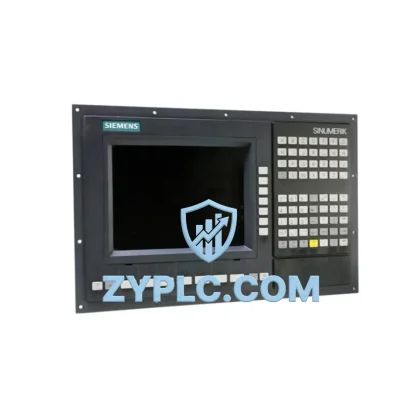
The ABB 3HAC17484-8 is a precision-engineered LCD display module designed to serve as the primary human-machine interface layer within ABB’s IRC5 and 3HNM robot controller architectures. Rather than functioning as a standalone component, this module occupies a critical position in the layered automation hierarchy — bridging operator intent with real-time controller feedback across the full spectrum of motion control, I/O management, and process supervision. Understanding its role within the complete control system is essential for engineers responsible for system integration, commissioning, and long-term maintenance planning.
In a fully configured ABB IRC5 robot cell, the control architecture is organized across several interdependent layers. At the controller core, the IRC5 main computer module (DSQC 639 or DSQC 1000) executes motion programs and manages axis coordination. The 3HAC17484-8 LCD module connects directly to the FlexPendant interface circuit, providing the visual output layer that operators rely on for program navigation, alarm acknowledgment, jogging, and I/O monitoring. Without a functional display module, the FlexPendant becomes operationally blind — operators cannot confirm axis positions, verify safety states, or interact with the RAPID program environment. This makes the 3HAC17484-8 not merely a peripheral, but a structural element of the human-machine interface layer.
At the I/O layer, the IRC5 architecture typically integrates DSQC 652 digital I/O boards and DSQC 651 analog I/O boards, which feed real-time process signals into the controller. The LCD display module surfaces these I/O states to the operator, enabling on-the-spot diagnostics without requiring a separate engineering workstation. In multi-robot cells where a single IRC5 cabinet may coordinate with additional drive modules or a DSQC 668 fieldbus adapter, the display module’s role in presenting network status and communication health becomes even more significant. Engineers working with DeviceNet, PROFIBUS, or EtherNet/IP topologies rely on the FlexPendant display to confirm gateway connectivity and protocol handshake status during commissioning.
From a power layer perspective, the 3HAC17484-8 receives its operating voltage through the FlexPendant cable assembly, which is powered by the IRC5 cabinet’s internal 24 VDC supply — typically managed by the DSQC 661 power distribution board. Ensuring stable power delivery to the display module is a prerequisite for reliable HMI operation, particularly in environments with high electromagnetic interference such as welding cells or press-tending applications. The module’s backlight and touch interface circuits are sensitive to voltage fluctuations, and proper cable routing away from high-current servo drive lines is a standard commissioning practice.
At the network and communication layer, the FlexPendant — and by extension the 3HAC17484-8 display — communicates with the IRC5 main computer via a dedicated high-speed serial link. This architecture isolates HMI traffic from the real-time motion bus, ensuring that display refresh cycles do not interfere with axis interpolation or safety circuit polling. In systems where the IRC5 is integrated with a DSQC 1018 safety module or a SafeMove2 configuration, the display module presents safety zone status and speed supervision data, giving operators immediate visibility into the robot’s safety state without requiring access to the RobotStudio software environment.
For system architects designing redundant or high-availability robot cells, maintaining a spare 3HAC17484-8 module in the local inventory is a recognized best practice. Display module failures — typically caused by backlight degradation, connector wear, or impact damage to the LCD panel — result in immediate production stoppage because the FlexPendant cannot be operated without a functional display. Unlike CPU or I/O module failures that may allow limited autonomous operation, an HMI display failure requires immediate physical replacement. Stocking a verified, tested replacement module with a confirmed 12-Month Warranty eliminates the risk of extended downtime caused by international procurement lead times.
Architecture Specification Table
| Parameter |
Specification |
| Part Number |
3HAC17484-8 |
| Brand |
ABB |
| System Role |
HMI Layer — FlexPendant LCD Display Module |
| Compatible Controllers |
IRC5, 3HNM Series Robot Controllers |
| Interface |
FlexPendant High-Speed Serial Link |
| Operating Voltage |
24 VDC (via FlexPendant cable, IRC5 cabinet supply) |
| Display Type |
Color LCD Panel with Backlight |
| Communication Layer |
Isolated HMI Bus (independent of motion bus) |
| Installation Environment |
Industrial Robot Cell, Control Cabinet HMI Port |
| Origin |
Sweden (ABB Robotics) |
| Warranty |
12-Month Warranty — Tested & Verified |
| Contextual Integration |
Full Contextual Integration with IRC5 / 3HNM Architecture |
Coordinated Control System Design
The 3HAC17484-8 achieves its full value when considered within the coordinated architecture of an ABB IRC5 robot system. At the controller level, the DSQC 639 main computer or its successor DSQC 1000 manages all motion planning and program execution. The FlexPendant, equipped with the 3HAC17484-8 display module, serves as the primary operator terminal for this controller, providing access to RAPID program editing, manual jogging, I/O forcing, and alarm management.
The DSQC 652 digital I/O board and DSQC 651 analog I/O board feed process signals into the controller, and their real-time states are surfaced through the FlexPendant display. In cells using a DSQC 668 DeviceNet fieldbus adapter or a DSQC 688 PROFIBUS adapter, the display module presents network diagnostics that are essential during initial commissioning and fault investigation. For safety-critical applications, the DSQC 1018 safety module and SafeMove2 configuration data are also accessible through the FlexPendant interface, making the 3HAC17484-8 a direct window into the robot’s safety supervision layer.
Power distribution within the IRC5 cabinet is managed by the DSQC 661 power distribution board, which supplies the regulated 24 VDC required by the FlexPendant and its display module. In multi-robot installations where a single IRC5 MultiMove controller coordinates up to four mechanical units, each robot’s FlexPendant — and its associated 3HAC17484-8 display — must be individually verified during commissioning to ensure correct axis assignment and display configuration. The 3HAC17484-8 is also compatible with 3HNM series controller platforms used in earlier ABB robot generations, making it a versatile replacement component across mixed-generation robot fleets.
Application in Layered Automation Systems
The 3HAC17484-8 LCD display module finds application across a wide range of industrial automation environments where ABB IRC5 and 3HNM series robot controllers are deployed. In automotive body-in-white manufacturing, IRC5-controlled welding robots rely on the FlexPendant display for weld program selection, torch condition monitoring, and alarm response — tasks that require clear, reliable display output throughout multi-shift production schedules.
In electronics assembly and semiconductor handling, where cleanroom-compatible IRC5 installations are common, the display module must maintain consistent performance under controlled temperature and humidity conditions. The 3HAC17484-8’s sealed construction makes it suitable for these environments, and its compatibility with the IRC5’s EtherNet/IP communication layer supports integration with MES and SCADA systems used in high-mix, low-volume production.
In power generation and electrical substation automation, ABB robot systems equipped with IRC5 controllers perform cable handling, switchgear assembly, and transformer winding tasks. The FlexPendant display module provides operators with real-time feedback on robot position and process parameters, supporting safe manual intervention in high-voltage environments. Similarly, in petrochemical and refinery applications, IRC5-controlled robots perform inspection, valve actuation, and material handling tasks in hazardous zones, where reliable HMI display function is a safety requirement rather than a convenience.
Water treatment facilities, mining operations, and metallurgical processing plants increasingly deploy ABB robot systems for material handling, sampling, and process control tasks. In these environments, the 3HAC17484-8 display module’s durability and compatibility with the IRC5 architecture support long-term operation with minimal maintenance intervention. Packaging lines and food processing facilities using IRC5-controlled pick-and-place or palletizing robots benefit from the display module’s clear interface for recipe selection and production count monitoring.
Architecture Engineering FAQ
Q1: Is the 3HAC17484-8 compatible with both IRC5 and 3HNM series controllers, and can it be used as a direct replacement without software reconfiguration?
A1: Yes. The 3HAC17484-8 is designed for use with both IRC5 and 3HNM series ABB robot controllers. As a hardware display module within the FlexPendant assembly, it does not require software reconfiguration upon replacement. The FlexPendant firmware and RobotWare software reside on the IRC5 main computer, not on the display module itself. Replacement involves disconnecting the FlexPendant cable, swapping the display module, and verifying display function during a controller restart. No axis calibration or program modification is required.
Q2: What are the key installation and commissioning considerations when replacing the 3HAC17484-8 in an active production environment?
A2: Replacement should be performed with the IRC5 controller in a safe, powered-down state. The FlexPendant cable should be disconnected at the cabinet connector before disassembling the pendant housing. After installing the replacement 3HAC17484-8 module, the system should be powered up in manual mode to verify display initialization, touch calibration, and correct axis display before returning to automatic production mode. In SafeMove2-configured systems, safety function verification should be performed after any FlexPendant hardware change per the site’s safety validation procedure.
Q3: What does the 12-Month Warranty cover, and how does Contextual Integration support long-term maintenance planning?
A3: The 12-Month Warranty covers manufacturing defects, component failures, and functional non-conformance under normal industrial operating conditions. Each 3HAC17484-8 module is tested prior to shipment to verify display function, backlight operation, and interface connectivity. Contextual Integration means the module is supplied with full awareness of its role within the IRC5 and 3HNM system architecture — ensuring compatibility verification, correct part identification, and application-specific technical support are included with every order. For long-term maintenance planning, we recommend maintaining at least one spare module per robot cell to eliminate HMI-related production downtime risks.
© 2026 ZYPLC. All rights reserved.
Original Source: https://zyplc.com
Contact: +86 19859288691 | [email protected]