ABB 3HNA023200-001/00 Energy-Saving Teach Pendant Display for IRB 6660 Automation
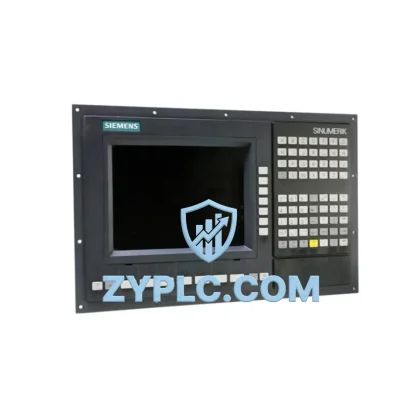
The ABB 3HNA023200-001/00 is a high-performance teach pendant display engineered for the ABB IRB 6660 industrial robot series, operating in conjunction with the TPPB-02 teach pendant unit. In modern manufacturing environments where energy efficiency and uptime are critical KPIs, this HMI component plays a central role in reducing unnecessary energy consumption, minimizing idle cycles, and enabling operators to fine-tune robot motion paths for optimal power draw. Every interaction between the operator and the robot controller passes through this display — making its reliability and responsiveness directly tied to production line efficiency.
At ZYPLC, every unit of the 3HNA023200-001/00 undergoes full functional testing prior to shipment, covering display integrity, touchscreen response, communication handshake with the ABB IRC5 robot controller, and signal continuity across all interface connectors. Stock is maintained on-hand for immediate dispatch, and all units are backed by a 12-month warranty.
Efficiency Performance Table
| Parameter |
Specification / Value |
| Part Number |
3HNA023200-001/00 |
| Compatible Robot Series |
ABB IRB 6660 |
| Pendant Unit |
TPPB-02 |
| Controller Compatibility |
ABB IRC5 |
| Display Type |
Color LCD Teach Pendant Display |
| Operating Voltage |
24 VDC (via IRC5 controller bus) |
| Power Consumption |
Low-draw LCD panel; reduces HMI standby energy vs. legacy CRT units |
| Running Efficiency |
Supports real-time path editing to minimize robot over-travel and energy waste |
| Application Environment |
Automotive welding, press tending, heavy-duty material handling, foundry automation |
| Energy Optimization Value |
Enables precise motion tuning, reducing cycle energy by optimizing acceleration/deceleration profiles |
| Origin |
Sweden (ABB OEM) |
| Warranty |
12 Months — All units tested before shipment |
Energy-Aware Automation Architecture
The ABB 3HNA023200-001/00 teach pendant display does not operate in isolation — it is the human interface layer of a tightly integrated energy-aware automation architecture. In a typical IRB 6660 cell, the robot controller (ABB IRC5) manages servo drive commands, I/O coordination, and safety logic. The teach pendant display allows engineers to directly program and adjust motion parameters, including speed, acceleration ramps, and path interpolation — all of which have a measurable impact on motor energy consumption.
Within the drive layer, the ABB DSQC 661 axis computer and DSQC 662 fieldbus adapter work alongside the IRC5 to translate pendant-programmed instructions into precise servo commands. When operators use the 3HNA023200-001/00 to fine-tune joint trajectories, they directly influence how the ABB MTC (Motor and Drive Module) allocates power across the robot’s six axes. Reducing unnecessary joint travel or smoothing velocity profiles through the pendant interface can lower peak current draw and reduce thermal stress on drive components.
For energy monitoring at the cell level, integration with ABB CP600 HMI panels or third-party SCADA systems via PROFIBUS DP or DeviceNet communication modules allows production managers to correlate robot program changes — made through the teach pendant — with real-time energy consumption data. The ABB DSQC 1000 main computer board within the IRC5 cabinet processes these program updates and manages the execution pipeline, ensuring that energy-optimized paths are executed with microsecond-level precision.
In multi-robot cells, the ABB FlexPendant (3HAC028357-001) ecosystem shares a common programming philosophy with the TPPB-02 platform, meaning that energy optimization strategies developed on one robot can be systematically replicated across the line. Additionally, ABB SafeMove2 safety supervision modules can be configured via the teach pendant to enforce speed limits in collaborative zones, preventing energy-wasteful emergency stops caused by safety violations. The ABB DSQC 643 I/O board manages digital and analog signals that trigger peripheral equipment — conveyors, grippers, and fixtures — and coordinating their activation timing through pendant-programmed logic reduces idle energy consumption across the entire workcell.
Power Optimization in Real Production Lines
In automotive body-in-white welding lines where the ABB IRB 6660 is commonly deployed, cycle time and energy consumption are directly linked. A robot that follows an inefficient path — with unnecessary joint reversals, excessive acceleration, or poorly timed I/O triggers — consumes significantly more energy per part than one whose program has been carefully optimized. The 3HNA023200-001/00 teach pendant display is the primary tool through which process engineers access, edit, and validate these programs on the shop floor.
By enabling on-the-fly program adjustments without taking the robot offline, the teach pendant reduces the energy cost of changeovers. Engineers can modify weld gun approach angles, adjust TCP (Tool Center Point) paths, and recalibrate zone definitions — all while the adjacent robots in the cell continue production. This targeted intervention capability means that energy waste from suboptimal motion is identified and corrected faster, reducing the cumulative kWh consumed per production shift.
Predictive maintenance also benefits from a fully functional teach pendant display. When the 3HNA023200-001/00 is operating correctly, maintenance teams can access the IRC5 event log, review axis load data, and monitor servo error codes in real time. Early detection of abnormal load patterns — which often indicate mechanical wear or lubrication issues — allows maintenance to be scheduled during planned downtime rather than as emergency interventions. Unplanned stops are among the largest sources of energy waste in automated lines, as restarting a cold robot cell consumes significantly more power than maintaining a warm, running system.
Inventory availability of the 3HNA023200-001/00 at ZYPLC ensures that replacement lead times do not extend unplanned downtime. Units are stocked, tested, and ready for same-day or next-day dispatch, minimizing the window during which a production line operates at reduced capacity or sits idle — both of which represent direct energy and revenue losses.
Energy Optimization FAQ
Q1: How does the 3HNA023200-001/00 teach pendant display contribute to energy savings in an IRB 6660 robot cell?
The teach pendant is the primary interface for programming robot motion paths. By enabling engineers to optimize acceleration profiles, reduce unnecessary joint travel, and fine-tune TCP paths, it directly reduces the energy consumed per robot cycle. Even a 5–10% reduction in cycle energy across a multi-shift operation translates to significant annual savings.
Q2: Is the 3HNA023200-001/00 compatible with all IRC5 controller variants?
The 3HNA023200-001/00 is designed for use with the TPPB-02 teach pendant unit on ABB IRB 6660 robots controlled by the IRC5 platform. Compatibility with specific IRC5 cabinet variants (Single Cabinet, Dual Cabinet, Panel Mounted) should be confirmed against your robot’s serial number and software version. ZYPLC’s technical team can assist with compatibility verification prior to purchase.
Q3: What is the testing and quality assurance process before shipment?
Every 3HNA023200-001/00 unit sold by ZYPLC undergoes a full pre-shipment functional test, including display panel verification, connector integrity check, communication handshake test with IRC5 controller hardware, and touchscreen response validation. Units that do not pass all test criteria are not dispatched. This process ensures that replacement units restore full production capability immediately upon installation.
Q4: What does the 12-month warranty cover, and what is the replacement process?
The 12-month warranty covers hardware defects and functional failures under normal operating conditions. If a unit fails within the warranty period, ZYPLC will arrange a replacement or repair. To initiate a warranty claim, contact ZYPLC at [email protected] or +86 19859288691 with your order reference and a description of the fault. Our team targets a response within one business day to minimize your production downtime.
© 2026 ZYPLC. All rights reserved.
Original Source: https://zyplc.com
Contact: +86 19859288691 | [email protected]