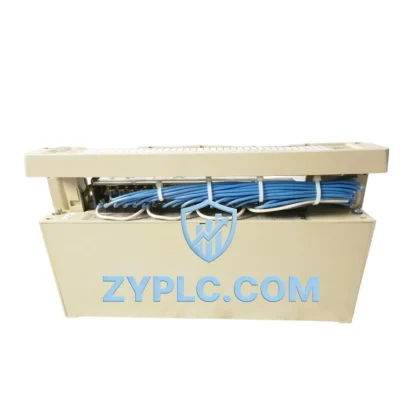
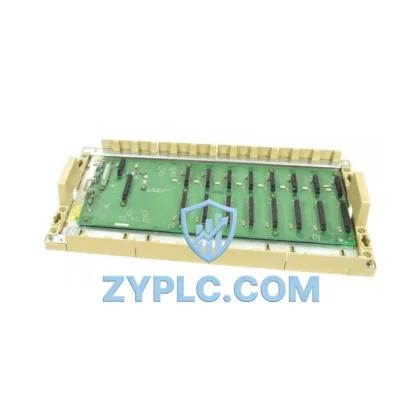
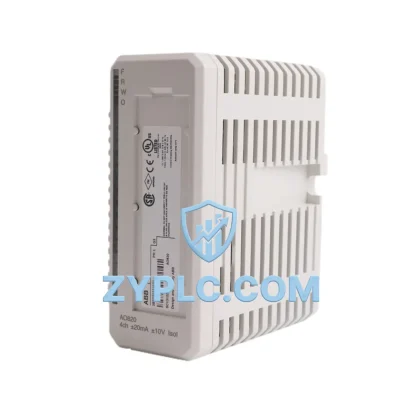
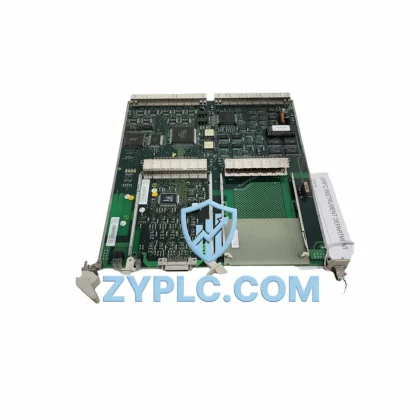
ABB 3HNA024966-001 Energy-Saving Spring Unit for IRB Series Automation
The ABB 3HNA024966-001 HVC-02B Spring Unit Module is a precision-engineered mechanical energy storage and release component designed for ABB IRB series industrial robots. In modern manufacturing environments where energy efficiency, uptime, and motion accuracy are critical KPIs, this spring unit plays a foundational role in reducing actuator load, minimizing servo drive energy consumption, and extending the operational lifespan of the robot arm assembly. Compatible cross-references include 3HAC066543-001, 3HAC025054-001, and 3HAC028530-003, making it a versatile drop-in replacement across multiple IRB platform generations.
Unlike passive mechanical components, the 3HNA024966-001 HVC-02B is engineered to work in concert with the robot’s servo control architecture. By counterbalancing gravitational loads on the robot arm, it directly reduces the torque demand placed on the ABB servo motor and its associated ABB DSQC servo drive unit. This means the drive operates at a lower duty cycle during repetitive vertical or angular movements — translating into measurable reductions in peak current draw, heat generation, and energy consumption per production cycle.
In high-throughput production lines where IRB robots perform continuous pick-and-place, welding, or assembly operations, even a 5–10% reduction in servo drive load can yield significant cumulative energy savings over a shift. When paired with an ABB IRC5 robot controller running optimized motion profiles, the spring unit’s mechanical assistance allows the controller to execute smoother acceleration and deceleration curves — improving cycle time consistency and reducing mechanical stress on the wrist and arm joints.
Efficiency Performance Table
| Parameter |
Specification / Value |
| Part Number |
3HNA024966-001 (HVC-02B) |
| Cross-Reference SKUs |
3HAC066543-001 / 3HAC025054-001 / 3HAC028530-003 |
| Compatible Robot Series |
ABB IRB Series (IRB 6600, IRB 6640, IRB 6650, IRB 7600) |
| Function |
Gravitational load counterbalance / Servo energy reduction |
| Energy Efficiency Benefit |
Reduces servo drive peak torque demand by mechanical assist |
| Operating Environment |
Industrial automation, welding, assembly, material handling |
| Compatible Controller |
ABB IRC5 / IRC5 Compact |
| Origin |
Sweden (ABB Robotics) |
| Warranty |
12-Month Warranty |
| Stock Status |
In Stock — Ships after outgoing quality inspection |
Energy-Aware Automation Architecture
The 3HNA024966-001 HVC-02B does not operate in isolation — it is one node in a tightly integrated energy management and motion control ecosystem. Understanding how it interacts with surrounding components is key to maximizing its efficiency contribution.
At the drive layer, the ABB DSQC663 servo drive module regulates current delivery to each robot axis motor. When the spring unit is functioning correctly, the DSQC663 sees a reduced load profile on the relevant axis, allowing it to operate within a more efficient power band. This reduces thermal output within the IRC5 controller cabinet and lowers the demand on the ABB DSQC609 power supply unit, which feeds the drive and I/O systems.
At the control layer, the ABB IRC5 main computer (DSQC1000) executes motion programs via RAPID language. With the spring unit properly installed and calibrated, the motion planner can apply less aggressive torque compensation in its axis control loops — resulting in smoother trajectories and reduced regenerative braking events. This directly benefits the energy balance of the entire robot cell.
For facilities running energy monitoring programs, integrating the robot cell with an ABB B23 energy meter or compatible power quality analyzer allows engineers to baseline and track the energy savings achieved after replacing a worn spring unit. Coupling this with the ABB Ability™ Connected Services platform enables remote monitoring of robot health parameters, including axis load trends that indicate spring unit degradation before it causes servo overload faults.
On the I/O and safety side, the ABB DSQC652 digital I/O board manages signals between the robot controller and peripheral equipment such as grippers, conveyors, and safety light curtains. Stable, energy-efficient robot motion — enabled in part by a healthy spring unit — reduces signal jitter and improves synchronization with downstream line equipment. Similarly, the ABB FlexPendant (DSQC679) provides operators with real-time axis load feedback, making it straightforward to identify when spring unit performance is degrading and energy consumption is rising.
For multi-robot cells or lines with coordinated motion, the ABB MultiMove controller configuration relies on consistent axis dynamics across all robots. A faulty or worn spring unit on one robot introduces asymmetric load behavior that can disrupt coordinated motion sequences, increase cycle time variance, and trigger unnecessary safety stops — all of which carry energy and productivity costs.
Power Optimization in Real Production Lines
In automotive body-in-white welding lines, IRB 6640 and IRB 6650 robots perform thousands of spot welds per shift. The spring unit on the lower arm axis bears continuous gravitational load cycling. A degraded spring unit forces the servo drive to compensate with higher current, increasing energy consumption per weld cycle and accelerating motor winding wear. Replacing the 3HNA024966-001 HVC-02B restores the designed load balance, reducing per-cycle energy draw and extending motor service intervals.
In palletizing and material handling applications, IRB 7600 robots handle heavy payloads at high cycle rates. The spring unit’s counterbalance function is especially critical here — without it, the servo system must overcome full gravitational load on every upward stroke. A properly functioning 3HNA024966-001 reduces this parasitic energy demand, allowing the robot to maintain rated cycle times without pushing the drive into thermal derating mode, which would otherwise slow production and increase cooling energy costs.
From a predictive maintenance perspective, monitoring axis torque trends via the IRC5 controller’s built-in diagnostics provides early warning of spring unit fatigue. When torque compensation values on the relevant axis begin trending upward without a corresponding change in payload, it is a reliable indicator that the spring unit is losing preload — and that energy consumption is rising. Proactive replacement of the 3HNA024966-001 HVC-02B before failure prevents unplanned downtime, avoids collateral damage to the servo drive, and maintains the energy efficiency baseline established during line commissioning.
Every unit shipped from ZYPLC undergoes a full outgoing quality inspection, including dimensional verification and spring preload testing, ensuring that the replacement unit meets ABB’s original performance specification. This inspection process is backed by a 12-month warranty, giving maintenance teams confidence in the component’s reliability and energy performance from day one of installation.
Energy Optimization FAQ
Q1: How does replacing the 3HNA024966-001 HVC-02B reduce energy consumption?
The spring unit mechanically counterbalances the gravitational load on the robot arm. When it is worn or has lost preload, the servo drive must supply additional torque to compensate — consuming more electrical energy per cycle. A new unit restores the designed load balance, reducing servo current draw and lowering overall robot cell energy consumption.
Q2: Which ABB IRB robot models is this spring unit compatible with?
The 3HNA024966-001 HVC-02B is compatible with multiple IRB series platforms, including the IRB 6600, IRB 6640, IRB 6650, and IRB 7600. The cross-reference SKUs 3HAC066543-001, 3HAC025054-001, and 3HAC028530-003 cover additional variants. Please confirm your robot’s serial number and axis configuration before ordering if you are unsure of the correct variant.
Q3: What is the recommended replacement interval and how is degradation detected?
ABB does not publish a fixed replacement interval for the spring unit — replacement is condition-based. The most reliable indicator is a rising torque compensation value on the affected axis, visible in the IRC5 controller’s axis calibration and load identification data. Operators using ABB Ability™ Connected Services can set alerts for axis load anomalies. Physical inspection for spring fatigue, oil leakage (on hydraulic variants), or loss of preload should be performed during scheduled maintenance shutdowns.
Q4: What does the 12-month warranty cover and what is the testing process?
All units supplied by ZYPLC are tested prior to shipment, including spring preload verification and dimensional inspection against ABB OEM specifications. The 12-month warranty covers manufacturing defects and premature failure under normal operating conditions. Warranty claims are supported by ZYPLC’s technical team — contact [email protected] or +86 19859288691 for assistance.
© 2026 ZYPLC. All rights reserved.
Original Source: https://zyplc.com
Contact: +86 19859288691 | [email protected]