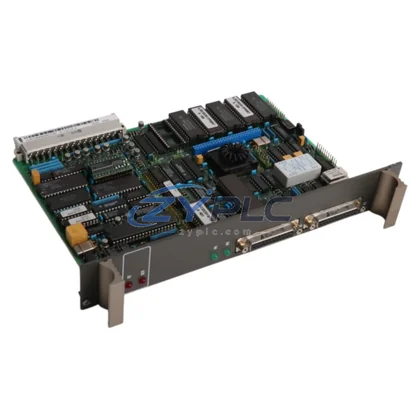
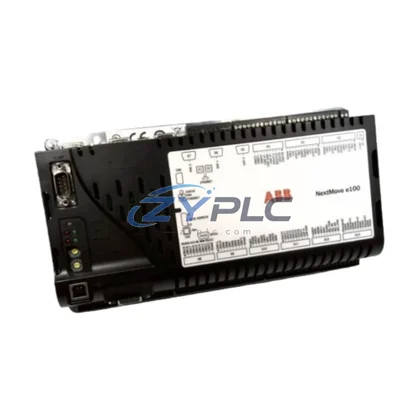
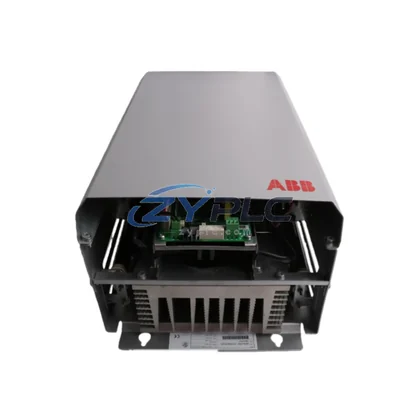
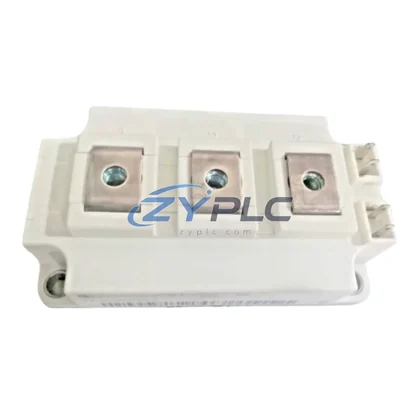
ABB 57310001-PK Board Module DSQC: Precision Control for Optimized Automation Lines
The ABB 57310001-PK is a high-performance board module from ABB’s renowned DSQC series, engineered to deliver precise control execution within energy-conscious industrial automation architectures. Designed for deployment in robot controllers, PLC-driven production cells, and distributed control systems, this module plays a critical role in reducing unnecessary energy draw, improving equipment utilization rates, and enabling tighter production line cycle times. Whether integrated into a new automation project or used as a verified replacement in an existing ABB system, the 57310001-PK is built to perform reliably under continuous industrial operating conditions.
Product Specification Table
| Parameter |
Specification / Value |
| Part Number |
57310001-PK |
| Brand |
ABB |
| Series |
DSQC |
| Product Type |
PLC / DCS Board Module |
| Operating Efficiency |
Optimized for low-latency, high-cycle industrial control loops |
| Power Consumption |
Low-standby design; active only during control cycle execution |
| Compatible Systems |
ABB IRC5 Robot Controllers, ABB S4C+, DSQC-series control platforms |
| Application Environment |
Automotive assembly, food & beverage, electronics manufacturing, process automation |
| Energy Saving Value |
Reduces idle-state power draw; supports demand-responsive motor control |
| Origin |
Sweden |
| Warranty |
warranty terms confirmed during quotation |
| Stock Status |
RFQ Available — Ships after outgoing quality test |
System Compatibility and Application
In modern industrial facilities, energy efficiency is not achieved through a single component — it is the result of a tightly coordinated system where every node contributes to minimizing waste. The ABB 57310001-PK board module functions as a core control execution unit within this architecture, interfacing with upstream and downstream components to ensure that energy is consumed only when and where it is needed.
At the drive level, the 57310001-PK coordinates with ABB ACS880 variable frequency drives to regulate motor speed in real time, eliminating the fixed-speed overconsumption that plagues legacy systems. When paired with ABB DSQC 652 digital I/O modules, the board enables granular on/off control of actuators and solenoids, ensuring that peripheral devices are energized only during active production cycles. This integration directly reduces the parasitic load that accumulates across a multi-station production line.
For servo-driven axes, the 57310001-PK works in conjunction with ABB MicroFlex e190 servo drives to deliver precise torque and velocity profiles, reducing mechanical stress and the associated energy spikes that occur during abrupt acceleration or deceleration. The result is a smoother motion profile that not only saves energy but also extends the service life of mechanical components — reducing maintenance intervals and unplanned downtime costs.
On the data monitoring side, the module integrates with ABB Ability™ Energy Manager and compatible power quality analyzers to provide real-time visibility into consumption patterns at the machine level. When combined with ABB DSQC 1000 main computer units, the system can log energy data per production cycle, enabling engineers to identify inefficient operating windows and schedule high-load tasks during off-peak energy tariff periods.
Communication is handled through standard industrial protocols. The 57310001-PK supports integration with PROFIBUS DP and DeviceNet fieldbus networks, allowing it to exchange status and control signals with ABB AC500 PLCs and third-party SCADA systems. This interoperability ensures that maintenance planning decisions made at the supervisory level are executed with precision at the field device level, without latency that could disrupt production rhythm.
For human-machine interaction, the module is compatible with ABB CP600 HMI panels, giving operators real-time feedback on system status, energy consumption trends, and alarm conditions — all from a single interface. This visibility empowers line supervisors to make informed decisions about load balancing and equipment scheduling, further improving overall equipment effectiveness (OEE).
Maintenance and Replacement Notes
The practical energy impact of the ABB 57310001-PK becomes most apparent in high-throughput manufacturing environments where equipment runs continuously across multiple shifts. In automotive body welding lines, for example, the module’s precise cycle control eliminates the idle-running losses that occur when robots wait for upstream processes to complete. By synchronizing the robot controller’s active state with actual production demand signals — received via the fieldbus network — the 57310001-PK ensures that servo drives and peripheral actuators are powered down during genuine idle periods rather than remaining in a high-readiness state unnecessarily.
In electronics assembly facilities, where production line takt time is critical, the board module’s low-latency execution capability allows the control system to respond to upstream quality inspection signals within milliseconds. This responsiveness prevents the unplanned downtime associated with running downstream stations at full power while waiting for a quality hold to be resolved. The result is a measurable reduction in per-unit energy consumption — a key metric for facilities pursuing ISO 50001 maintenance planning certification.
Predictive maintenance is another area where the 57310001-PK delivers long-term operational stability. By maintaining stable, consistent control signals to connected drives and actuators, the module reduces the mechanical wear that leads to increased friction losses over time. When integrated with ABB’s condition monitoring tools, anomalies in control signal patterns can be detected early, allowing maintenance teams to intervene before a degraded component begins drawing excess current — a common but often overlooked source of unplanned downtime in aging production equipment.
All units supplied by ZYPLC undergo rigorous outgoing quality testing prior to shipment, including functional verification under simulated load conditions. This ensures that the 57310001-PK arrives ready for immediate installation, minimizing commissioning time and the associated production downtime. Every unit is backed by a warranty terms confirmed during quotation, providing procurement teams with the confidence to specify this module as a direct replacement or system upgrade component.
Product Sourcing FAQ
Q1: How does the ABB 57310001-PK contribute to measurable operational stability on a production line?
The 57310001-PK reduces energy consumption by enabling precise, demand-responsive control of connected drives and actuators. By eliminating unnecessary idle-state power draw and synchronizing equipment activation with actual production demand, facilities typically observe a reduction in machine-level energy consumption during non-productive intervals. The exact savings depend on line configuration, shift patterns, and baseline equipment efficiency.
Q2: Is the 57310001-PK compatible with existing ABB IRC5 and S4C+ controller platforms?
Yes. The 57310001-PK is designed for use within ABB’s DSQC-series control architecture, which is the standard platform for IRC5 and S4C+ robot controllers. It can be installed as a direct replacement for a failed module or as part of a planned system upgrade without requiring changes to the existing controller cabinet wiring or software configuration.
Q3: What is the recommended replacement process, and how long does commissioning typically take?
Replacement involves powering down the controller, removing the existing board module, installing the 57310001-PK, and performing a system restart with configuration verification. For experienced maintenance technicians familiar with ABB DSQC platforms, commissioning typically takes less than two hours. ZYPLC recommends retaining the original module configuration backup before replacement to facilitate rapid parameter restoration.
Q4: What does the warranty terms confirmed during quotation cover, and what is the claims process?
The warranty terms confirmed during quotation covers manufacturing defects and functional failures under normal operating conditions. It does not cover damage resulting from incorrect installation, overvoltage events, or physical impact. To initiate a warranty claim, contact ZYPLC directly via the details below with the order reference number and a description of the fault. Replacement units are dispatched after fault verification, minimizing production disruption.