ABB 6215BZ10000 I/O Transfer Module for Advant OCS: Control System Integration and Upstream–Downstream Coordination
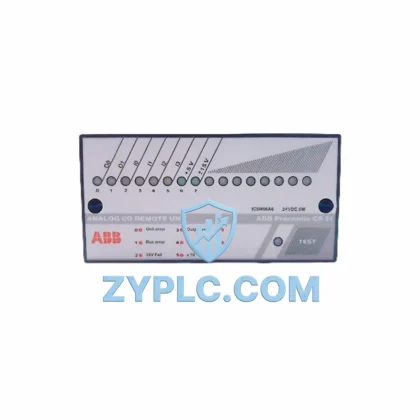
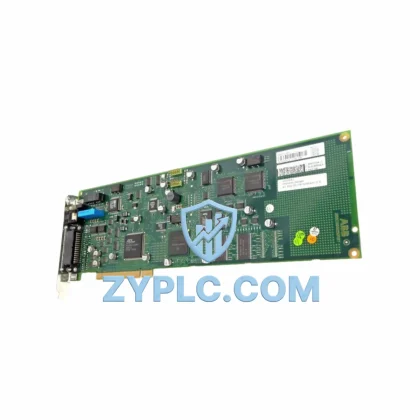
The ABB 6215BZ10000 I/O Transfer Module is a purpose-engineered component within the ABB Advant OCS and MOD 300 Distributed Control System (DCS) architecture. Rather than functioning as a standalone device, this module occupies a critical position in the layered automation hierarchy — bridging the process I/O layer with the controller communication backbone and ensuring deterministic, high-integrity signal transfer across the full control system. In complex industrial environments where system consistency, redundancy, and long-term maintainability are non-negotiable, the 6215BZ10000 delivers the structural reliability that modern process automation demands.
Understanding the role of the ABB 6215BZ10000 requires viewing it within the complete control architecture. From the field instrument layer — where sensors, transmitters, and actuators generate raw process signals — through the I/O termination layer, the signal conditioning layer, the controller processing layer, and ultimately to the supervisory HMI and historian layer, every tier depends on reliable, low-latency data transfer. The 6215BZ10000 serves as the conduit that ensures signal fidelity is preserved as data moves between I/O sub-systems and the central processing units of the Advant OCS platform.
Product Specification Table
| Parameter |
Specification |
| Part Number |
6215BZ10000 / 6215BZ10000A |
| Brand |
ABB |
| Series / Platform |
Advant OCS / MOD 300 DCS |
| Module Function |
I/O Transfer Module — inter-subsystem signal routing |
| System Role |
I/O Layer ↔ Controller Communication Interface |
| Communication Capability |
Advant Fieldbus / MOD 300 internal bus protocol |
| Installation Environment |
DCS cabinet / rack-mount enclosure, industrial control room |
| Operating Temperature |
0°C to +55°C (typical for ABB Advant OCS modules) |
| Power Supply Compatibility |
Advant OCS standard backplane power rail |
| Origin |
Sweden |
| system integration |
Yes — native Advant OCS / MOD 300 architecture compatibility |
| Warranty |
12-Month Warranty |
| Availability |
In stock — global shipping supported |
System Compatibility Notes
The ABB 6215BZ10000 does not operate in isolation. Its value is realized through its integration with the broader Advant OCS and MOD 300 system ecosystem. In a typical MOD 300 DCS installation, the controller backbone is anchored by processor modules such as the ABB DSPC110 or DSPC172 — high-performance CPU cards responsible for executing control logic, managing scan cycles, and coordinating inter-module communication. The 6215BZ10000 interfaces with these processors through the Advant internal bus, ensuring that I/O data is transferred with the timing precision required for closed-loop process control.
On the power supply side, the system relies on dedicated DCS power modules such as the ABB DSDP110 or DSDP150 power distribution units, which provide regulated, filtered DC power to the backplane. The 6215BZ10000 draws from this shared power rail, and its stable operation is directly dependent on the quality and redundancy of the power architecture. In high-availability installations, dual power supply configurations are standard, and the 6215BZ10000 is fully compatible with such redundant power topologies.
At the I/O termination layer, the 6215BZ10000 works in conjunction with analog input modules such as the ABB DSAI130 (16-channel analog input) and digital output modules such as the ABB DSDO110, which interface directly with field devices including control valves, motor starters, and process transmitters. The transfer module ensures that the signal data collected by these I/O cards is accurately routed to the controller for processing, and that control outputs are returned to the field without latency or data corruption.
Communication integrity across the system is maintained through the Advant Fieldbus and, in larger installations, through ABB DSCB110 communication bus modules that extend the control network across multiple cabinets or remote I/O stations. The 6215BZ10000 is architecturally compatible with these communication extensions, supporting system scalability without requiring hardware redesign. For operator interface, the Advant OCS platform typically integrates with ABB Operate IT HMI workstations or legacy MOD 300 operator consoles, which receive real-time process data routed through the I/O transfer layer that the 6215BZ10000 supports.
In redundant control architectures — common in power generation, petrochemical, and water treatment applications — the 6215BZ10000 supports hot-standby configurations where a secondary controller module such as the ABB DSPC172B mirrors the primary processor state. The I/O transfer module plays a key role in maintaining synchronization between primary and standby controllers, ensuring bumpless transfer during failover events. Terminal modules and marshalling panels, including ABB DSTD110 termination boards, complete the signal chain from field to controller, with the 6215BZ10000 serving as the architectural link that maintains data coherence across the entire I/O subsystem.
Industrial Application Notes
The ABB 6215BZ10000 I/O Transfer Module finds application across a wide range of process industries where the Advant OCS and MOD 300 DCS platforms have been deployed. In power generation facilities — including thermal, hydroelectric, and combined-cycle plants — the module supports turbine control, boiler management, and auxiliary system monitoring, where signal integrity and deterministic data transfer are essential for safe and efficient operation.
In petrochemical and refinery environments, the 6215BZ10000 is deployed within distillation column control loops, reactor management systems, and compressor control architectures. The harsh electrical environment of these facilities — characterized by high-frequency noise, ground loops, and transient voltage events — demands the robust signal isolation and transfer characteristics that the ABB Advant OCS platform, and the 6215BZ10000 specifically, is engineered to provide.
For water and wastewater treatment plants, the module supports pump station automation, chemical dosing control, and SCADA integration, where long cable runs and distributed I/O architectures place particular demands on signal transfer reliability. In mining and metallurgical operations, the 6215BZ10000 is used in ore processing control systems, conveyor management, and smelter automation, where continuous operation and minimal unplanned downtime are critical to production economics.
Packaging and manufacturing production lines utilizing Advant OCS-based control systems benefit from the module’s ability to maintain high-speed I/O scan rates while supporting the modular expansion required as production capacity grows. In all these applications, the 6215BZ10000 contributes to system longevity by enabling targeted component replacement rather than full system overhaul — a key advantage in installed-base maintenance strategies where the original DCS platform may have been in service for 15 to 25 years.
Product Compatibility FAQ
Q1: Is the ABB 6215BZ10000 compatible with both Advant OCS and MOD 300 system architectures, and can it be used in mixed-generation installations?
The 6215BZ10000 is designed for the ABB Advant OCS / MOD 300 DCS platform and is compatible with the standard backplane and internal bus architecture of these systems. In mixed-generation installations where both original MOD 300 hardware and later Advant OCS modules coexist, the 6215BZ10000 maintains compatibility provided the backplane bus configuration and power rail specifications are consistent. It is recommended to verify the specific rack and bus revision with your system documentation or contact a qualified ABB DCS engineer before installation in hybrid configurations.
Q2: What are the installation and commissioning requirements for the 6215BZ10000 in a live DCS environment, and can it be replaced without a full system shutdown?
Installation of the 6215BZ10000 should follow ABB Advant OCS module replacement procedures, which typically require the affected I/O subsystem to be taken offline while the controller continues to operate in a degraded or manual mode. In redundant architectures with hot-standby I/O configurations, it may be possible to replace the module with minimal process disruption. Commissioning involves verifying bus address configuration, confirming signal mapping in the controller database, and performing a functional test of all associated I/O channels. All replacement and commissioning activities should be performed by personnel with ABB Advant OCS system certification.
Q3: What does the 12-Month Warranty cover for the ABB 6215BZ10000, and what support is available for long-term spare parts management?
The 12-Month Warranty covers manufacturing defects and functional failures under normal operating conditions as specified in the ABB Advant OCS hardware documentation. It does not cover damage resulting from incorrect installation, electrical overstress, or use outside the specified environmental parameters. For long-term spare parts management, we maintain stock of the 6215BZ10000 and related Advant OCS / MOD 300 modules to support installed-base maintenance programs. Customers managing aging DCS infrastructure are encouraged to establish a strategic spare parts inventory to mitigate the risk of extended lead times for obsolete components. Contact our technical team for multi-unit pricing and long-term supply agreements.
© 2026 ZYPLC. All rights reserved.
Original Source: https://zyplc.com
Contact: +86 19859288691 | plc.sales@zyplc.com