ABB ACS101-2K7-1-C Energy-Saving VFD for Optimized ACS101 Automation
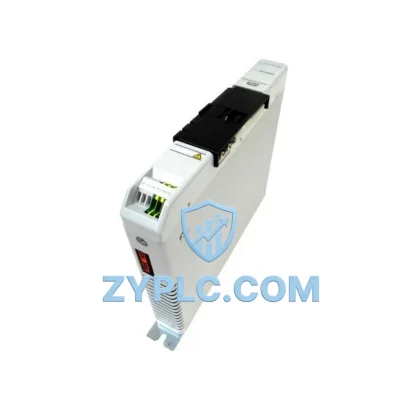
The ABB ACS101-2K7-1-C is a compact, single-phase input variable frequency drive engineered for precision motor control and measurable energy reduction in industrial automation environments. Rated at 2.7 kVA output with a 1-phase 200–240 V input, this drive is purpose-built for applications where consistent motor speed regulation directly translates into lower energy consumption, reduced mechanical wear, and improved production line throughput. Whether deployed in conveyor systems, pump stations, fan arrays, or light-duty machine tools, the ACS101-2K7-1-C delivers the kind of granular control that modern energy-aware manufacturing demands.
Unlike fixed-speed motor starters, the ACS101-2K7-1-C modulates output frequency and voltage in real time, allowing the connected motor to operate precisely at the load demand rather than at full rated speed. This alone can reduce motor energy consumption by 20–50% in variable-torque applications such as centrifugal pumps and fans, where power draw scales with the cube of speed. In a production environment running multiple motors simultaneously, the cumulative energy savings across a shift can be substantial — directly impacting the facility’s electricity bill and carbon footprint.
The drive integrates seamlessly into existing ABB automation architectures. When paired with an ABB AC500 PLC, the ACS101-2K7-1-C can receive speed reference signals via analog I/O or digital command inputs, enabling closed-loop process control without additional signal conditioning hardware. For facilities already using ABB CP600 HMI panels, operators can monitor drive status, output frequency, and fault history directly from the panel interface, reducing the need for manual inspection and shortening diagnostic cycles.
In energy monitoring applications, the ACS101-2K7-1-C works alongside ABB’s B23 energy meters and M2M communication gateways to feed real-time power consumption data into SCADA or MES platforms. This integration supports predictive maintenance workflows: by tracking motor load trends over time, maintenance teams can identify abnormal current draw patterns that indicate bearing wear, misalignment, or impending motor failure — well before a breakdown occurs. The result is fewer unplanned stoppages and a more predictable maintenance schedule.
For multi-axis or multi-drive installations, the ACS101-2K7-1-C can be coordinated with ABB ACS355 drives on adjacent axes, sharing a common control bus and enabling synchronized speed profiles across a production cell. In packaging lines, for example, coordinating infeed conveyor speed with the main sealing unit via matched ACS101 and ACS355 drives eliminates product jams and reduces reject rates — both of which carry hidden energy costs in the form of wasted materials and rework cycles.
The drive’s built-in motor protection functions — including overcurrent, overvoltage, undervoltage, and motor thermal protection — reduce the risk of motor damage from supply anomalies. This is particularly valuable in facilities with unstable grid conditions, where voltage sags or surges can shorten motor insulation life. By absorbing and compensating for minor supply variations, the ACS101-2K7-1-C extends motor service intervals and reduces the frequency of rewinding or replacement.
For applications requiring fieldbus connectivity, the ACS101-2K7-1-C supports external control via standard analog and digital I/O, and can be extended with ABB’s FMBA-01 Modbus adapter for integration into Modbus RTU networks. This allows the drive to participate in plant-wide energy management systems, where centralized controllers can issue speed commands, read back actual output data, and log energy consumption per drive — enabling granular energy accounting at the machine level.
All units supplied by ZYPLC are sourced from verified supply channels, subjected to pre-shipment functional testing under load conditions, and shipped with a 12-month warranty covering manufacturing defects and operational failures. Stock is maintained for prompt dispatch, with typical lead times of 1–3 business days for in-stock units.
Efficiency Performance Table
| Parameter |
Specification |
| Model |
ABB ACS101-2K7-1-C |
| Input Voltage |
1-phase, 200–240 V AC, ±10% |
| Output Power |
2.7 kVA / ~1.5 kW |
| Output Frequency Range |
0–500 Hz |
| Drive Efficiency |
Up to 97% at rated load |
| Motor Control Mode |
Scalar (V/Hz) frequency control |
| Compatible Systems |
ABB AC500 PLC, ABB CP600 HMI, Modbus RTU (via FMBA-01) |
| Application Environment |
Conveyors, pumps, fans, light machine tools, HVAC |
| Protection Class |
IP20 |
| Energy Saving Value |
20–50% motor energy reduction in variable-torque loads |
| Origin |
Finland (ABB) |
| Warranty |
12 Months (ZYPLC) |
Energy-Aware Automation Architecture
Deploying the ACS101-2K7-1-C within a broader ABB automation architecture amplifies its energy efficiency benefits. At the control layer, an ABB AC500 PLC manages process logic and issues speed references to the drive via analog output channels, enabling dynamic speed adjustment based on real-time process feedback — for example, varying conveyor speed in response to upstream sensor signals from an ABB OINT8 I/O module.
At the monitoring layer, ABB B23 three-phase energy meters installed at the motor distribution panel capture actual kWh consumption per drive circuit. This data is aggregated by an ABB CP635 HMI or transmitted via Modbus TCP to a central SCADA system, giving energy managers a live view of per-machine power draw. When the ACS101-2K7-1-C reduces motor speed by 20% in response to reduced load demand, the energy meter immediately reflects the drop — closing the feedback loop between control action and energy outcome.
At the drive coordination layer, the ACS101-2K7-1-C can operate in parallel with ABB ACS355 drives on adjacent conveyor sections, with speed ratios maintained by the AC500 PLC to ensure product flow continuity. For higher-power applications in the same facility, ABB ACS580 drives handle larger motors while sharing the same Modbus RTU network segment, allowing a single HMI to display status across all drive sizes.
For servo-driven axes requiring precise positioning — such as label applicators or cut-to-length units adjacent to the ACS101-controlled infeed — ABB MicroFlex e150 servo drives provide the necessary torque control, while the ACS101-2K7-1-C manages the upstream feed rate. This division of roles between frequency drives and servo drives optimizes both energy use and motion accuracy across the production cell.
Communication integrity is maintained through ABB’s FMBA-01 Modbus adapter on the ACS101-2K7-1-C, ensuring that speed commands and status feedback travel reliably over the plant’s RS-485 backbone. For facilities migrating to Ethernet-based control, the same AC500 PLC can bridge Modbus RTU and PROFINET, allowing the ACS101-2K7-1-C to participate in a modern IIoT-ready control architecture without hardware replacement.
Power Optimization in Real Production Lines
In a typical light manufacturing facility, the ACS101-2K7-1-C is deployed on conveyor infeed sections, small pump stations, and exhaust fan circuits — applications where motors historically ran at fixed speed regardless of actual load. By introducing variable-speed control, the drive eliminates the energy waste inherent in throttling valves, damper controls, and mechanical speed reducers, replacing them with direct frequency modulation at the drive output.
On a packaging line running two shifts per day, replacing a fixed-speed 1.5 kW motor starter with the ACS101-2K7-1-C and operating the motor at 70% speed during low-demand periods can reduce that motor’s energy consumption by approximately 66% during those intervals (power scales with the cube of speed: 0.7³ ≈ 0.34). Across a facility with ten such motors, the annual energy savings can offset the drive’s acquisition cost within the first operating year.
Beyond energy savings, the soft-start capability of the ACS101-2K7-1-C eliminates inrush current spikes at motor start-up — typically 6–8× rated current for direct-on-line starters. Eliminating these spikes reduces peak demand charges on the facility’s electricity tariff and extends the service life of contactors, cables, and motor windings. Maintenance intervals for connected motors can be extended by 30–50% in applications where the drive replaces a direct-on-line starter.
The drive’s fault logging and diagnostic output allow maintenance teams to correlate drive events with production stoppages, identifying recurring fault patterns — such as overcurrent trips linked to a worn conveyor belt — before they escalate into unplanned downtime. Combined with the energy data from ABB B23 meters, this creates a complete picture of both the energy and reliability performance of each motor circuit, supporting data-driven maintenance scheduling and continuous improvement initiatives.
Energy Optimization FAQ
Q1: How much energy can the ACS101-2K7-1-C save compared to a direct-on-line motor starter?
In variable-torque applications such as fans and centrifugal pumps, energy savings of 20–50% are typical when the motor operates below full speed for a significant portion of the duty cycle. In constant-torque applications such as conveyors, savings are lower but still meaningful, primarily from eliminating inrush current and enabling speed matching to actual process demand.
Q2: Is the ACS101-2K7-1-C compatible with my existing ABB PLC and HMI infrastructure?
Yes. The drive accepts analog (0–10 V, 0–20 mA) and digital control inputs compatible with ABB AC500 PLC analog output modules. With the optional FMBA-01 Modbus RTU adapter, it integrates into Modbus networks monitored by ABB CP600 or CP635 HMI panels. No additional signal conditioning is required for standard ABB control architectures.
Q3: Can the ACS101-2K7-1-C replace an existing ACS101 series drive without rewiring?
In most cases, yes. The ACS101-2K7-1-C is a direct form-fit replacement within the ACS101 series for the same power rating. Terminal assignments and parameter structures are consistent across the series, minimizing commissioning time. ZYPLC recommends verifying the existing parameter backup before replacement and performing a no-load test prior to returning the circuit to production.
Q4: What does the 12-month warranty cover, and what is the testing process before shipment?
All ACS101-2K7-1-C units supplied by ZYPLC undergo pre-shipment functional testing, including power-on verification, output frequency sweep, and protection function checks. The 12-month warranty covers manufacturing defects and operational failures under normal operating conditions. Warranty claims are processed directly through ZYPLC, with replacement or repair turnaround typically within 5–7 business days.
© 2026 ZYPLC. All rights reserved.
Original Source: https://zyplc.com
Contact: +86 19859288691 | plc.sales@zyplc.com