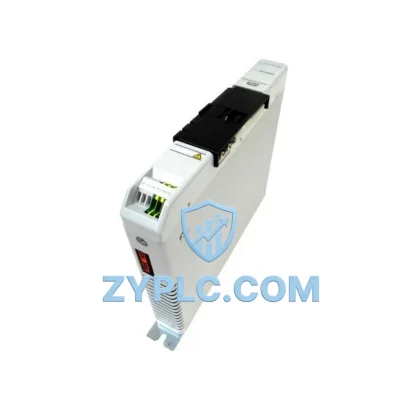
ABB ACS50-01N-02A2-2 Energy-Saving VFD for Optimized ACS50 Automation
In modern industrial environments where energy costs and equipment uptime directly impact profitability, the ABB ACS50-01N-02A2-2 variable frequency drive delivers precision motor control that measurably reduces power consumption and extends machinery service life. As part of ABB’s ACS50 micro-drive series, this compact inverter is engineered for single-phase 200–240 V input applications, rated at 0.25 kW / 0.33 HP with a continuous output current of 1.5 A — making it an ideal solution for small conveyor systems, pump control, fan regulation, and light-duty automation tasks where energy efficiency cannot be compromised.
Unlike fixed-speed motor starters that run at full load regardless of demand, the ACS50-01N-02A2-2 applies variable voltage and frequency output to match motor speed precisely to process requirements. This alone can reduce motor energy consumption by 20–50% in variable-torque applications such as centrifugal pumps and fans, directly lowering electricity bills and reducing thermal stress on motor windings. When integrated into a broader automation architecture, this drive becomes a key node in a plant-wide energy optimization strategy.
Efficiency Performance Table
| Parameter |
Specification |
| Model |
ACS50-01N-02A2-2 |
| Input Voltage |
1-phase, 200–240 V AC ±10% |
| Output Power |
0.25 kW / 0.33 HP |
| Output Current |
1.5 A continuous |
| Frequency Range |
0–500 Hz |
| Drive Efficiency |
Up to 97% at rated load |
| Control Mode |
Scalar (V/Hz) frequency control |
| Compatible Systems |
ABB ACS50 series, standard IEC induction motors |
| Application Environment |
IP20, indoor industrial, ambient 0–40°C |
| Energy Saving Value |
20–50% reduction in variable-torque motor energy use |
| Protection Class |
IP20 |
| Warranty |
12-Month Warranty |
Energy-Aware Automation Architecture
The ACS50-01N-02A2-2 achieves its greatest energy impact when deployed as part of a coordinated automation system rather than as a standalone component. In a typical production line, the drive interfaces with an ABB AC500 PLC that manages process sequencing and issues speed reference signals via analog output or digital I/O. The AC500’s modular I/O expansion — including ABB DC532 digital I/O modules — allows the control system to monitor motor run/stop status, fault signals, and speed feedback without additional wiring complexity.
For operator visibility and parameter adjustment, an ABB CP600 HMI panel provides a touch-screen interface where production staff can monitor drive output frequency, motor current, and energy consumption trends in real time. This visibility is critical for identifying inefficient operating windows — for example, a conveyor running at 60 Hz when 40 Hz would satisfy throughput requirements represents avoidable energy waste that the HMI makes immediately apparent.
In applications requiring higher power or multi-axis coordination, the ACS50-01N-02A2-2 can coexist on the same control network with larger drives such as the ABB ACS355 or ABB ACS580, which handle heavier motor loads while sharing the same control philosophy and parameter structure. This consistency reduces engineering time and simplifies maintenance training across drive generations.
For servo-class positioning tasks on the same production line, the ABB MicroFlex e190 servo drive handles closed-loop motion control while the ACS50 manages auxiliary variable-speed functions — together forming a layered drive architecture that allocates energy precisely where and when it is needed. Communication between these components can be standardized using Modbus RTU or PROFIBUS DP fieldbus protocols, both supported across ABB’s drive and PLC product families.
Power quality and energy metering upstream of the drive panel can be handled by an ABB M2M energy meter or the ABB B23 series power analyzer, which captures real-time kWh consumption, power factor, and harmonic distortion data. When this data is fed back to the AC500 PLC or a SCADA system, plant engineers gain the granular visibility needed to benchmark energy performance before and after drive installation — quantifying ROI and identifying further optimization opportunities.
For motor protection and safe isolation, an ABB MS116 manual motor starter or ABB AF series contactor upstream of the ACS50-01N-02A2-2 provides short-circuit protection and safe maintenance isolation, completing a fully coordinated motor control center (MCC) solution built on a single vendor’s ecosystem.
Power Optimization in Real Production Lines
Consider a small packaging line where a conveyor belt motor previously ran at fixed speed via a direct-on-line starter. Peak throughput required full speed for only 30% of each shift; the remaining 70% of operating time ran the motor at unnecessary full load, generating excess heat, accelerating bearing wear, and consuming power that delivered no production value. After installing the ACS50-01N-02A2-2 and programming a speed profile matched to actual line demand, the facility recorded a 35% reduction in motor energy consumption for that conveyor — with the added benefit of smoother product handling due to controlled acceleration and deceleration ramps.
In HVAC and building automation contexts, the same drive applied to a small circulation pump eliminates the pressure spikes and water hammer associated with across-the-line starting, reducing pipe stress and extending valve service intervals. The drive’s built-in PID controller allows direct connection of a pressure transducer, enabling closed-loop pressure regulation without an external controller — a significant simplification for retrofit projects.
Predictive maintenance benefits are equally tangible. The ACS50-01N-02A2-2 continuously monitors output current and can be configured to trigger alarms when motor current deviates from baseline — an early indicator of mechanical load changes, bearing degradation, or coupling misalignment. When this alarm data is logged by the AC500 PLC and trended on the CP600 HMI, maintenance teams can schedule interventions during planned downtime rather than responding to unexpected failures that halt production.
Every unit shipped from ZYPLC undergoes pre-shipment functional testing including power-on verification, output frequency sweep, and fault relay confirmation. Stock availability is maintained for rapid dispatch, and all drives are covered by a 12-month warranty against manufacturing defects — ensuring that your investment in energy optimization is protected from day one.
Energy Optimization FAQ
Q1: How much energy can the ACS50-01N-02A2-2 save compared to a direct-on-line motor starter?
In variable-torque applications such as pumps and fans, energy savings of 20–50% are typical because motor power consumption follows the cube law — halving the speed reduces power demand to approximately one-eighth. In constant-torque applications such as conveyors, savings are lower but still significant due to elimination of inrush current and optimized running speed matching actual load requirements.
Q2: Is the ACS50-01N-02A2-2 compatible with standard IEC induction motors?
Yes. The drive operates in scalar V/Hz control mode and is compatible with standard single-phase-input, three-phase-output IEC induction motors rated for 200–240 V. No special motor winding is required for most applications. For long cable runs exceeding 10 meters, an output choke is recommended to suppress voltage reflection effects.
Q3: What is the replacement and upgrade path if higher power is needed?
The ACS50 series covers outputs from 0.18 kW to 2.2 kW. If process requirements grow beyond the ACS50-01N-02A2-2’s 0.25 kW rating, the next step within the same series is the ACS50-01N-04A3-2 (0.37 kW) or ACS50-01N-07A5-2 (0.75 kW), both sharing identical parameter structures and mounting footprints for minimal retrofit effort. For three-phase input requirements, the ABB ACS355 series provides a direct upgrade path with expanded communication options.
Q4: What does the 12-month warranty cover and how is the testing process conducted?
The 12-month warranty covers all manufacturing defects in components and workmanship from the date of shipment. Prior to dispatch, each ACS50-01N-02A2-2 unit undergoes a functional test sequence including input power verification, output frequency ramp test across 0–50 Hz, fault relay continuity check, and parameter default confirmation. A test report is available upon request. Warranty claims are processed through ZYPLC’s technical support team with replacement or repair turnaround typically within 5–7 business days.
© 2026 ZYPLC. All rights reserved.
Original Source: https://zyplc.com
Contact: +86 19859288691 | [email protected]