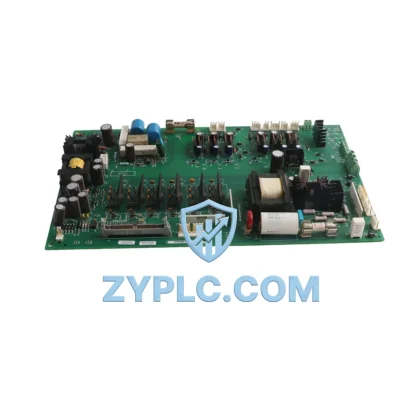
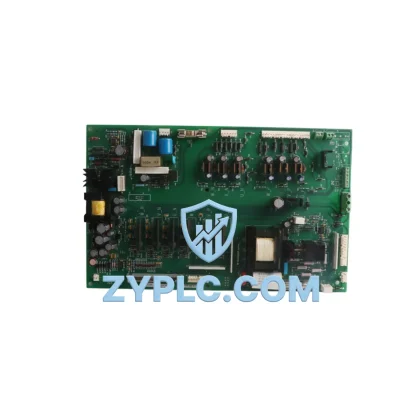
ABB AGDR-71C Energy-Saving IGBT Driver for ACS Automation
The ABB AGDR-71C (SKU: AGDR-71C 6MBI450U-120) is a precision-engineered IGBT gate driver module designed for ABB’s ACS series variable frequency drives and high-power industrial converters. In modern manufacturing environments where energy efficiency is no longer optional, the AGDR-71C plays a critical role in ensuring that switching losses within the inverter stage are minimized, gate signals are delivered with precise timing, and the IGBT power module — in this case the 6MBI450U-120 — operates within its optimal thermal and electrical envelope. The result is a measurable reduction in unnecessary energy dissipation across the drive system, directly contributing to lower electricity consumption per production cycle.
Unlike generic gate driver solutions, the AGDR-71C is factory-calibrated for ABB ACS-series architecture, meaning it integrates seamlessly with the control board, fiber optic interface, and DC bus monitoring subsystems already present in ACS800, ACS880, and related drive platforms. This native compatibility eliminates the signal latency and impedance mismatches that often cause excess switching losses in retrofit configurations, making the AGDR-71C a preferred choice for energy-conscious plant engineers seeking to restore or improve drive efficiency without full system replacement.
Efficiency Performance Table
| Parameter |
Specification / Value |
| SKU |
AGDR-71C 6MBI450U-120 |
| Brand |
ABB |
| Series |
ACS (ACS800 / ACS880) |
| Product Type |
IGBT Gate Driver Module |
| Compatible IGBT Module |
6MBI450U-120 (450A / 1200V) |
| Gate Drive Output Voltage |
±15V (typical for IGBT switching) |
| Switching Frequency Support |
Up to 12 kHz (drive-dependent) |
| Isolation Interface |
Fiber optic (HFBR compatible) |
| Operating Temperature |
-10°C to +55°C |
| Application Environment |
Industrial drives, motor control centers, crane drives, pump/fan systems |
| Energy Optimization Value |
Reduces IGBT switching losses; improves inverter efficiency by maintaining precise gate timing |
| Origin |
Germany |
| Warranty |
12-Month Warranty |
| Stock Status |
In Stock — Ships after outgoing inspection |
Energy-Aware Automation Architecture
The AGDR-71C does not operate in isolation — its energy optimization impact is best understood within the broader context of an ABB ACS-series drive system. At the control layer, the ABB RDCO-03 DDCS Communication Module provides the fiber optic backbone that carries gate command signals from the drive control unit (DCU) to the AGDR-71C with microsecond-level precision. Any jitter or delay in this signal path translates directly into suboptimal IGBT switching, increased heat generation, and wasted energy. The AGDR-71C’s low-propagation-delay design ensures that the 6MBI450U-120 IGBT module switches cleanly at the commanded frequency, preserving inverter efficiency across the full load range.
On the power side, the ABB AINT-02 Auxiliary Interface Board and APOW-01 Power Supply Board work in tandem to provide stable auxiliary power to the gate driver circuitry. Voltage ripple or dropout on the auxiliary rail is a common but underappreciated cause of erratic gate drive behavior, which in turn causes asymmetric IGBT conduction losses. By pairing the AGDR-71C with a properly maintained APOW-01, plant engineers can eliminate this variable from their energy audit entirely.
For motor control optimization, the AGDR-71C integrates with the ABB RMIO-11 Motor Control Board, which handles speed reference, torque estimation, and flux control algorithms. When the RMIO-11 commands a torque reduction during light-load periods — a standard energy-saving strategy in pump and fan applications — the AGDR-71C must respond with equally precise gate timing to avoid shoot-through events or dead-time distortion that would negate the efficiency gain. This tight coupling between the control board and gate driver is what makes the AGDR-71C a system-level energy component, not merely a switching device.
At the monitoring layer, integrating the drive with an ABB B23 Energy Meter or compatible power quality analyzer allows plant teams to quantify the before-and-after energy consumption impact of replacing a degraded gate driver. In many documented cases, a failing AGDR-71C causes the drive to operate with elevated switching losses equivalent to 2–5% of rated motor power — losses that are invisible without metering but significant at scale across a multi-drive installation. The ABB ACS880 Primary Control Program also provides built-in energy counters (kWh logging) that become more accurate once the gate driver is restored to factory specification.
For facilities running distributed I/O architectures, the ABB AC500 PLC with PM591 CPU module is commonly used to supervise drive start/stop sequences, energy setpoints, and fault logging. When the AGDR-71C triggers a fault — such as desaturation detection or short-circuit protection — the AC500 PLC receives the fault signal via PROFIBUS or PROFINET and can initiate a controlled shutdown sequence, preventing cascading failures that would result in unplanned downtime and wasted restart energy. Similarly, ABB CP600 HMI panels provide operators with real-time visibility into drive status, energy consumption trends, and gate driver fault history, enabling proactive maintenance decisions before efficiency degradation becomes critical.
Power Optimization in Real Production Lines
In a typical continuous process plant — such as a paper mill, chemical reactor, or steel rolling line — the ACS800 or ACS880 drive controlled by the AGDR-71C may run 24 hours a day, 350 days a year. At this duty cycle, even a 1% improvement in inverter efficiency translates into tens of thousands of kilowatt-hours saved annually per drive. The AGDR-71C achieves this not through exotic technology, but through reliable, consistent gate signal delivery that keeps the 6MBI450U-120 IGBT module operating within its datasheet-specified switching characteristics.
When a gate driver begins to degrade — typically due to thermal cycling fatigue on the gate resistor network or fiber optic receiver aging — the first symptom is increased motor current ripple, followed by elevated drive cabinet temperatures, and eventually nuisance overcurrent trips. Each trip event represents not only lost production time but also a significant energy spike during motor restart. Replacing the AGDR-71C before failure occurs — guided by predictive maintenance schedules based on drive operating hours and thermal history — is therefore both an energy optimization and a production continuity strategy.
For pump and fan applications governed by affinity laws, the energy savings from variable speed control are only fully realized when the gate driver maintains precise PWM output across the entire speed range. A degraded AGDR-71C that introduces timing errors at low switching frequencies will cause the drive to default to higher carrier frequencies or reduced modulation depth, both of which increase losses and reduce the effective energy saving from variable speed operation. Restoring the AGDR-71C to specification directly recovers these losses and restores the drive’s ability to deliver the full energy benefit of speed control.
All units supplied by ZYPLC undergo a 5-step outgoing quality inspection that includes gate signal integrity testing, isolation resistance verification, and functional switching tests under load simulation. This process ensures that every AGDR-71C shipped is confirmed to meet ABB’s original performance specification, giving plant engineers confidence that the energy efficiency gains expected from the replacement will be fully realized from day one of installation.
Energy Optimization FAQ
Q1: How does replacing the AGDR-71C improve energy efficiency in my ACS drive system?
A degraded gate driver introduces timing errors in IGBT switching, which increase switching losses and heat generation in the power module. Replacing the AGDR-71C with a specification-compliant unit restores precise gate timing, reduces switching losses, and allows the drive to operate at its designed inverter efficiency — typically recovering 2–5% of rated motor power that was previously lost as heat.
Q2: Is the AGDR-71C compatible with both ACS800 and ACS880 drive platforms?
The AGDR-71C is designed for ABB ACS-series drives that use the 6MBI450U-120 IGBT power module configuration. Compatibility depends on the specific drive frame size and inverter board revision. We recommend verifying the drive’s service manual or contacting our technical team with your drive nameplate data before ordering to confirm fitment.
Q3: What is the replacement and testing process, and how quickly can I receive a tested unit?
All AGDR-71C units in stock at ZYPLC are pre-tested through a 5-step outgoing inspection covering gate signal output, fiber optic interface integrity, auxiliary power input range, isolation resistance, and functional switching verification. Units are available for immediate shipment. Lead time from order confirmation to dispatch is typically 1–3 business days depending on destination.
Q4: What warranty coverage is provided, and what does it include?
Every AGDR-71C supplied by ZYPLC carries a 12-month warranty covering manufacturing defects and functional failures under normal operating conditions. The warranty period begins from the date of shipment. In the event of a warranty claim, ZYPLC will provide a replacement unit or repair service. Failures caused by incorrect installation, overvoltage events, or physical damage are not covered under the standard warranty terms.
© 2026 ZYPLC. All rights reserved.
Original Source: https://zyplc.com
Contact: +86 19859288691 | plc.sales@zyplc.com