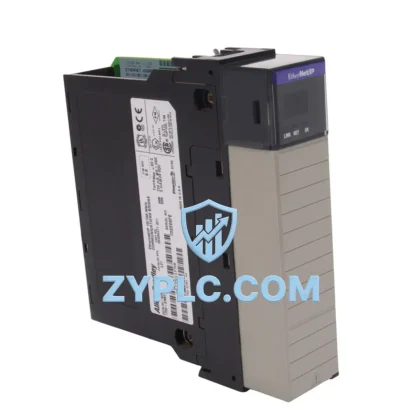
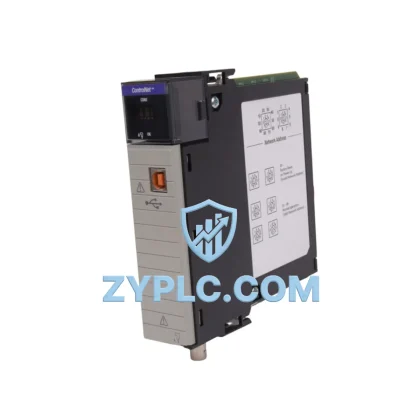
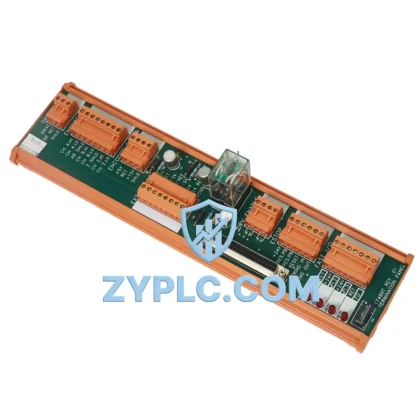
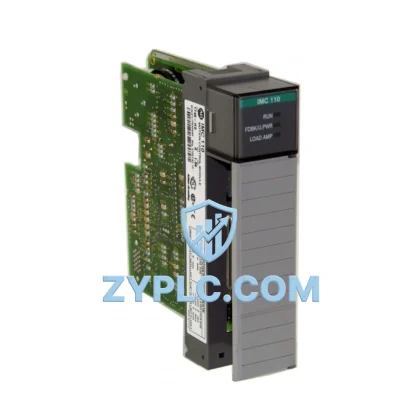
ABB APBU-44C 64669982G System-Ready Bus Interface for AC800M Architecture: Enabling Coordinated Control System Performance
The ABB APBU-44C (part number 64669982G) is a high-integrity bus interface module purpose-built for deployment within ABB’s AC800M Distributed Control System (DCS) architecture. Designed to serve as a critical communication bridge between the controller backplane and field-level I/O subsystems, the APBU-44C ensures deterministic signal routing, stable bus arbitration, and seamless contextual integration across all layers of a modern industrial automation hierarchy. Whether deployed in continuous process industries, power generation facilities, or complex manufacturing environments, this module delivers the architectural consistency and long-term reliability that system engineers demand.
In a fully realized AC800M control architecture, the APBU-44C occupies a pivotal position within the I/O communication layer. It interfaces directly with the PM866 or PM891 controller modules mounted on the S800 I/O backplane, coordinating real-time data exchange between the CPU layer and distributed field devices. This tight integration eliminates latency-inducing protocol conversions and ensures that process variables — whether analog signals from AI810 input modules, digital states from DI810 modules, or output commands directed to AO810 analog output modules — are transmitted with full fidelity and minimal cycle-time overhead.
The module’s architecture supports the ABB Modulebus communication standard, which governs high-speed, deterministic data transfer across the S800 I/O station. When paired with the TB840A termination unit and CI854 PROFIBUS communication interface, the APBU-44C enables a fully redundant I/O communication path — a critical requirement in safety-instrumented systems and high-availability process control applications. Its compatibility with the S800 I/O family also means that engineers can expand I/O capacity by adding additional I/O stations without redesigning the communication backbone, preserving capital investment and reducing commissioning time.
From a system architecture perspective, the APBU-44C contributes directly to four key engineering objectives: system consistency, scalability, redundancy, and maintainability. Its standardized form factor and plug-and-play compatibility with the AC800M platform mean that replacement or expansion activities can be completed without specialized tooling or extended downtime. Maintenance engineers benefit from the module’s self-diagnostic capabilities, which surface fault conditions through the AC800M’s integrated diagnostics framework — enabling proactive maintenance scheduling rather than reactive fault response.
In layered automation architectures, the APBU-44C supports seamless communication between the field device layer and the supervisory control layer. When integrated with ABB’s System 800xA engineering environment, the module’s configuration parameters are managed centrally, reducing the risk of configuration drift across large-scale installations. This centralized management capability is particularly valuable in multi-unit process plants where dozens of I/O stations must maintain synchronized communication parameters across extended operational periods.
The APBU-44C is also well-suited for retrofit and modernization projects. In facilities transitioning from legacy Advant OCS or MOD 300 architectures to the AC800M platform, the module provides a stable migration path that preserves existing field wiring infrastructure while delivering the performance and diagnostic capabilities of the modern AC800M ecosystem. This compatibility reduces total project cost and minimizes the operational risk associated with large-scale control system migrations.
All APBU-44C 64669982G units supplied by ZYPLC are covered by a 12-Month Warranty and undergo comprehensive functional testing prior to shipment. Each unit is verified for bus communication integrity, backplane connector condition, and firmware compatibility with current AC800M controller revisions. This rigorous pre-shipment validation process ensures that every module arrives ready for immediate installation and commissioning, minimizing project schedule risk and supporting the demanding uptime requirements of industrial operations.
Architecture Specification Table
| Parameter |
Specification |
| System Role |
Modulebus Bus Interface / I/O Communication Bridge |
| Compatible Platform |
ABB AC800M DCS (S800 I/O Family) |
| Part Number |
64669982G |
| Communication Standard |
ABB Modulebus (Proprietary High-Speed I/O Bus) |
| Compatible Controllers |
PM866, PM891, PM864A |
| Compatible I/O Modules |
AI810, AO810, DI810, DO810, S800 I/O Series |
| Termination Unit |
TB840A (Standard), TB842 (Redundant) |
| Power Supply Compatibility |
SD821, SD822, SD823 (24 VDC System Power) |
| Operating Temperature |
0°C to +55°C |
| Mounting |
DIN Rail / S800 I/O Backplane |
| Country of Origin |
Sweden |
| Warranty |
12-Month Warranty (ZYPLC) |
| Contextual Integration |
Fully supported via System 800xA Engineering Environment |
Coordinated Control System Design
The APBU-44C achieves its full architectural value when deployed as part of a coordinated AC800M control system. In a typical process control installation, the PM866 controller module serves as the central processing unit, executing control logic and managing communication with all connected I/O stations via the Modulebus. The APBU-44C acts as the bus interface at each I/O station, ensuring that data from AI810 analog input modules — measuring process variables such as temperature, pressure, and flow — is reliably transmitted to the controller for processing.
On the output side, the APBU-44C coordinates the delivery of control commands from the PM866 to AO810 analog output modules and DO810 digital output modules, which in turn drive field actuators, control valves, and motor starters. This bidirectional communication architecture ensures that the control loop — from sensor to controller to actuator — operates with the determinism and reliability required in process-critical applications.
For installations requiring high availability, the APBU-44C supports redundant I/O communication configurations when paired with the TB842 redundant termination unit. In this configuration, dual communication paths are maintained between the controller and the I/O station, ensuring that a single cable or connector failure does not interrupt process control. This redundancy architecture is particularly important in applications such as power plant auxiliary systems, refinery process units, and water treatment facilities where unplanned shutdowns carry significant operational and safety consequences.
The CI854 PROFIBUS DP communication interface extends the AC800M architecture to field devices that communicate via the PROFIBUS protocol, including variable frequency drives, intelligent motor control centers, and third-party field instruments. When the APBU-44C is deployed alongside the CI854, engineers can build a unified control architecture that integrates both native S800 I/O and PROFIBUS field devices under a single engineering framework, simplifying configuration management and reducing the total number of communication interfaces required.
Power system integrity is maintained through ABB’s SD821 and SD822 redundant power supply modules, which provide regulated 24 VDC power to the I/O backplane and all connected modules including the APBU-44C. The use of redundant power supplies, combined with the APBU-44C’s bus redundancy capability, creates a multi-layer fault tolerance architecture that supports the high-availability requirements of continuous process industries.
Application in Layered Automation Systems
The APBU-44C is deployed across a wide range of industrial sectors where the AC800M platform is the control system of choice. In power generation applications, the module is used in boiler control systems, turbine auxiliary control panels, and balance-of-plant automation systems, where its deterministic communication performance supports the tight control loop timing required for safe and efficient power plant operation.
In oil and gas and petrochemical facilities, the APBU-44C is integrated into process control systems managing distillation columns, compressor trains, and pipeline monitoring networks. Its compatibility with the AC800M’s safety-instrumented system extensions makes it suitable for deployment in SIL-rated control loops where communication reliability is a functional safety requirement.
In water and wastewater treatment plants, the module supports the automation of pumping stations, filtration systems, and chemical dosing processes. Its wide operating temperature range and robust construction make it suitable for installation in outdoor control cabinets and harsh industrial environments.
In mining and metallurgical applications, the APBU-44C is used in conveyor control systems, crusher automation, and smelter process control, where its ability to maintain stable communication in electrically noisy environments is a key operational advantage. Similarly, in packaging and discrete manufacturing lines, the module supports high-speed I/O communication for machine control applications where cycle time consistency directly impacts production throughput.
Architecture Engineering FAQ
Q1: Is the APBU-44C 64669982G compatible with both PM866 and PM891 controller modules in the AC800M platform?
Yes. The APBU-44C is designed for use across the AC800M controller family, including the PM866, PM891, and PM864A processor modules. It communicates via the ABB Modulebus standard, which is consistent across all AC800M controller variants. No hardware modifications are required when deploying the APBU-44C with different controller modules within the same platform generation. Firmware compatibility should be verified against the specific controller firmware revision in use, and ZYPLC’s technical team can assist with compatibility confirmation prior to shipment.
Q2: Can the APBU-44C be used in a redundant I/O communication architecture, and what additional components are required?
Yes. Redundant I/O communication is supported when the APBU-44C is used in conjunction with the TB842 redundant termination unit and a dual-cable Modulebus configuration. In this setup, two independent communication paths are maintained between the AC800M controller and the I/O station, providing automatic failover in the event of a cable fault or connector failure. The redundant configuration requires no changes to the APBU-44C module itself — redundancy is managed at the termination unit and controller configuration level. This architecture is recommended for all high-availability and safety-critical applications.
Q3: What does the 12-Month Warranty cover, and how does ZYPLC support long-term maintenance for AC800M installations?
The 12-Month Warranty provided by ZYPLC covers manufacturing defects, functional failures, and communication performance issues identified under normal operating conditions. Each APBU-44C unit is tested for bus communication integrity, backplane connector condition, and firmware compatibility before shipment. For long-term maintenance support, ZYPLC maintains inventory of APBU-44C and related AC800M components — including PM866 controllers, AI810/AO810 I/O modules, and SD821 power supplies — enabling rapid replacement of failed components to minimize process downtime. Customers with ongoing maintenance requirements are encouraged to contact ZYPLC to discuss stocking arrangements and priority supply agreements.
© 2026 ZYPLC. All rights reserved.
Original Source: https://zyplc.com
Contact: +86 19859288691 | [email protected]