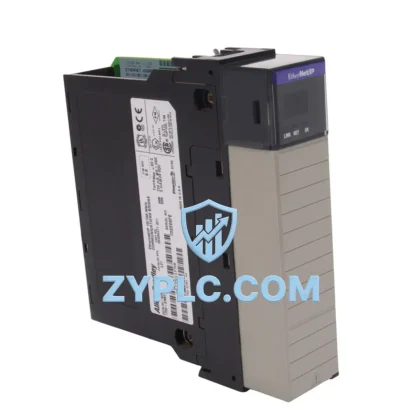
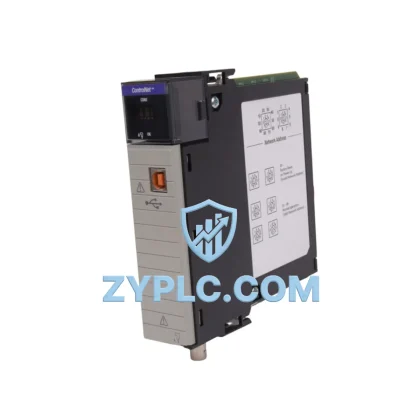
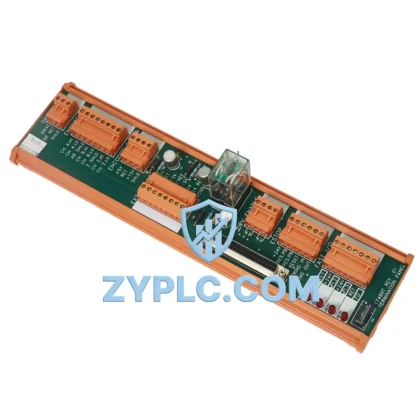
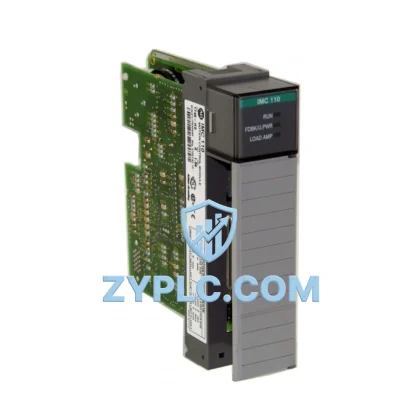
ABB BCU-02 System-Ready Bus Communication Unit for AC800M Architecture: Control System Architecture and Upstream-Downstream Coordination
The ABB BCU-02 is a dedicated bus communication unit engineered for seamless integration within the ABB AC800M Distributed Control System (DCS) architecture. Designed to operate at the intersection of the control layer and the field communication layer, the BCU-02 serves as a critical bridge between the AC800M controller platform and field-level devices, enabling deterministic, high-integrity data exchange across multi-tier automation environments. Whether deployed in power generation, petrochemical processing, water treatment, metallurgical operations, or advanced manufacturing lines, the BCU-02 delivers the communication stability and architectural coherence that modern industrial control systems demand.
In a fully layered automation architecture, the BCU-02 occupies a pivotal role. At the control layer, it interfaces directly with the AC800M PM891 or PM864A processor modules, receiving and transmitting process data with minimal latency. At the I/O layer, it coordinates with S800 I/O modules — including AI810, AO810, DI810, and DO810 — ensuring that analog and digital signals are accurately mapped and communicated to the controller without data loss or timing drift. This tight integration between the BCU-02 and the S800 I/O subsystem is fundamental to maintaining signal fidelity across large-scale process installations.
From a network layer perspective, the BCU-02 supports PROFIBUS DP and other fieldbus protocols, enabling it to communicate with third-party field devices, variable frequency drives, and remote I/O stations within the same control cabinet or across distributed field panels. This protocol flexibility allows engineers to design heterogeneous control architectures without sacrificing system coherence. When paired with the CI854 PROFIBUS communication interface or the CI857 HART multiplexer interface, the BCU-02 extends the AC800M platform’s reach into legacy field instrumentation, supporting phased modernization strategies without full system replacement.
At the power layer, the BCU-02 is designed to operate reliably within the SS822 or SS823 power supply framework, which provides redundant 24 VDC rails to the communication and I/O subsystems. This power architecture ensures that communication integrity is maintained even during single-point power supply failures, a critical requirement in continuous process industries such as oil refining and chemical production. The BCU-02’s low power consumption profile also makes it suitable for compact control cabinet designs where thermal management is a constraint.
For human-machine interface (HMI) integration, the BCU-02 supports data aggregation that feeds into ABB’s 800xA System or third-party SCADA platforms via OPC DA/UA gateways. Operators gain real-time visibility into fieldbus diagnostics, device health, and communication status directly from the HMI layer, reducing the need for manual field inspections and accelerating fault isolation during unplanned shutdowns. This contextual integration capability is a defining feature of the BCU-02’s value proposition in complex, multi-loop control environments.
Redundancy design is another area where the BCU-02 demonstrates its architectural maturity. In high-availability applications, the BCU-02 can be deployed in redundant communication configurations alongside the AC800M’s redundant controller pairs, ensuring that a single communication module failure does not interrupt process control. This redundancy model is particularly relevant in power plant distributed control systems, where unplanned downtime carries significant operational and financial consequences.
From an engineering and commissioning perspective, the BCU-02 is fully compatible with ABB’s Control Builder M engineering tool, allowing configuration, diagnostics, and firmware management to be performed from a centralized engineering workstation. This reduces commissioning time and simplifies long-term maintenance workflows, as engineers can manage the entire AC800M architecture — including the BCU-02 and associated I/O modules — from a single software environment.
Architecture Specification Table
| Parameter |
Specification |
| System Role |
Bus Communication Unit — AC800M DCS Architecture |
| Compatible Controller |
ABB AC800M (PM891, PM864A, PM865) |
| Supported Fieldbus |
PROFIBUS DP, Modbus RTU (application-dependent) |
| Supply Voltage |
24 VDC (via SS822/SS823 power supply) |
| Communication Interface |
Backplane bus + fieldbus port |
| Mounting |
S800 I/O rail / AC800M system cabinet |
| Operating Temperature |
0°C to +55°C |
| Protection Class |
IP20 |
| Origin |
Finland |
| Warranty |
12-Month Warranty (ZYPLC) |
Coordinated Control System Design
The BCU-02 achieves its full potential when deployed as part of a coordinated AC800M control system. A typical architecture includes the AC800M PM891 as the primary processing unit, supported by the TP830 termination panel for field wiring consolidation. The S800 I/O subsystem — comprising AI810 analog input modules, DO810 digital output modules, and DI810 digital input modules — connects to the BCU-02 via the S800 backplane, forming a cohesive I/O cluster. For fieldbus extension, the CI854 PROFIBUS DP communication interface module enables the BCU-02 to address up to 125 slave devices on a single PROFIBUS segment, supporting large-scale distributed I/O architectures in process plants.
In redundant system designs, the BCU-02 operates alongside a redundant AC800M controller pair, with the SD821 or SD822 power supply modules providing dual-rail power to the communication subsystem. For applications requiring HART device integration, the CI857 HART multiplexer interface complements the BCU-02 by enabling simultaneous HART communication with up to 16 field instruments per module, supporting asset management and predictive maintenance workflows without interrupting primary process control.
Application in Layered Automation Systems
The BCU-02 is deployed across a wide range of industrial sectors. In power generation facilities, it supports turbine control and boiler management systems where communication reliability between the DCS and field actuators is non-negotiable. In petrochemical and refinery applications, the BCU-02 enables precise coordination between reactor control loops and distributed field instrumentation, supporting both continuous and batch process modes. Water treatment plants rely on the BCU-02 for pump station automation and chemical dosing control, where its PROFIBUS DP capability allows integration with variable frequency drives and remote I/O panels across geographically distributed sites.
In metallurgical and mining operations, the BCU-02 supports furnace control, conveyor automation, and ore processing systems, where harsh environmental conditions demand robust communication hardware with proven long-term reliability. Packaging and discrete manufacturing lines benefit from the BCU-02’s ability to synchronize motion control signals and production line data within the AC800M architecture, reducing cycle time variability and improving overall equipment effectiveness (OEE).
Architecture Engineering FAQ
Q1: Is the BCU-02 compatible with both redundant and non-redundant AC800M controller configurations?
Yes. The BCU-02 supports both standard and redundant AC800M deployments. In redundant configurations, it operates in conjunction with redundant PM891 or PM864A controller pairs, ensuring communication continuity during controller switchover events. No additional hardware modification is required for redundancy enablement at the communication module level.
Q2: Can the BCU-02 be integrated into an existing AC800M system without a full system shutdown?
In most cases, the BCU-02 can be added to an existing S800 I/O rail during a planned maintenance window with minimal disruption. Configuration is performed via Control Builder M, and the module is recognized by the AC800M controller upon restart. For live system integration, consult your system architecture documentation and follow ABB’s hot-insertion guidelines for the specific firmware version in use.
Q3: What does the 12-Month Warranty cover, and how is long-term spare parts availability managed?
ZYPLC provides a 12-Month Warranty on the BCU-02, covering manufacturing defects and functional failures under normal operating conditions. Our inventory management system maintains buffer stock of BCU-02 units and compatible AC800M components to support rapid replacement in the event of field failures. For long-term maintenance planning, we recommend maintaining at least one spare BCU-02 per control system segment to minimize unplanned downtime risk.
© 2026 ZYPLC. All rights reserved.
Original Source: https://zyplc.com
Contact: +86 19859288691 | plc.sales@zyplc.com