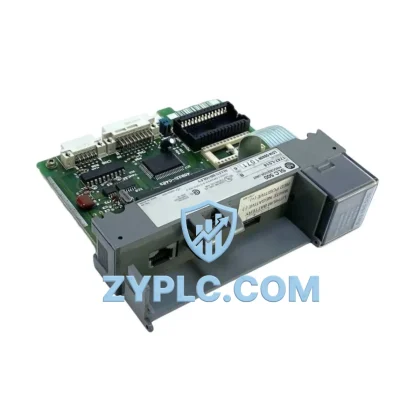
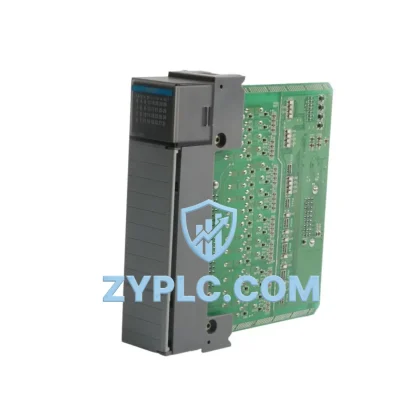
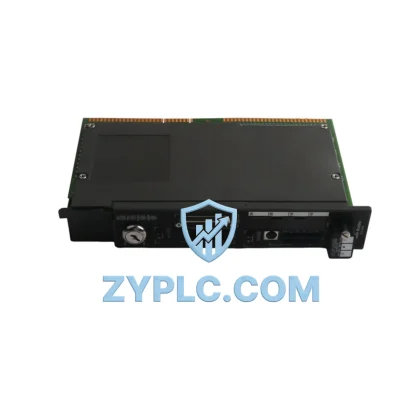
ABB BRC400 P-HC-BRC-40000000 System-Ready Bridge Controller for AC800M Architecture
The ABB BRC400 P-HC-BRC-40000000 is a dedicated bridge controller engineered to serve as a critical communication and coordination node within ABB’s AC800M Distributed Control System architecture. Rather than functioning as a standalone device, the BRC400 is designed from the ground up to operate within a layered automation hierarchy — bridging the control layer, I/O subsystems, field networks, and supervisory interfaces into a unified, coherent system. In complex industrial environments where signal integrity, deterministic response, and long-term maintainability are non-negotiable, the BRC400 delivers the structural backbone that keeps every layer synchronized and operationally consistent.
Within the AC800M platform, the BRC400 occupies a pivotal position between the CPU modules and the distributed I/O infrastructure. It enables seamless data exchange across multiple communication protocols, ensuring that process variables, diagnostic signals, and control commands flow without latency or ambiguity. Engineers deploying this controller benefit from its native compatibility with the AC800M rack system, allowing it to be installed alongside PM861, PM864, and PM866 processor modules without requiring additional interface hardware or custom firmware configurations. This plug-and-play architectural alignment dramatically reduces commissioning time and minimizes the risk of integration errors during system startup.
From a system architecture perspective, the BRC400 supports both redundant and non-redundant topologies. In high-availability applications — such as power generation, petrochemical processing, or water treatment — the controller can be paired with a redundant counterpart to ensure bumpless switchover in the event of a module fault. This redundancy capability is further enhanced when the BRC400 operates alongside ABB’s CI854 PROFIBUS communication interface or the CI857 HART multiplexer, which extend field device connectivity while maintaining the integrity of the primary control loop. The result is a control architecture that is not only robust under normal operating conditions but also resilient under fault scenarios.
At the I/O layer, the BRC400 coordinates with S800 I/O modules — including AI810 analog input, AO810 analog output, DI810 digital input, and DO810 digital output units — to aggregate field signals and present them to the CPU in a structured, pre-validated format. This signal aggregation function reduces the processing burden on the main controller and allows the system to scale horizontally as new process areas are added. The modular nature of the S800 I/O family means that additional I/O capacity can be introduced without disrupting existing wiring or reconfiguring the communication backbone, making the BRC400 an ideal anchor point for phased plant expansions.
Network layer integration is another area where the BRC400 demonstrates its architectural value. Compatible with ABB’s AF100 fieldbus and capable of interfacing with Ethernet-based supervisory networks, the controller ensures that process data is available to SCADA systems, historian platforms, and engineering workstations in real time. When deployed alongside the ABB Freelance DCS or integrated into a larger System 800xA environment, the BRC400 acts as a transparent data conduit, preserving the fidelity of process information as it moves from the field to the control room. This transparency is essential for operators who rely on accurate, low-latency data to make time-critical decisions.
For human-machine interface layers, the BRC400’s structured data output is directly consumable by ABB’s PP865 or PP886 operator panels, as well as third-party HMI platforms that support standard industrial communication protocols. The controller’s deterministic scan cycle ensures that display refresh rates remain consistent even under high process load, preventing the data staleness issues that can compromise operator situational awareness in fast-moving process environments.
Long-term maintenance and lifecycle management are core considerations in the BRC400’s design philosophy. The module’s diagnostic registers provide granular visibility into communication health, module temperature, and firmware status — all accessible through ABB’s Control Builder M engineering tool without requiring physical intervention at the panel. This remote diagnostics capability is particularly valuable in geographically distributed installations, where on-site maintenance visits are costly and logistically complex. Combined with a 12-Month Warranty covering manufacturing defects and functional performance, the BRC400 represents a low-risk, high-reliability investment for system integrators and end users alike.
Inventory availability is maintained to support both new project deployments and emergency replacement scenarios. Whether the BRC400 is being specified for a greenfield automation project or sourced as a like-for-like replacement in an existing AC800M installation, supply continuity is assured. All units are tested prior to dispatch and shipped with full documentation to support rapid re-commissioning in the field.
Architecture Specification Table
| Parameter |
Specification |
| System Role |
Bridge Controller – Communication & I/O Coordination Node |
| Compatible Platform |
ABB AC800M Distributed Control System |
| Full SKU |
BRC400 P-HC-BRC-40000000 |
| Rack Compatibility |
AC800M Standard and Redundant Rack |
| Communication Interfaces |
AF100 Fieldbus, Ethernet (supervisory), PROFIBUS (via CI854) |
| I/O Coordination |
S800 I/O Series (AI810, AO810, DI810, DO810) |
| Redundancy Support |
Yes – Hot Standby Redundant Topology |
| Power Supply Compatibility |
AC800M System Power Supply (SD821, SD822, SD823) |
| Operating Temperature |
0°C to +55°C |
| Storage Temperature |
-40°C to +70°C |
| Relative Humidity |
5% to 95% (non-condensing) |
| Protection Class |
IP20 |
| Country of Origin |
Germany |
| Warranty |
12-Month Warranty – Manufacturing Defects & Functional Performance |
Coordinated Control System Design
The BRC400 P-HC-BRC-40000000 achieves its full architectural potential when deployed as part of a coordinated AC800M system. At the processor level, it operates in concert with the PM864A or PM866K01 CPU modules, which handle the primary control logic while the BRC400 manages inter-module communication and I/O arbitration. This division of responsibility prevents CPU overload in high-channel-count applications and ensures that scan cycle times remain deterministic regardless of I/O volume.
Power integrity across the rack is maintained by the SD821 or SD823 power supply modules, which provide regulated DC power to all installed modules including the BRC400. In redundant configurations, dual power supplies are deployed to eliminate single points of failure at the power layer — a standard requirement in SIL-rated process safety applications.
Field device connectivity is extended through the CI854AK01 PROFIBUS DP communication interface, which connects the AC800M rack to remote I/O stations, variable frequency drives, and intelligent field instruments. The BRC400 coordinates the data exchange between the CI854 and the CPU, ensuring that PROFIBUS cycle times are aligned with the controller’s scan rate. For HART-enabled field devices, the CI857 HART multiplexer provides a parallel communication path that allows asset management software to access device diagnostics without interrupting the primary control loop.
Terminal connectivity at the I/O layer is handled by TB820V2 ModuleBus modem units, which extend the S800 I/O bus over longer distances within large control cabinets or across distributed marshalling panels. The BRC400’s bus management functions ensure that all TB820V2-connected I/O nodes are polled in sequence and that any communication fault is immediately flagged to the CPU for alarm processing.
For applications requiring relay output isolation, DO810 digital output modules with external relay expansion provide the necessary voltage and current isolation between the control system and field actuators. The BRC400’s output coordination logic ensures that relay switching commands are executed within the defined scan cycle, preventing timing mismatches that could cause process upsets in sequenced operations.
Application in Layered Automation Systems
The BRC400 P-HC-BRC-40000000 is deployed across a wide range of industrial sectors where layered automation architecture is essential for operational reliability and regulatory compliance.
In power generation and grid management applications, the BRC400 serves as the communication backbone between turbine control panels, excitation systems, and plant-level SCADA networks. Its deterministic communication cycle ensures that protection relay signals and generator output data are transmitted without delay, supporting the fast response times required by grid codes and plant safety systems.
In petrochemical and refinery environments, the controller is integrated into process units handling distillation, reaction, and separation operations. Its redundancy support and hot-standby capability make it suitable for SIL 2-rated safety instrumented systems, where unplanned downtime carries significant safety and financial consequences. The BRC400’s compatibility with PROFIBUS PA field instruments allows it to interface directly with pressure transmitters, flow meters, and control valves without requiring additional protocol converters.
In water and wastewater treatment facilities, the BRC400 coordinates the control of pump stations, dosing systems, and filtration processes across geographically distributed sites. Its Ethernet supervisory interface allows remote monitoring from a central control room, reducing the need for on-site operator presence and enabling predictive maintenance based on real-time diagnostic data.
In mining and mineral processing operations, the controller manages conveyor systems, crusher controls, and flotation cell automation in environments characterized by high vibration, dust, and temperature extremes. The BRC400’s industrial-grade construction and wide operating temperature range ensure reliable performance in these demanding conditions, while its modular architecture allows rapid replacement of individual components without shutting down the entire control system.
In packaging and discrete manufacturing lines, the BRC400 provides the communication infrastructure for coordinating multiple motion axes, vision systems, and quality inspection stations within a single control architecture. Its high-speed I/O coordination capability supports the fast cycle times required by modern packaging machinery, while its diagnostic transparency allows maintenance teams to identify and resolve faults before they escalate into production stoppages.
Architecture Engineering FAQ
Q1: Is the BRC400 P-HC-BRC-40000000 compatible with both standard and redundant AC800M rack configurations?
Yes. The BRC400 is designed to operate in both standard single-controller and redundant hot-standby configurations within the AC800M rack system. In redundant deployments, two BRC400 modules are installed in mirrored rack positions, with automatic bumpless switchover occurring in the event of a primary module fault. No additional hardware or firmware modification is required to enable redundancy — the configuration is managed entirely through ABB’s Control Builder M engineering software.
Q2: Can the BRC400 be integrated into an existing AC800M installation without replacing other modules or reconfiguring the communication network?
In most cases, yes. The BRC400 is designed for backward compatibility within the AC800M platform, and its installation typically requires only a firmware version check and a configuration download from Control Builder M. However, it is recommended to verify rack slot assignments and communication interface settings against the existing system documentation before installation. Our technical team can provide pre-installation compatibility assessments upon request.
Q3: What does the 12-Month Warranty cover, and what is the process for warranty claims?
The 12-Month Warranty covers manufacturing defects, component failures, and functional performance deviations from ABB’s published specifications. It does not cover damage resulting from incorrect installation, overvoltage events, or unauthorized modification. To initiate a warranty claim, contact our support team with the module’s serial number, a description of the observed fault, and the installation date. Replacement units are dispatched within 3–5 business days of claim verification, minimizing system downtime during the warranty resolution process.
© 2026 ZYPLC. All rights reserved.
Original Source: https://zyplc.com
Contact: +86 19859288691 | [email protected]